Best Outdoor Wall Art Materials Compared
A garden wall can look finished from a distance and still feel flat when you actually sit with it. That is usually the moment people start asking about the best outdoor wall art materials - not just what looks good online, but what keeps its colour, shape and impact through rain, sun and seasonal wear.
Outdoor wall art has to do two jobs at once. It needs to bring style and personality to the space, and it needs to cope with conditions that would quickly ruin most indoor decor. That is why material matters so much. The right choice can turn a blank fence, courtyard wall or patio backdrop into a proper focal point. The wrong one can fade, warp, crack or simply look tired far too quickly.
What makes the best outdoor wall art materials?
When you are choosing art for an exterior wall, appearance is only part of the decision. The real test is how the material behaves outside over time. British weather can be unpredictable, and even in milder climates, outdoor pieces still face UV exposure, moisture, temperature shifts, dirt and wind.
The best outdoor wall art materials combine visual clarity with durability. They should resist fading, handle wet conditions, stay structurally stable, and be easy enough to install without turning the project into a chore. A good outdoor artwork also needs to suit the setting. A sleek contemporary courtyard may suit a glossy modern finish, while a planted garden room may need something softer or more textured.
This is where many shoppers get caught out. They focus on the image and assume the material is secondary. In outdoor styling, it is often the other way round.
Best outdoor wall art materials for style and durability
Outdoor-grade acrylic
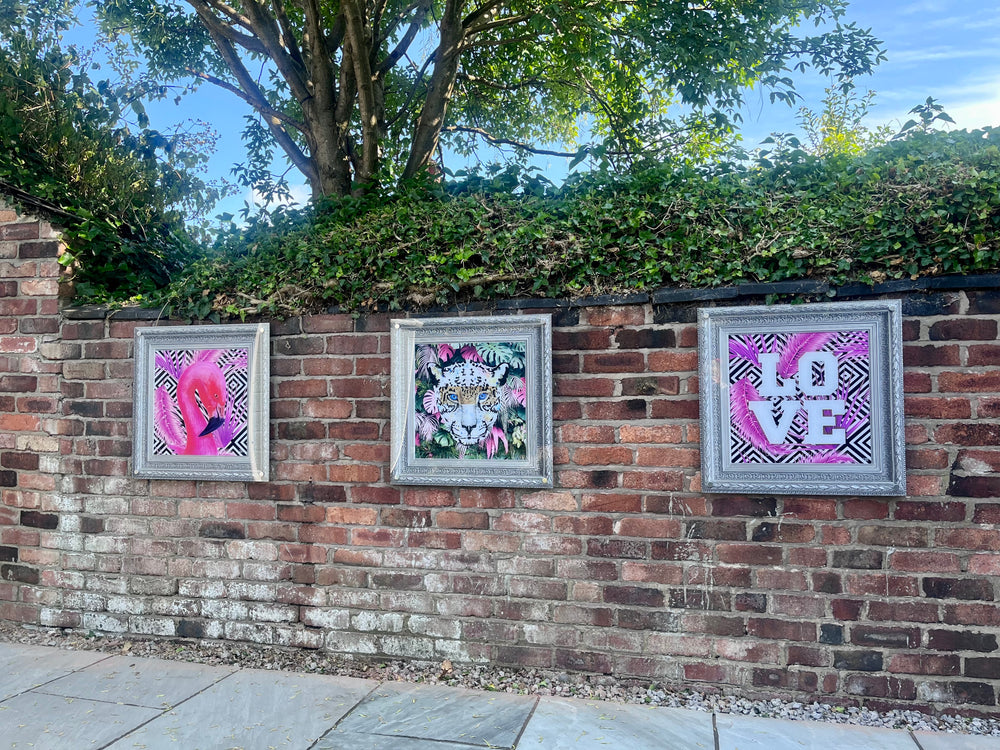
If your priority is sharp detail, strong weather resistance and a polished finish, outdoor-grade acrylic is one of the strongest options available. It offers a clean, contemporary look that works particularly well in patios, garden seating areas, exterior dining spaces and modern outdoor rooms.
Acrylic has a clarity and depth that helps printed artwork look vivid and refined. Colours appear crisp, dark tones hold their richness, and the surface gives the piece a premium feel rather than a makeshift outdoor adaptation. That matters when you want your exterior space to feel designed, not decorated as an afterthought.
From a performance point of view, acrylic is well suited to outdoor display when it is specifically produced for exterior use. UV and water resistance are key here. Not all acrylic art is made the same, and indoor acrylic prints will not necessarily cope with outdoor conditions. Proper outdoor-grade acrylic is designed to hold up far better against moisture and sun exposure, making it a dependable choice for buyers who want decorative impact without constant maintenance.
The trade-off is that acrylic is a more design-led, premium material. It suits customers who want a finished, gallery-style appearance outdoors rather than a rustic or heavily industrial look.
Metal
Metal is often one of the first materials people consider for outdoor art, and for good reason. It can be durable, sculptural and visually striking. Powder-coated aluminium tends to be one of the better metal options because it is lighter than steel and more resistant to rust. Stainless steel can also perform well, though the finish and installation requirements vary.
Metal art works beautifully in contemporary gardens, on brick walls, or in spaces that need contrast against greenery. Cut-out silhouettes, geometric forms and dimensional designs can all create strong shadow play, especially in bright sun.
That said, metal is not automatically the best choice for every buyer. Some pieces are more decorative than image-led, so if you want detailed artwork with rich printed colour, metal may feel more limited. Certain finishes can also show wear over time, particularly in coastal or exposed settings. Rusted effects may be intentional in some styles, but for a cleaner aesthetic, maintenance and finish quality matter.
Treated wood
Wood can bring warmth and texture to an outdoor wall, especially in garden spaces with a natural, relaxed feel. It suits rustic, bohemian and country-led styling and can soften harder surfaces like rendered walls or fencing.
The challenge with wood is longevity. Even when treated, wood is more vulnerable to moisture movement, warping and surface wear than acrylic or properly finished metal. Painted or printed wooden art can look lovely at first, but outdoor exposure tends to test it quickly. In sheltered areas it may perform well enough, but on a wall that gets direct rain and sun, wood usually asks for more upkeep.
For homeowners who love an organic look and do not mind a little weathering, wood can still be appealing. If your priority is a crisp finish that stays consistent, there are usually stronger options.
Canvas and fabric-based prints
This is where it helps to be careful. Many pieces marketed as outdoor art use coated canvas or weather-resistant fabric, but these materials often sit in a middle ground. They may tolerate some exposure, yet they rarely deliver the long-term resilience and finish quality of more purpose-built exterior materials.
Canvas can work in covered garden rooms or enclosed outdoor areas where it is protected from regular rain. In those settings, it offers a softer, more casual decorative feel. On exposed walls, though, it is generally not the most reliable choice. Moisture, sagging and fading are the usual concerns.
If you are styling a fully outdoor space rather than a semi-sheltered one, fabric-based art can end up feeling like a compromise.
Ceramic and tile
Ceramic and tile artwork can be beautiful, especially in Mediterranean-style courtyards, kitchen gardens or spaces with a decorative architectural feel. These materials can handle weather well when properly made and installed, and they bring texture and permanence.
The limitation is flexibility. Tile murals and ceramic pieces are often heavier, more involved to mount, and less adaptable if you like to refresh your scheme. They tend to suit permanent design plans rather than buyers who want the option to update artwork seasonally or experiment with different styles.
They also create a very specific look. If your goal is statement art with a broad choice of imagery, ceramic usually offers fewer possibilities than printed acrylic.
Why acrylic often stands out
For homeowners who want both design impact and practical reassurance, acrylic often lands in the sweet spot. It gives you the visual presence of art rather than just decoration, while still being engineered for outdoor life.
That combination matters. Exterior styling has moved on from treating the garden as a place for a few generic plaques and hanging ornaments. People want outdoor spaces that feel curated, expressive and as considered as the rooms inside the home. A material that can carry bold abstracts, vintage-inspired imagery, botanicals or modern graphic work - without losing performance credibility - naturally stands apart.
This is one reason brands such as YARDART UK have focused on outdoor-grade acrylic rather than simply repurposing indoor formats. When the material is chosen specifically for exterior use, the result feels intentional from every angle: the finish, the colour quality, the weather resistance and the ease of installation.
How to choose the right material for your space
The best choice depends partly on where the piece will hang. A sheltered courtyard has different demands from an exposed fence line or a wall that catches direct afternoon sun. If the artwork will face heavy weather, durability should lead the decision. If the area is covered, you may have more freedom to prioritise texture or style.
It is also worth thinking about the role the artwork will play. If you want one large statement piece to anchor an outdoor seating area, image clarity and finish matter more. Acrylic is particularly strong here because it delivers presence and polish. If you are layering smaller decorative accents into planting or around a pergola, metal or wood may make more sense stylistically.
Finally, consider how much maintenance you actually want. Most buyers say they do not mind occasional upkeep, but what they really want is something that looks good with minimal effort. That is why low-maintenance, weather-resistant materials tend to win in the long run.
The material should support the design
A beautiful image on the wrong surface will always feel slightly off outdoors. The material should reinforce the style of the piece and the atmosphere you want to create. Modern artwork benefits from crisp lines and saturated colour. Botanical and landscape-inspired designs often need enough print quality to preserve detail. Even vintage or distressed looks need a substrate that can cope with the elements.
That balance between beauty and performance is what separates a quick decorative purchase from an outdoor piece you still love next season. When you choose a material built for exterior display, you give the artwork a fair chance to do its job properly.
A blank outdoor wall is not just empty space. It is an opportunity to bring character, colour and structure to the part of the home you actually see when you slow down and enjoy it. Choose a material that can hold that moment, whatever the weather does next.


Leave a comment