Designing the Perfect Garden Party
A great garden party is rarely about squeezing in more chairs or buying another string of lights at the last minute. The difference is usually design. When you start designing the perfect garden party, the space begins to work harder - guests know where to gather, the atmosphere feels considered, and every corner looks like it belongs to the same story.
That matters more than most people realise. Outdoor entertaining often gets treated as temporary, almost improvised, while indoor hosting is planned down to the last cushion and candle. Yet a garden, patio or courtyard can carry just as much personality as a sitting room when it is styled with intention. If you want your party to feel polished rather than patched together, begin with how the space looks, moves and lives from the moment guests arrive.
Designing the perfect garden party starts with the room outside
The easiest mistake is to think of a garden as one big open area. In practice, the most inviting spaces behave like outdoor rooms. One zone draws people in for drinks, another supports dining, and a quieter edge gives guests somewhere to pause when they want a lower-key conversation.
This does not require a large garden. Even a compact patio can feel layered when each area has a clear purpose. A bistro table near the kitchen doors creates a natural landing spot for arrivals, while a bench or lounge set further back establishes a second rhythm. If everything is pushed to the perimeter, the centre can feel awkwardly empty. If everything is clustered too tightly, the whole event feels cramped before it even begins.
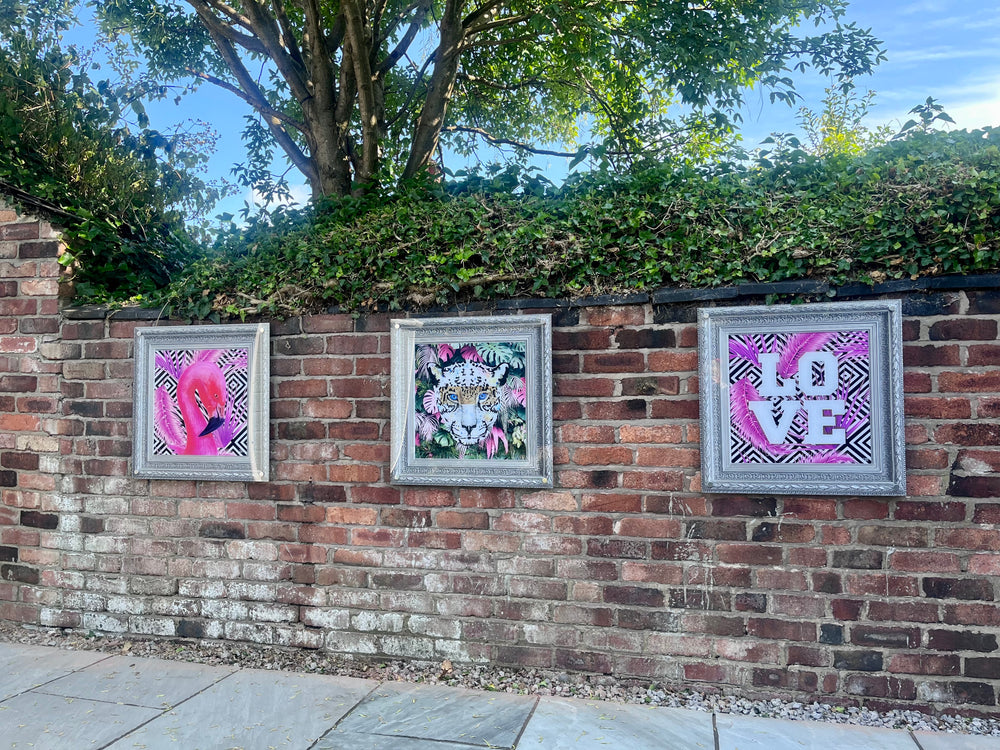
Think about sightlines as well. The best focal point is not always the dining table. Sometimes it is a beautifully dressed wall, a styled corner with planting and lanterns, or a piece of outdoor artwork that anchors the scheme. This is where the garden starts to feel designed rather than merely furnished. Exterior walls and fences are often underused, yet they can define the entire mood of a gathering when treated as part of the decor rather than background.
Choose a visual direction before you buy anything else
If your garden party styling feels slightly random, it usually comes down to one issue: too many ideas competing at once. Before choosing tableware, cushions or lighting, settle on a visual direction. That might be contemporary and architectural, soft botanical, vintage-inspired, or boho with layered texture. The point is not to make it formal. It is to make decisions easier.
Colour plays a huge role here. A restrained palette always looks more expensive outdoors because the garden itself already supplies variation through greenery, flowers and changing light. If the setting is lush and full, quieter neutrals with one strong accent shade can look incredibly refined. If the space is more minimal - paved courtyard, painted fencing, clean-lined furniture - bolder art and patterned textiles can bring the energy.
This is also where permanent decor earns its place. Temporary party pieces can create charm, but they rarely provide depth on their own. Weatherproof wall art, for example, gives an outdoor space a finished backdrop before a single guest arrives. It adds scale, personality and colour in a way that survives beyond one event, which makes it a design investment rather than a one-night fix.
Style should match the setting, not fight it
A country garden can carry a softer look with botanical prints, washed linens and relaxed planting. A modern terrace may suit graphic shapes, monochrome accents or abstract outdoor art. Neither is better. What works is coherence.
It also helps to think seasonally. High summer can handle brighter contrasts and a more playful mix. Spring and early autumn often look better with richer tones, layered textiles and warmer lighting. Designing well for the time of year is one of the quickest ways to make a party feel natural.
Make guests feel comfortable before you make it look clever
Beautiful styling will always fall flat if guests are too hot, too cold, or unsure where to put their drink. Comfort is the less glamorous part of entertaining, but it is what people remember. The trick is to build it into the design rather than tack it on afterwards.
Shade needs proper thought, especially for daytime gatherings. A parasol, pergola or even the strategic use of a tree canopy can shape the layout while making the space more usable. Evening parties need the opposite approach. As the light drops, people gravitate towards warmth and glow, so it helps to place soft lighting around seating areas, along paths and near dining zones rather than relying on one harsh source.
Seating should feel varied, not uniform. Dining chairs are essential if food is central to the event, but a garden party becomes more relaxed when guests have options. A built-in bench, occasional stools, outdoor cushions and a couple of lower lounge seats make the gathering feel less rigid. Just keep the heights compatible enough that conversations can flow.
The same goes for surfaces. Guests need places for glasses, plates and serving dishes, and not always in the obvious spots. A side table beside a bench can be more useful than another decorative planter. Design is at its best when it quietly solves practical problems.
Use lighting to create atmosphere, not clutter
Lighting is where many outdoor spaces either come alive or become visually noisy. The temptation is to add more of everything - festoons, lanterns, candles, solar stakes - but restraint usually looks better.
Start by deciding what you want the evening to feel like. If the mood is elegant and grown-up, keep lighting warm, low and layered. If it is a more casual summer gathering, a little sparkle can work beautifully, but it still needs a plan. Highlight entrances, dining areas and key styling moments, then let the darker pockets remain darker. Not every corner needs equal attention.
Walls matter here too. A well-placed piece of outdoor art can catch evening light in a subtle way and add dimension after sunset. This is especially useful in gardens that lose detail once daylight fades. Instead of relying on decorative clutter, one statement piece can hold the scene together from afternoon drinks through to late evening.
Tablescaping should support the garden, not compete with it
When the setting is already visually rich, the table does not need to shout. The most successful outdoor tablescapes tend to echo the surroundings rather than overpower them.
That could mean textured ceramics, simple glassware and linens in earthy or chalky tones, with foliage or seasonal flowers kept loose and unfussy. If your garden is more structured, a cleaner table with sharper lines and fewer decorative elements may feel stronger. Again, it depends on the space.
Height is worth watching. Tall arrangements can be beautiful in photographs but frustrating in real life if they block conversation. Lower centrepieces, grouped candles and considered place settings usually strike the right balance. It is also wise to think about the breeze. Lightweight napkins, unstable candles and overly delicate displays can quickly stop looking refined when the weather shifts.
Food presentation is part of the design
Even if the menu is simple, how it is presented changes the feel of the party. Shared platters encourage movement and sociability, while a plated meal creates a more formal rhythm. Neither is automatically right. It depends on whether you want the event to feel relaxed and mingling or anchored and occasion-led.
A drinks station can be particularly effective because it creates its own destination within the garden. Styled properly, it becomes part of the decor rather than a practical afterthought.
Weatherproof details make the whole thing feel effortless
British weather does not always reward optimism, so designing the perfect garden party means planning for change without making the setting feel defensive. The goal is not to prepare for every possible scenario. It is to make sure a slight breeze, a drop in temperature or a passing shower does not unravel the atmosphere.
This is where durable outdoor styling really proves its value. Fabrics, serving pieces and decorative accents should be chosen with real conditions in mind. Exterior art designed specifically for outdoor use can be especially useful because it keeps its visual impact without needing to be rushed inside. For homeowners investing in a space they will use well beyond one event, that reliability matters.
YARDART UK has built its outdoor art offering around exactly this principle: design-led impact that is made to handle exterior conditions. It is the kind of detail that helps a garden feel finished before the table is laid.
The perfect garden party has personality
The most memorable gatherings are not the ones that look copied from a trend report. They are the ones that feel unmistakably connected to the home and the people hosting it. That could mean contemporary artwork against a painted brick wall, vintage-style tableware mixed with modern seating, or a bold splash of colour in an otherwise calm scheme.
Perfection, in this case, is not about symmetry or spotless staging. It is about confidence. When the layout makes sense, the decor belongs to the space, and the practical details have been handled, everyone relaxes - including the host. That is when a garden party stops feeling like an event you arranged and starts feeling like a place people genuinely want to stay.
If you are planning one this season, focus less on adding more and more on designing what is already there with intention. Your garden will tell you what it needs when you start treating it like a room worth styling properly.


Leave a comment