12 Exterior Wall Art Ideas That Transform Gardens
A blank garden wall can flatten an otherwise beautiful outdoor space. You might have invested in paving, planting and furniture, yet the fence line or brick backdrop still feels unfinished. The right exterior wall art ideas change that quickly, adding scale, personality and a proper sense of design without the upheaval of a full renovation.
What works outdoors, though, is not always what works indoors. Sunlight shifts colour, rain tests materials, and large open spaces can swallow up pieces that looked generous in a showroom photo. That is why the best approach starts with placement, proportion and weatherproof performance, then moves into style.
Exterior wall art ideas for different outdoor spaces
The most effective exterior wall art ideas are shaped by where the piece will live. A narrow side return needs something different from a broad entertaining wall behind a dining set.
For patios, artwork often works best when it anchors a seating zone. Think of the wall art as the outdoor equivalent of a living room focal point. If your furniture is low and streamlined, a large-format acrylic print can bring height and visual structure to the arrangement. Abstract pieces suit contemporary patios particularly well because they add movement without competing with planters, cushions and tableware.
In courtyards, scale becomes more dramatic. Smaller enclosed spaces can handle bolder imagery because the viewer is closer to the wall. Botanical artwork, street-art inspired prints or richly coloured vintage-style pieces all work well here, especially if the courtyard has minimal planting and needs warmth.
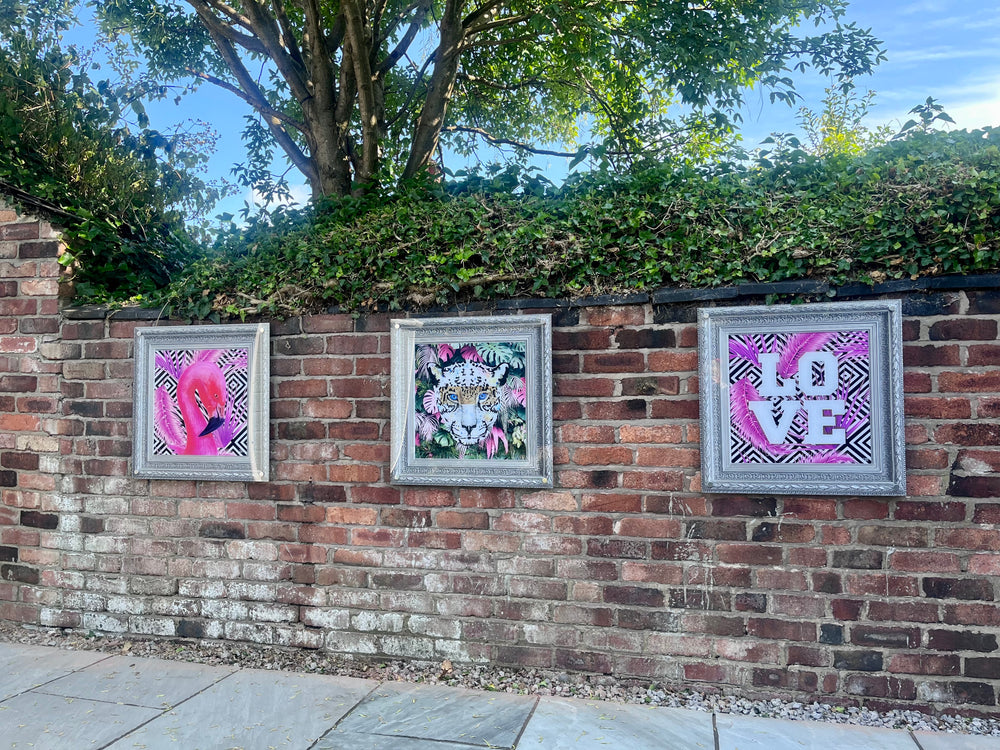
Fence panels need a slightly different eye. Repetition can help. Instead of treating one fence section as a single statement wall, consider using two or three coordinated pieces to create rhythm along the length. This suits boho and modern collections especially well, where connected colour palettes can make the boundary feel intentional rather than purely practical.
For exterior brick walls, texture matters. If the surface already has strong visual character, choose art with enough presence to stand up to it. Clean-lined modern imagery or graphic equine artwork can hold its own against busy brick, whereas very delicate designs may get lost.
1. Oversized statement art for instant impact
If your outdoor wall is large, one generous piece nearly always looks more expensive and more considered than several undersized ones. This is one of the simplest exterior wall art ideas, yet it is often overlooked because people underestimate how much scale an outdoor setting needs.
Acrylic wall art is particularly effective here because it gives you crisp colour and a polished finish without feeling fussy. On a broad wall behind a sofa set or outdoor dining table, a single oversized print can frame the entire entertaining area and make the space feel styled rather than assembled.
The trade-off is that large statement pieces need enough breathing room. If the wall already includes lighting, shelving, taps or plant supports, a slightly smaller format may sit more comfortably.
2. A curated pair for balance
Some walls do not want one dominant feature. They want symmetry. A pair of related artworks can bring balance to garden rooms, pergola walls and sheltered terraces, especially when furniture sits centrally underneath.
This works well with botanical themes, monochrome abstracts or limited-edition pieces where subtle variation adds interest. Matching does not have to mean identical. The stronger option is often two works from the same visual family, linked by palette or style, with enough difference to feel collected.
This layout is useful when you want the wall to feel polished but not overpowering. It also allows more flexibility if your furniture layout changes later.
3. A gallery arrangement for long fences
Long fences can feel repetitive, particularly in newer gardens where planting is still establishing. A gallery-style arrangement breaks up that length and gives the eye places to land.
The key is restraint. Outdoors, a gallery wall should be looser and larger in scale than an indoor one. Three to five well-spaced pieces often look stronger than a dense cluster. Keep a common thread, whether that is muted neutrals, bold graphic colour or a single subject category such as vintage travel-inspired scenes or expressive abstract work.
If your garden is already packed with flowers and foliage, simpler artwork will stop the scheme becoming visually noisy. If the planting is pared back, you can be bolder with pattern and colour.
4. Botanical art that complements planting
Botanical outdoor art can sound obvious for a garden, but it works best when it complements rather than copies what is already there. If your planting is loose and cottage-style, choose cleaner, more graphic botanical designs to bring contrast. If the garden is architectural and structured, softer leaf or floral imagery can add warmth.
This is one of the most versatile exterior wall art ideas because it suits almost every setting, from compact balconies to family gardens. It also ages well stylistically. While trend-led prints can date a scheme, botanical designs tend to remain easy to live with.
5. Abstract pieces for modern patios
Modern patios often rely on strong lines, muted materials and controlled planting. In that setting, abstract art can do a lot of heavy lifting. It introduces colour, shape and energy without pushing the space into a theme.
The practical advantage is flexibility. Abstract pieces are easier to style around changing furniture, seasonal textiles and updated planting than very literal imagery. If you like refreshing cushions, pots or accessories through the year, abstract art gives you room to evolve the space without replacing the focal point.
6. Vintage-inspired prints for character
If your garden feels neat but lacks personality, vintage-style artwork can soften it. These pieces bring a sense of history and charm to walls that otherwise feel purely functional.
They suit brick courtyards, traditional terraces and dining areas where you want a slightly more atmospheric look. The trick is not to overdo the nostalgia. Pairing vintage-style art with contemporary furniture can stop the space tipping into pastiche and keep it feeling collected rather than themed.
7. Street art influences for urban spaces
Urban gardens and roof terraces often benefit from something with edge. Street-art inspired outdoor prints can inject confidence into compact exterior spaces, especially where materials like concrete, dark timber and rendered walls dominate.
This is a good choice if you want the art to lead the scheme rather than simply finish it. Bold graphics, layered textures and saturated tones can transform a plain wall into the defining feature of the whole space.
8. Boho artwork for softer styling
For relaxed seating areas, boho-inspired outdoor art can bring softness and warmth. This style works particularly well with natural textures, pale stone, layered textiles and lantern lighting.
The risk with boho schemes outdoors is that they can drift into looking temporary if every element is lightweight or overly decorative. A well-made weatherproof wall piece grounds the look and gives it permanence, which is especially useful if you want your garden to feel as considered as your interior.
Choosing materials that actually work outdoors
Great styling falls apart quickly if the material is wrong. Outdoor wall art should be designed for real exposure, not treated as if a covered wall automatically solves everything.
UV resistance matters because direct sun can wash out colour faster than many people expect. Water resistance matters even on apparently sheltered walls, as wind-driven rain and damp can reach surprising places. Easy-clean surfaces are also worth prioritising, particularly near barbecues, dining areas or high-traffic family spaces.
Outdoor-grade acrylic is a strong option because it offers crisp detail, dependable durability and a smart finish that feels elevated rather than utilitarian. It also tends to be easier to live with than more delicate decorative options. If your aim is long-term visual impact with low fuss, that balance counts.
How to place outdoor wall art well
Placement is where good art can either sing or look oddly adrift. Hang the piece in relation to the furniture or architectural feature below it, not simply in the centre of the wall. A dining set, bench or outdoor sofa gives you the visual anchor you need.
Height should feel natural from a seated and standing viewpoint. Too high, and the art disconnects from the space. Too low, and it can feel cramped by furniture or planters. In most gardens, slightly lower than people first imagine looks better.
Leave enough margin around the artwork so it reads clearly from a distance. This is especially important in outdoor spaces, where surrounding textures such as brick, timber, climbing plants and paving already create a busy backdrop.
Matching art to your home's exterior
The best choice is not always the boldest one. It depends on what your house and garden already say.
Contemporary homes can usually carry stronger contrast, larger scale and more graphic work. Period properties often suit artwork with a slightly softer palette or more classic subject matter, though that does not mean traditional by default. A modern abstract can look brilliant on an older home if the colours connect with the brick, stone or painted joinery.
If you are unsure, take your cue from two things: the dominant exterior material and the mood you want the space to have. Calm, dramatic, playful and refined are all valid directions, but mixing them at random rarely works.
A useful rule is this: if your furniture and planting already make a strong statement, choose art that sharpens the scheme. If the rest of the space is understated, let the art provide the personality. Brands such as YARDART UK have built their appeal on exactly this idea - that outdoor walls deserve the same design attention as the rooms inside your home.
A thoughtfully chosen piece does more than fill empty space. It gives the garden a point of view, and that is usually the difference between an outdoor area that looks finished and one that still feels like it is waiting for something.


Leave a comment