

Garden Styling Ideas That Make Walls Work
A beautiful garden can still feel unfinished when the walls around it are bare. Garden styling is often focused on planting, paving and furniture, yet fences, brickwork and rendered exterior walls occupy a huge part of the view. Treating these vertical surfaces as part of the design gives an outdoor space the same sense of character, balance and intention as a well-designed room.
The most successful gardens do not rely on one dramatic feature alone. They create a conversation between colour, texture, planting and places to pause. Outdoor wall art can be the element that pulls those details together - adding a focal point that remains visible through changing seasons, even when borders are resting and the weather is less kind.
Start Garden Styling With the View You Want to Create
Before choosing colours or accessories, stand at the doorway, your favourite seat and the far end of the garden. What do you see first? A long blank fence, a shaded courtyard wall or a patio that feels more practical than inviting? Those are the places where considered styling will have the greatest impact.
Think about how you want the space to feel. A compact urban garden may benefit from a large botanical image that creates depth and softness. A sleek new patio can carry a confident abstract piece with strong blocks of colour. In a relaxed, plant-filled garden, vintage-inspired artwork or boho detailing can introduce a collected, personal look without making the space feel overdone.
This is not about matching every cushion, pot and flower. A little contrast is often what gives a garden energy. The aim is to choose one clear visual direction, then repeat a few colours or materials around it so the result feels curated rather than accidental.
Give Blank Walls a Purpose
Garden walls are not merely boundaries. They can frame an outdoor dining area, extend the atmosphere of an indoor kitchen or create a destination at the end of a path. Once a wall has a purpose, it becomes much easier to style.
Behind a dining table, choose art that feels generous in scale and holds its own against chairs, planting and people. In a quiet seating corner, a more reflective image can make the space feel deliberately tucked away. At the end of a narrow garden, a statement piece draws the eye forwards and makes the garden appear more considered and expansive.
Scale matters more than many people expect. A small artwork placed on a large fence can look lost, particularly when viewed from indoors. As a rule, allow the piece to occupy enough visual space to be read from your usual viewing point. If you have a broad wall, one oversized design often looks more confident than several small items scattered across it.
Work with the wall, not against it
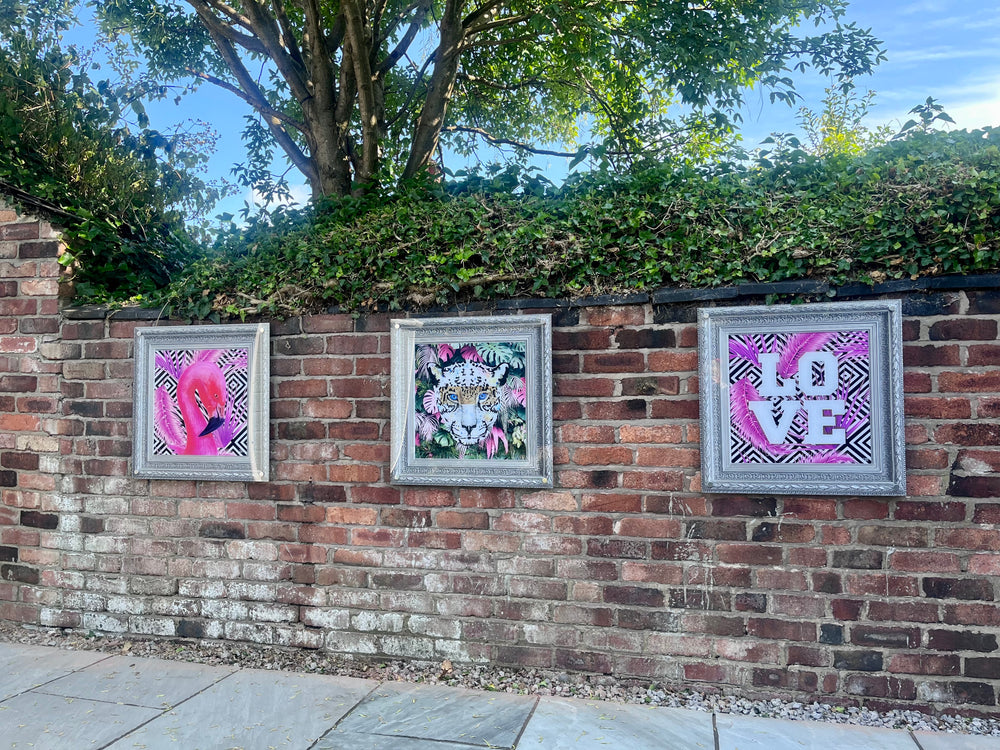
Brick, timber, render and painted masonry all bring a different backdrop. On warm red brick, cool blues, leafy greens and monochrome artwork can feel crisp and contemporary. Against dark painted fencing, brighter artwork brings welcome contrast. Pale render provides a clean gallery-like setting, allowing bolder designs, street art-inspired pieces and high-impact botanicals to take centre stage.
If the wall is visually busy, choose artwork with a simpler composition. If the surface is plain, more layered or detailed imagery can add the richness it lacks. The key is balance: the wall should support the art, not compete with it.
Choose a Colour Story That Survives the Seasons
Summer planting can make any garden look abundant, but good styling should still work in February. Build the main palette around fixed elements such as paving, fencing, exterior paint, brick tones and garden furniture. Then use art to introduce colours you want to see all year.
Earthy terracotta, olive, sand and charcoal suit natural, Mediterranean-inspired spaces. Crisp black, white and cobalt work beautifully with contemporary paving and architectural planting. For a more expressive garden, vivid pink, orange or turquoise can transform a plain patio wall into a confident backdrop for entertaining.
You do not need to reproduce every colour in the artwork elsewhere. Instead, pick one or two accents. A deep green within a botanical print might be echoed in glazed pots. A warm coral note could reappear in outdoor cushions or a painted planter. These small repetitions make the design feel intentional without becoming too coordinated.
Seasonal change is a useful test. If the artwork only works when flowers are in bloom, it may not be doing enough. Choose a design with its own presence, whether the borders are full of colour, washed by rain or reduced to sculptural stems in winter.
Make Materials Part of the Design Decision
Outdoor decoration must earn its place. Paper prints, untreated timber frames and indoor canvases can quickly lose their appeal when faced with rain, moisture, frost and direct sunlight. Fading, warping and peeling turn a design choice into another maintenance task.
For exterior walls, look for artwork designed specifically for outdoor use, with UV and water resistance built into the material rather than added as an afterthought. Outdoor-grade acrylic offers a clean, contemporary finish and helps protect the printed image from changing conditions. It is also lightweight enough to make installation straightforward on many suitable exterior surfaces.
This is where design and performance should meet. A dramatic artwork is only a worthwhile focal point if it continues to look sharp after long bright days, sudden showers and the general wear of garden life. YARDART UK creates weatherproof outdoor wall art for exactly this purpose, bringing the impact of a statement interior piece into spaces that are exposed to the elements.
Position art with light in mind
Sunlight changes throughout the day, and that should influence where you place your artwork. A wall that receives strong afternoon sun may suit deeper, bolder tones, while a shadowed corner can be lifted by lighter colours or an image with a bright background.
Avoid placing a feature where it will be constantly obscured by fast-growing climbers or large pots. Plants should soften the edges of the composition, not hide it completely. Leave some breathing room around the artwork so the design remains visible and the wall still feels calm.
Layer the Space From Ground to Wall
The best garden styling has depth. A wall feature looks more convincing when it belongs to a scene rather than floating above an empty patio. Use planting, furniture and lighting to build gentle layers between the ground and the vertical surface.
Position a bench, bistro set or occasional chair beneath a larger piece where space allows. Add tall grasses or architectural pots to one side, keeping the other side quieter if you want an asymmetrical, modern composition. For a more formal setting, repeat matching planters on either side and centre the artwork between them.
Lighting can make the space usable for longer and turn wall art into an evening feature. Warm, low-level illumination is usually more flattering than harsh security lighting. The goal is not to flood the wall but to give the artwork enough presence after dusk, while allowing planting and texture to retain their atmosphere.
Be realistic about how the area is used. A family patio needs clear circulation and easy-clean surfaces. A small courtyard may need every element to work hard, so a single wall piece can provide far more impact than additional furniture. If your garden is already full of colourful planting, a quieter monochrome design may be the stronger choice. Styling is not about adding more - it is about making every visible element count.
Create an Outdoor Room, Not a Decorated Fence
A patio becomes more inviting when its walls, furniture and planting appear to belong to the same setting. Consider the relationship with the room inside too. If your kitchen has warm oak, black fittings and soft green accents, carrying a related mood outdoors can make the threshold feel wider and the home more connected.
This does not mean the garden must mirror the interior exactly. Outdoor spaces can be bolder, more playful and less precious. A striking equine image, expressive abstract or oversized botanical can introduce personality that might feel too dramatic indoors but looks entirely at home against foliage and open sky.
When choosing a piece, trust the one you continue to notice. The right artwork should give the eye somewhere to land from the house, make a seating area feel more complete and bring pleasure on an ordinary glance through the window. Start with the wall you see most often, style it with confidence, and let the rest of the garden grow around that point of view.


Leave a comment