Garden Wall Makeover with Weatherproof Prints
A blank garden wall can flatten the whole space. You might have well-chosen planting, smart paving and a seating area that works beautifully, but if the wall behind it is tired, empty or visually heavy, the garden still feels unfinished. A garden wall makeover with weatherproof prints changes that quickly. It gives the eye somewhere to land, adds personality without clutter, and brings indoor-style decorating confidence outside.
What makes this approach so effective is the balance between style and practicality. Outdoor walls need more than a pretty surface treatment. Paint can feel flat, mirrors need careful positioning, and many decorative pieces simply are not made to cope with rain, frost and strong sun over time. Weatherproof prints are different. They are designed for real exterior conditions, so the decorative impact does not come with the usual compromise.
Why a garden wall makeover with weatherproof prints works
Most garden walls fall into one of two categories. They are either purely functional, such as boundary walls and rendered sections around a patio, or they become accidental backdrops for everything else. In both cases, they often absorb space rather than shaping it.
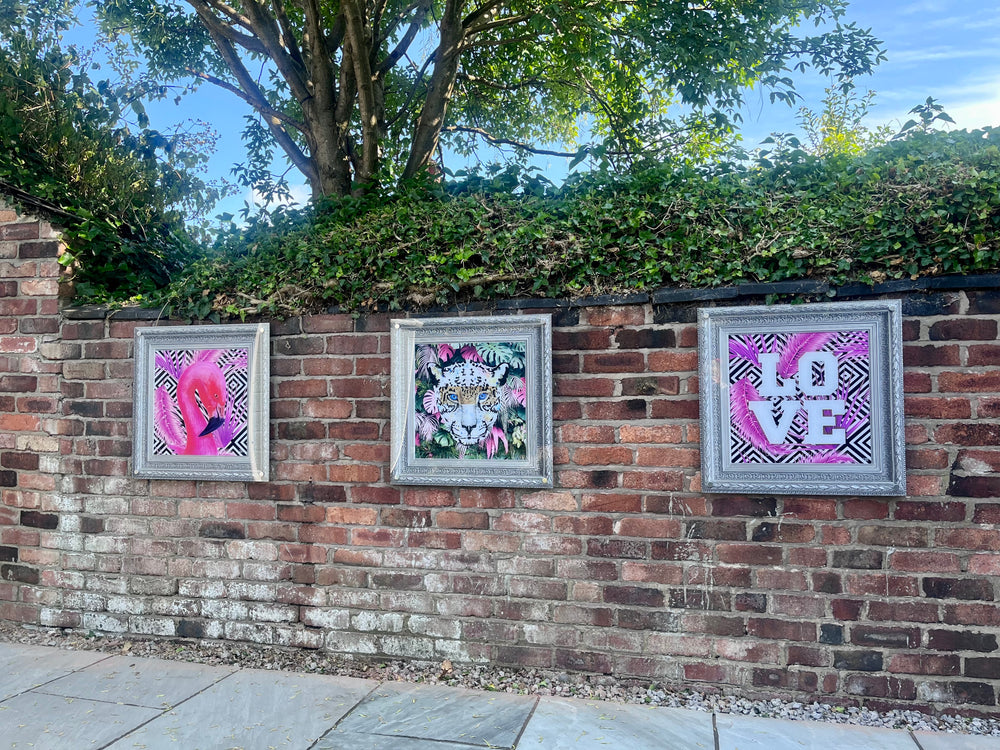
Adding weatherproof artwork changes the role of the wall. Instead of acting as a hard edge, it becomes part of the design of the garden. This matters especially in smaller plots, courtyards and urban outdoor spaces where every visible surface contributes to the overall look. A print can soften brick, warm up render, add contrast to timber fencing, or create a stronger link between your planting scheme and seating area.
There is also a practical advantage. A full renovation can mean resurfacing, repainting or reworking an entire section of garden. A print-led makeover is lighter-touch. You keep the structure you already have and improve how it looks, often with far less disruption. For homeowners who want a noticeable transformation without a lengthy outdoor project, that is a strong option.
Start with the wall, not the artwork
The best results come from reading the wall properly before choosing a design. Size matters, but so do texture, exposure and distance. A large wall viewed from across the lawn needs different treatment from a narrow side-return wall beside a bistro set.
If the wall gets strong direct sun for most of the day, colour choice becomes especially important. High-contrast monochrome pieces can look crisp and architectural in bright conditions, while soft neutrals may appear washed out unless they have enough depth. In shadier gardens, richer botanicals, vintage tones and darker abstracts often perform well because they add visual warmth where light is limited.
Surface character matters too. Old brick with plenty of variation has a different visual weight from smooth painted render. On a highly textured wall, a clean contemporary print can create a sharp, intentional contrast. On a plain surface, something layered and expressive may stop the space from feeling too controlled.
This is where many makeovers go wrong. People choose art they like in isolation, rather than art that suits the scale and mood of the space. In a garden, context does most of the work.
Choosing a style that feels right outdoors
A successful outdoor wall does not need to match the inside of your home exactly, but it should feel connected to how you live. If your patio is styled for relaxed entertaining, oversized tropical botanicals or sun-washed abstract prints can bring energy without making the area feel busy. If the garden leans more architectural, modern graphic work or restrained black-and-white photography can sharpen the lines of the space.
For cottage gardens and planting-led schemes, vintage florals, wildlife-inspired pieces and softer boho designs tend to sit naturally among greenery. In contemporary courtyards, street art influences and bold colour blocks can create a gallery-like effect that turns a plain exterior wall into a focal point.
There is no single correct direction. It depends on whether you want the artwork to blend or lead. If the planting is already doing a lot, one strong print with a simpler palette may be enough. If the garden is structurally clean and minimal, the wall art can carry more personality.
Scale is what makes it feel designed
The easiest way to make outdoor art look like an afterthought is to choose a piece that is too small. Garden walls usually need more presence than interior walls because you view them from further away and against open space. A print that would feel generous in a dining room can disappear completely outdoors.
That does not always mean going huge, but it does mean being realistic. Large-format pieces are often the most effective choice above outdoor sofas, along dining terraces or on expansive rendered walls. They create confidence and give the whole area a sense of purpose.
Smaller formats can still work, especially in pairs or as part of a more curated arrangement. The key is spacing and balance. A cluster can look smart in a sheltered courtyard, but on a broad wall it may feel visually fragmented. When in doubt, choose fewer, larger pieces. Outdoor spaces usually respond better to clarity than fuss.
Why weatherproof quality matters more outside
This is not just about surviving the odd shower. Outdoor décor has to cope with repeated exposure to moisture, temperature changes and UV light. Materials that look acceptable at first can fade, warp or degrade surprisingly quickly once they are placed outside full time.
That is why purpose-made weatherproof prints are worth the investment. Outdoor-grade acrylic, UV-resistant printing and water-resistant construction are not small technical extras. They are what allow the artwork to keep its clarity and finish season after season. If you are creating an exterior space that is meant to look polished, durability is part of the design brief.
Easy installation matters too. Garden makeovers are more appealing when they do not turn into specialist building projects. Well-made outdoor art should feel straightforward to position securely on exterior walls, whether you are refreshing a compact patio or styling a larger entertaining zone.
Placement can change the mood of the garden
Where you hang the print affects more than visibility. It shapes the experience of the space. Artwork placed behind seating creates an outdoor room effect, making the area feel styled and settled. A piece at the end of a path or in a side courtyard can draw the eye forward and make the garden feel more expansive.
If you have a dining area, art can help anchor it in the same way a statement wall anchors an interior room. Around hot tubs, pergolas and covered patios, prints can add atmosphere without introducing anything fussy or fragile. Even a utilitarian wall near bins, side access or a garage can be lifted with the right design.
Sightlines are useful here. Stand at the back door, sit in your favourite chair, and look from the main entertaining spots. The best location is often the one you notice repeatedly, not necessarily the most obvious blank wall.
Pairing prints with planting and furniture
The strongest outdoor schemes feel layered. Weatherproof prints work particularly well when they echo something else in the garden - the shape of leaves, the tone of planters, the lines of furniture cushions, or the mood of the paving. That link does not need to be literal. In fact, subtle repetition usually feels more refined.
A botanical print near structural greenery can make planting feel more intentional. A bold abstract can pull together mixed furniture colours that otherwise feel disconnected. Warm earthy artwork can soften cooler stone or composite decking, while monochrome pieces can tidy up a space with lots of varied foliage.
It is also worth thinking about seasonal change. In winter, when borders are quieter, the wall art may carry more of the garden's visual interest. In summer, it becomes part of a fuller composition. Good outdoor prints work in both situations.
A garden wall makeover with weatherproof prints for different spaces
Not every garden needs the same treatment. In a compact terrace, one statement piece can create depth and stop the space feeling enclosed. In a long garden, art can break up distance and add moments of interest between zones. Courtyards benefit from prints that bounce character around hard surfaces, while family gardens often suit energetic designs that make seating and social areas feel welcoming rather than purely practical.
In coastal or high-exposure settings, material performance becomes even more important. In sheltered urban gardens, the style decision may matter more than the endurance question, but both still count. The point is not to follow one formula. It is to choose artwork that suits the setting and the way the space is used.
For homeowners who want a polished finish without overcomplicating the garden, this is where specialist outdoor art earns its place. Brands such as YARDART UK have helped make exterior styling feel less improvised and more design-led, with prints created specifically for outdoor living rather than borrowed from indoor décor.
A garden should not stop at paving, planting and furniture. When the walls are treated as part of the design, the whole space feels more considered, more expressive and far more complete. If one area of your garden still feels flat, that wall is probably asking for art.


Leave a comment