
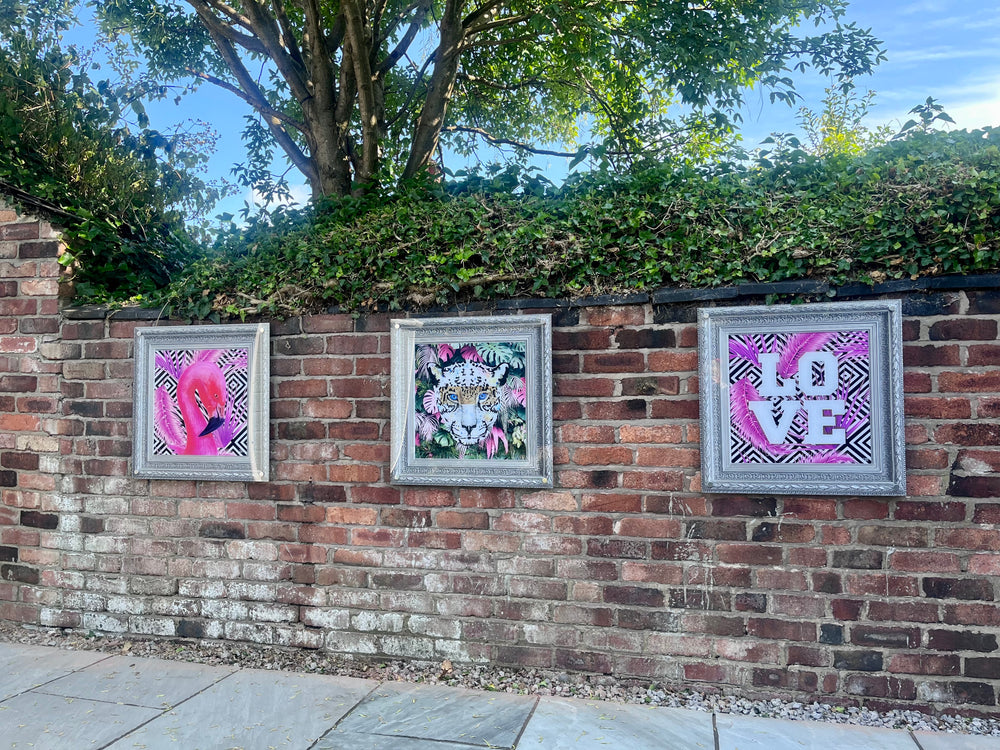
Your Guide to Styling Exterior House Walls
A blank exterior wall can make even a beautifully planted garden feel unfinished. It is often the largest uninterrupted surface in the space, yet it is treated as background rather than part of the design. This guide to styling exterior house walls starts with a simple idea: give the walls around your patio, courtyard or garden the same considered attention as the rooms inside your home.
The best results do more than fill an empty space. They create a focal point, frame an entertaining area, draw the eye towards a favourite view or bring warmth to a shaded corner. With the right combination of outdoor artwork, colour, planting and light, a plain wall becomes part of the experience of being outside.
Start with the wall's purpose
Before choosing a style, consider what the wall needs to do. A wall behind an outdoor dining table calls for a different approach from a narrow passageway or the boundary at the far end of a lawn. Think about where people sit, walk, look and gather. Styling should support how the space is used, not compete with it.
A feature wall beside a seating area can carry a confident, large-scale artwork that sets the mood for the whole garden. In a smaller courtyard, one carefully positioned piece may create more impact than several small decorations. Along a long fence or side wall, a sequence of artworks, planting and lighting can turn a functional route into a considered garden journey.
Also look at the wall itself. Is it brick, render, timber or painted masonry? Does it receive strong afternoon sun, driving rain or very little natural light? These details affect both the palette you choose and the materials that will perform well over time.
Choose a style that belongs to your home
Exterior wall styling feels most successful when it connects the architecture of the house with the atmosphere you want outdoors. That does not mean every colour must match. It means the choices should feel intentional.
For contemporary homes, abstract artwork, strong graphic forms and a restrained palette can sharpen clean lines and make a patio feel like an open-air room. Black, chalky white, warm stone and deep green all work particularly well with modern planting and streamlined furniture.
Period properties often suit vintage-inspired scenes, botanical imagery or softer, heritage-led colours. A weathered brick wall can be a beautiful backdrop for artwork with faded florals, landscape tones or classical details. The contrast between old materials and crisp, contemporary printing can feel especially compelling.
If your garden is eclectic, be bolder. Boho, street-art-inspired or colourful equine designs can introduce personality without requiring a complete redesign. The key is repetition. Echo one or two colours from the artwork in cushions, pots, planting or a painted gate so the space reads as curated rather than accidental.
Get scale right before you buy
Scale is where many exterior walls lose impact. A small piece on a broad wall tends to look timid, particularly when viewed from the house or across the garden. Outdoor spaces absorb visual detail: distance, sky, planting and furniture all make artwork appear smaller than it would indoors.
As a useful guide, aim for artwork to occupy around two-thirds of the width of the furniture beneath it. Above a two-seat bistro set, a medium-sized piece can look balanced. Above a long dining table or corner sofa, consider one substantial statement work or a pair that reads as a deliberate composition.
Stand at the point from which you will see the wall most often. That might be the kitchen doors, the lounge window or the end of the garden path. If the design cannot be appreciated from that position, go larger, simplify the surrounding area or move the piece closer to where people spend time.
Height matters too. Centre artwork roughly at eye level when standing near it, then adjust for the setting. Above low garden seating, hanging it slightly lower creates intimacy. On a wall viewed mainly from indoors, position it to sit comfortably within the sightline from the room.
Make weatherproof art the focal point
Outdoor artwork offers something paint and planting cannot: an instant visual story. It can bring in colour where flowers are seasonal, add character to a newly landscaped garden, or make a bare boundary wall feel purposeful from day one.
However, exterior conditions are unforgiving. Indoor prints, canvases and unprotected decorative pieces can fade, warp or deteriorate quickly in rain, frost and direct sunlight. Choose artwork made specifically for outdoor display, with materials designed to resist water and UV exposure rather than simply hoping a decorative indoor piece will cope.
Outdoor-grade acrylic art is particularly effective for this role. Its clean finish gives colour and detail real clarity, while its weather-resistant construction makes it practical for patios and exposed walls. At YARDART UK, digitally printed outdoor acrylic artwork is designed to deliver that gallery-style impact while standing up to real British weather.
Keep the composition simple around the art. Avoid placing busy trellis, oversized climbers or numerous small ornaments immediately around a statement piece. Give it a little breathing room so it can do its job. A pair of planters, subtle uplighting or a low bench beneath it is usually enough to anchor the wall.
Use colour with the garden, not against it
Your garden already has a palette, even if you have never planned one. Green foliage, timber tones, paving, brickwork, fencing and seasonal flowers all influence how a new wall treatment will look. The easiest route is to choose artwork that either picks up those existing colours or creates a deliberate contrast.
Deep blue, terracotta and mustard tones can warm up grey paving and pale render. Leafy greens, soft pinks and dusky neutrals sit naturally among planting. If the garden is packed with colourful flowers, monochrome or muted artwork may provide welcome visual calm. If planting is mostly evergreen, a vibrant print can become the colour that carries the space through winter.
Paint can support the effect, but it should not automatically be the main event. A dark wall can make bright artwork and foliage appear more vivid, while a pale wall gives a compact garden a more open feeling. Test paint samples outdoors at different times of day before committing. Morning shade and evening sun can change a colour dramatically.
Add layers without clutter
A styled wall needs depth, but too many competing elements can make it feel smaller and less restful. Build in layers: the wall itself as the backdrop, artwork as the focal layer, then planting, furniture and lighting to create atmosphere.
Climbers and wall-trained plants can soften hard surfaces, but allow enough clearance around the artwork for airflow and visibility. Choose pots in materials and shades that support the chosen scheme. A single oversized planter often looks more polished than a collection of unrelated small containers.
Lighting extends the usefulness of the space and changes the wall after dark. Soft, warm illumination from a discreet exterior fitting can highlight art without creating glare. Place lighting so it washes gently across the surface rather than pointing directly into the seating area. For dinner on the patio, the wall should feel atmospheric, not floodlit.
A practical guide to styling exterior house walls
The finishing touches are straightforward, but they make the difference between an attractive idea and a wall that continues to look good. Before installation, work through these essentials:
- Check the wall is sound, dry and suitable for the chosen fixings.
- Measure the viewing area as well as the wall, particularly around doors, windows and furniture.
- Use weather-appropriate fixings and follow the artwork's installation guidance carefully.
- Leave clearance from vigorous climbers, sprinklers and areas where water regularly pools.
- Clean the surrounding wall and furniture at the same time, so the finished feature looks intentionally presented.


Leave a comment