
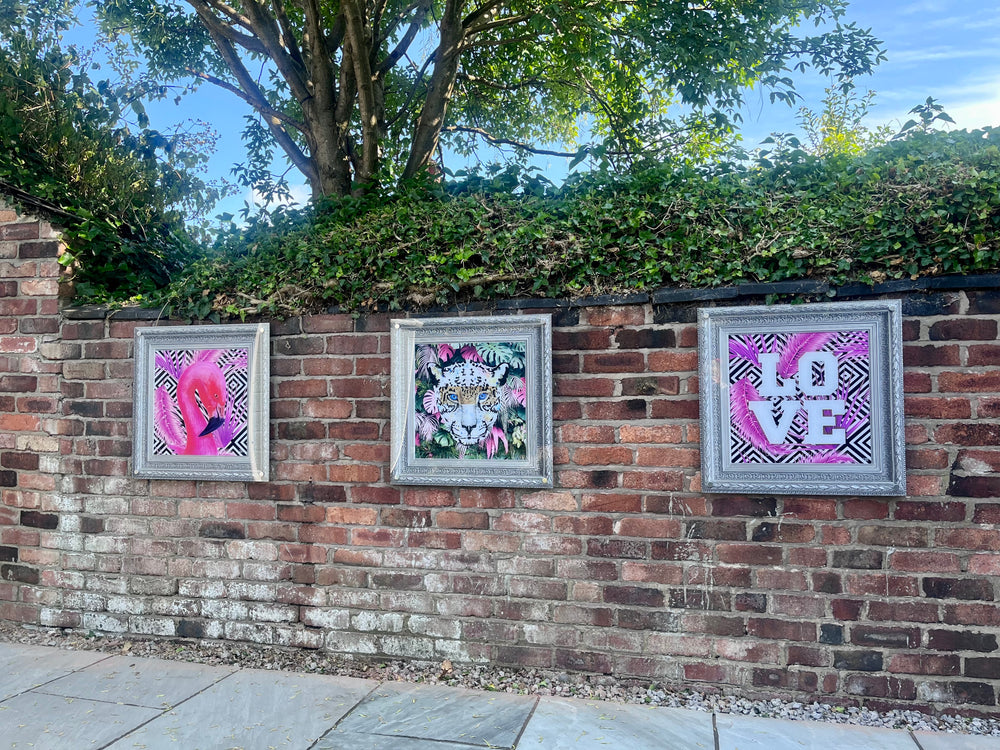
How to Decorate a Blank Garden Wall
A bare garden wall has a way of flattening the whole space. You can have smart paving, healthy planting and well-chosen furniture, but if one large vertical surface is left empty, the garden often feels unfinished. If you're wondering how to decorate a blank garden wall, the answer is rarely to fill it with just anything. The best results come from treating that wall as part of your overall design scheme, with the same care you would give a living room feature wall.
Start with what the wall is doing in the space
Before you choose décor, step back and look at the wall properly. Is it the main backdrop to a seating area, something you see from the kitchen, or a side boundary that needs softening? A wall viewed head-on from indoors can handle something bolder and more graphic. A wall that sits behind dining furniture may need decoration with enough presence to frame the area without making it feel crowded.
It also helps to think about light. A wall in full sun can carry darker artwork, stronger contrast and crisp modern styling. A shaded courtyard wall often benefits from lighter tones, reflective finishes and imagery that lifts the space rather than visually receding into it. This is one of the biggest differences between a garden that looks styled and one that looks pieced together.
Material matters too. Brick, rendered masonry and timber-clad surfaces all behave differently. Some walls already have character and only need one statement piece. Others are plain enough to need layering, texture or scale to stop them feeling stark.
How to decorate a blank garden wall without cluttering it
The easiest mistake is overfilling the area because it looks large. In practice, outdoor walls often look better with fewer, larger elements than lots of small ones. The garden has enough visual movement already through planting, changing light and seasonal colour. Your wall décor should bring structure.
That usually means choosing one of three routes. You can create a focal point, build a layered composition, or use the wall to support atmosphere with light and greenery. Which approach works best depends on the size of the wall and how polished you want the result to feel.
Use outdoor wall art as the anchor
If you want the cleanest transformation, outdoor wall art is usually the strongest option. It gives the eye somewhere to land, adds colour instantly and can shift the mood of the garden from purely practical to properly designed. This is especially effective in courtyards, patios and compact gardens where every surface needs to work harder.
The key is choosing art made for exterior conditions rather than trying to adapt indoor pieces. British gardens bring rain, fluctuating temperatures and long periods of damp, so durability is not a small detail. Weatherproof acrylic wall art has a sharper, more elevated look than many typical outdoor accessories, and it holds its finish far better when exposed to UV and water over time.
Style choice matters just as much as material. Botanical prints can soften brick and connect the wall to surrounding planting. Abstract pieces work well in contemporary spaces where you want shape and colour rather than a literal theme. Vintage-inspired designs can warm up older gardens, while bolder modern or street-art-led prints bring energy to minimalist patios. The wall should not feel separate from the garden. It should complete it.
Think in proportion, not just in style
Scale is where many garden walls go wrong. A small decorative item placed in the middle of a long fence or rendered wall tends to emphasise how empty everything else is. One oversized piece often looks more intentional than three modest ones scattered across the surface.
If the wall is particularly wide, a pair or triptych can work beautifully, especially behind an outdoor sofa or dining set. Repeating frames or panels creates rhythm without fuss. For narrower spaces, such as the end of a side return or a compact courtyard, one vertically oriented piece can make the wall feel taller and more resolved.
As a rough rule, your main wall feature should occupy enough space to feel connected to the area beneath it. If it sits above a bench, for example, it should look proportionate to the width of the seating rather than floating awkwardly above it.
Layer art with planting for a more finished look
A beautifully decorated wall rarely succeeds on its own. What happens around it matters. Planting is what stops the wall feature from looking pasted on and helps it belong to the garden.
Tall grasses, clipped shrubs, olive trees in pots or loose cottage-style planting can all work, depending on the setting. The trick is contrast. If your wall art is graphic and contemporary, soften the base with fuller planting shapes. If the artwork is delicate or botanical, more structured greenery can keep the composition from becoming too loose.
Containers are often the most flexible answer, especially on paved patios where in-ground planting is limited. Large pots placed asymmetrically around the wall can frame the art and give the whole section of the garden more presence. You do not need a row of identical planters unless the look is intentionally formal. Slight variation usually feels more natural.
Add lighting if you use the garden in the evening
A blank wall often disappears after dark, which is a missed opportunity if the garden is used for dining or entertaining. Lighting changes that completely. Even a simple wash of warm light can turn a plain wall into a backdrop. When paired with artwork, it creates depth and makes the garden feel designed well beyond daytime hours.
Wall lights should complement the décor rather than compete with it. If the art is the hero, choose discreet fittings that highlight it softly. If the wall itself is more architectural, with textured render or climbing plants, then lighting can be used more atmospherically.
The practical point here is that not every decorative choice performs equally at night. Brightly coloured pieces may lose impact in low light unless illuminated properly. Pale designs, glossy surfaces and art with strong contrast often hold up better in the evening.
When shelves, mirrors and extras work - and when they do not
There is a temptation to treat a garden wall like an indoor room and add lots of accessories. Sometimes that works, particularly in sheltered courtyards with a styled, intimate feel. But outdoors, restraint usually looks more expensive.
Shelving can be useful for displaying small pots or lanterns, though it tends to suit enclosed spaces more than open, weather-exposed gardens. Outdoor mirrors can bounce light around a shaded corner, but they need careful placement or they can look gimmicky very quickly. If the wall already has a strong view opposite it, reflection can be an asset. If not, a mirror may simply duplicate a fence or drainpipe.
This is where a single premium decorative feature often outperforms several smaller accessories. It is easier to maintain, visually stronger and less likely to date.
Match the decoration to the garden's style
The most successful answer to how to decorate a blank garden wall is not one universal idea. It depends on the mood you want to create.
In a modern garden, clean-lined outdoor art with bold composition can sharpen the whole scheme. On pale render or dark fencing, it adds instant contrast and gives simple furniture a more curated setting. In a softer, more relaxed garden, artwork with botanical, boho or vintage influence can bring personality without disrupting the planting-led feel.
For entertaining spaces, choose something with enough visual energy to hold its own behind dining sets or lounge seating. For quieter corners, a calmer piece may be better, especially if the aim is to create a retreat rather than a showpiece. There is no prize for filling every wall with maximum impact. Sometimes one thoughtfully chosen piece is what makes the whole garden click.
Practical details that make the finish feel polished
Installation height matters more than people expect. If art is hung too high, it can feel detached from the furniture and planting below. Too low, and it may feel cramped or vulnerable to splashes and foliage. Aim to position it so it relates clearly to the space it belongs to.
It is also worth considering what the wall looks like in winter. Summer planting can disguise awkward gaps, but in colder months the structure is more exposed. This is why durable outdoor wall art is such a useful design tool. It keeps the garden looking intentional even when borders are quieter.
If you are investing in decorative pieces, choose ones that are designed to cope with real weather rather than occasional sunshine. That confidence in performance is part of what makes an outdoor upgrade feel worthwhile. Brands such as YARDART UK have helped shift expectations here by offering art that is made specifically for outdoor living, not simply repurposed from indoor décor.
A blank garden wall is not a problem to hide. It is usable design space. Once you start seeing it that way, the choices become clearer, and the garden begins to feel less like an area outside the house and more like a room with sky above it.


Leave a comment