
How to Decorate Garden Seating Area Well
The difference between a garden seating area that gets used and one that gets ignored usually comes down to one thing - intention. A couple of chairs on paving might be practical, but they rarely feel inviting. If you are wondering how to decorate garden seating area spaces so they feel finished, comfortable and visually considered, the answer is to treat them like an outdoor room rather than an afterthought.
That shift changes everything. Instead of adding random accessories at the end, you start with mood, function and what the space needs to feel complete. The best garden seating areas look relaxed, but there is almost always a clear design idea behind them.
Start with the purpose of the space
Before choosing cushions, lanterns or planters, decide what the seating area is actually for. A compact bistro set in a sunny corner needs a different approach from a larger patio used for entertaining. If the space is for morning coffee, keep it calm and uncluttered. If it is where friends gather on summer evenings, you can be bolder with layers, lighting and decorative detail.
This matters because decoration works best when it supports how the space is used. Deep cushions look generous, but they may not suit a dining setup where people need upright seating. A fire pit creates atmosphere, but it can dominate a smaller courtyard. Good styling is never just about adding more. It is about choosing the right elements for the way you want to live outside.
How to decorate garden seating area layouts first
Layout is the part many people skip, yet it has the biggest impact on comfort. Even beautiful furniture can feel awkward if it is too far apart, pushed against every edge, or left floating without a focal point. Start by pulling seating into a conversational arrangement. People should be able to talk without raising their voices or twisting in their chairs.
Then think about what anchors the area. That might be an outdoor rug, a coffee table, a planted centrepiece or a striking wall feature. In gardens, visual structure matters because open-air spaces can feel scattered very quickly. When there is a clear centre, the whole area feels more deliberate.
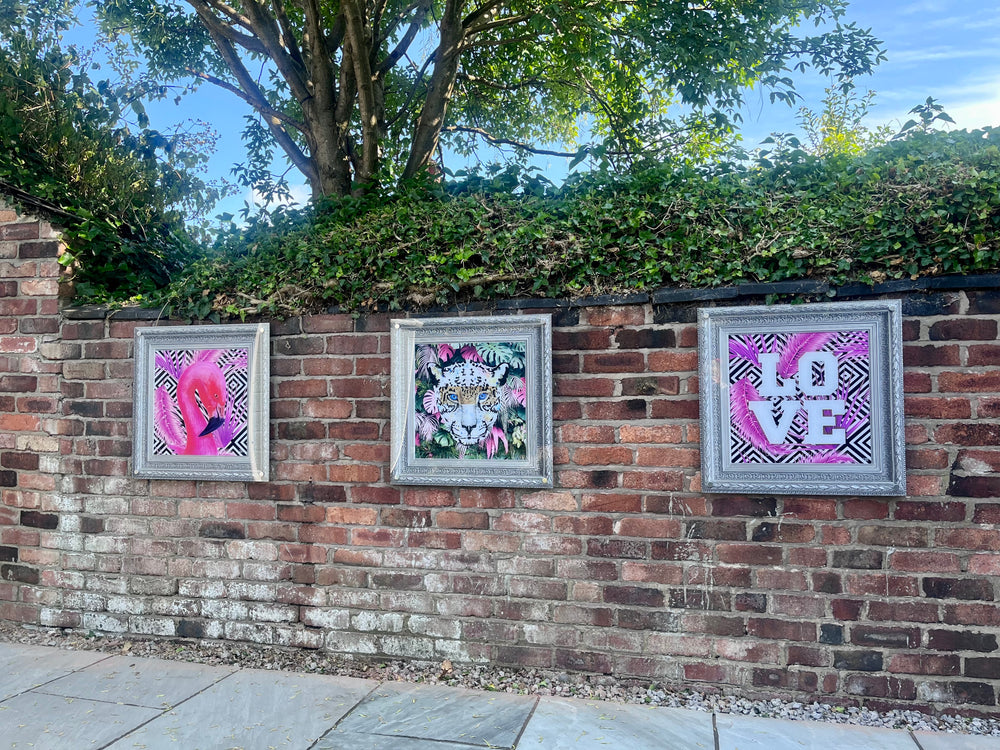
If your seating backs onto a fence, brick wall or exterior wall, use that surface properly. Blank vertical space often makes a seating area feel unfinished, even when the furniture itself is strong. Weatherproof outdoor art adds scale, colour and personality while helping the area read as a complete room. It is especially effective in courtyards and smaller gardens where walls are a major part of the view.
Choose a style direction and stay with it
The easiest way to make a garden seating area look expensive is to stop mixing too many ideas. You do not need everything to match, but the space should feel edited. Pick a direction and repeat it through materials, colours and shapes.
For a contemporary garden, that might mean clean-lined furniture, tonal cushions, charcoal planters and oversized abstract wall art. For a softer, more romantic setting, you might choose pale stone, botanical prints, textured fabrics and trailing greenery. If your taste is more eclectic, balance it carefully so it looks collected rather than chaotic. One statement artwork paired with simpler furniture often works better than several competing decorative pieces.
This is where outdoor wall art earns its place. It gives you a clear style cue that the rest of the area can follow. A vintage-inspired piece can warm up a plain patio. A modern acrylic print can sharpen a relaxed seating zone and make it feel more curated. The key is choosing something designed for the outdoors, so the finish holds up through rain, UV exposure and changing temperatures.
Use colour with confidence, but not everywhere
Garden seating areas already contain plenty of visual information - paving, plants, fencing, brick, timber and sky all contribute to the palette. That is why colour works best when it is controlled. Choose two or three main tones and repeat them across cushions, pots, throws and decorative accents.
If the garden is full of flowers and foliage, a quieter seating palette can feel more sophisticated. Natural shades such as olive, stone, sand and deep green sit well in most British gardens and do not date quickly. If your planting is fairly minimal, decoration can do more of the heavy lifting. In that case, richer tones such as terracotta, navy or ochre can bring energy without overwhelming the space.
Artwork is one of the simplest ways to introduce colour with purpose. Rather than scattering bright accessories across every surface, one well-placed outdoor piece can carry the palette and give the eye somewhere to settle. It also helps the area feel designed in a way that loose accessories rarely do.
Layer comfort so the space gets used
A seating area can look beautiful in photos and still fail in real life if it is not comfortable enough to linger in. That does not mean filling every seat with oversized cushions. It means layering in comfort where it counts.
Seat pads and back cushions should add support, not clutter. Throws are useful in the UK, where evenings can cool quickly even after a warm day. A side table for drinks or books makes the area more functional and more likely to be used. Shade matters too. A parasol, pergola or well-positioned planting can make a dramatic difference to how long people want to sit there.
There is always a balance to strike. Too little soft furnishing and the space feels hard. Too much and it starts to look fussy, with more maintenance than pleasure. Aim for comfort that feels effortless.
Lighting is what turns a patio into a destination
If you only use the garden in daylight, decoration has a limited effect. Lighting is what gives a seating area atmosphere and extends it into the evening. The best schemes mix practical light with softer accent lighting, so the space feels warm rather than overlit.
Wall-mounted fixtures help define the area, while portable lanterns and candles create intimacy at table level. Solar lights can be useful, though brightness and quality vary. If you want a polished result, keep the light warm and avoid overly blue tones that make the space feel cold.
Think about what you want illuminated. Plants with shape, textured walls and outdoor artwork all come alive when lit properly. A weatherproof art piece with subtle evening lighting can completely change the mood of a seating area, adding depth after dark when planting detail starts to disappear.
How to decorate garden seating area walls and boundaries
In many gardens, the seating area is framed by hard surfaces - fencing, rendered walls, brickwork or trellis. Those boundaries are not just background. They are part of the room. If they are left bare, the space can feel temporary, no matter how good the furniture is.
Start by deciding whether you want the boundary to recede or stand out. Painted fencing in a darker tone can make greenery and accessories feel richer. Lighter finishes keep things airy, especially in smaller spaces. Once the backdrop is right, add one or two decorative elements with real presence.
This is where product choice matters. Outdoor decor should not just look good on day one. It needs to withstand rain and sun without fading, warping or losing impact. Premium acrylic wall art designed for exterior display offers that combination of style and performance. It brings the decorative confidence of indoor art outside, which is exactly what many seating areas are missing.
At YARDART UK, that idea sits at the heart of outdoor styling - exterior spaces deserve the same visual attention as interiors, but the materials need to work harder.
Bring in planting as a framing device
Plants should soften the seating area, not swallow it. Use them to frame views, add height and create privacy where needed. Tall planters can make an exposed patio feel more enclosed. Low planting around the edges can make furniture sit more naturally in the garden.
Try to vary leaf shape and scale. If everything is dense and bushy, the area can feel heavy. If everything is sparse, it may feel unfinished. Evergreens provide structure throughout the year, while seasonal planting brings movement and colour. In smaller spaces, fewer larger pots often look smarter than lots of small containers dotted about.
The most successful seating areas usually balance planting with strong non-living elements such as furniture, textiles and art. That combination keeps the space feeling designed in every season, not only when the borders are in full bloom.
Finish with one focal point, not five
When people ask how to decorate garden seating area spaces beautifully, they often imagine lots of finishing touches. In reality, the smartest outdoor spaces are usually built around one strong idea. A statement wall artwork, a dramatic planting arrangement, a beautifully styled coffee table or a sculptural fire bowl can all do the job.
Once you have that focal point, everything else should support it. This prevents the area from becoming visually noisy and gives it a more confident, high-end feel. If something does not add comfort, function or style clarity, it probably does not need to be there.
A well-decorated garden seating area should feel easy to step into and hard to leave. When the layout works, the materials are right and the styling has a clear point of view, even a simple patio starts to feel like a destination in its own right.


Leave a comment