How to Hang Outdoor Wall Art Properly
A bare garden wall can make even a beautifully furnished patio feel unfinished. If you're wondering how to hang outdoor wall art, the real goal is not just getting it on the wall - it is placing it securely, proportionately and in a way that still looks polished after sun, rain and changing seasons.
Outdoor art has a different job from indoor décor. It has to handle weather, temperature shifts and open-air exposure while still giving your space the same design confidence you expect inside the house. That means the right hanging method depends on two things at once: the surface you are fixing to and the type of artwork you are displaying.
How to hang outdoor wall art with the right plan
Before you reach for a drill, step back and look at the wall as part of the whole outdoor setting. Art should feel intentional, not squeezed into leftover space. On a patio, that might mean centring a statement piece above a bench or outdoor sofa. Along a fence, it could mean using artwork to break up a run of timber and create a focal point near planting or dining areas.
Scale matters more outdoors because walls and fences often feel visually larger than interior rooms. A piece that looks generous indoors can appear undersized against brickwork or cladding. If you are hanging one artwork, give it enough presence to hold the space. If you are creating a grouped arrangement, keep the spacing even so the collection reads as one styled feature rather than several disconnected items.
It also helps to test the position before fixing anything permanently. Hold the piece in place, or use paper cut to size, and view it from different angles - from the seating area, from inside the house and from the far end of the garden. Outdoor art is often seen at a distance, so placement that feels right up close may need adjusting.
Choose the fixing method for your surface
The safest way to hang outdoor wall art depends entirely on the wall material. There is no single fixing that suits every outdoor surface, and this is where many installations go wrong.
Brick, stone and masonry
For exterior brick or masonry, screws with wall plugs are usually the most secure option. You will need to drill into the mortar or masonry itself, depending on the condition of the wall and the weight of the artwork. In most cases, a weather-resistant screw and a suitable plug create a more reliable hold than adhesive products, especially in exposed gardens where damp and temperature changes can weaken stick-on fixings over time.
If the artwork is large or heavy, use two fixing points rather than one. This spreads the load and helps prevent tilting in windy conditions. Stainless steel or other rust-resistant hardware is worth choosing from the start, because standard indoor fittings can stain the wall or deteriorate surprisingly quickly outside.
Timber fences and wooden structures
Fences, pergolas and timber-clad walls are generally simpler to work with, but they still need care. Exterior screws are usually the best choice, driven into sound timber rather than thin decorative slats. If your fence panels are ageing, warped or soft from moisture, the panel may not be strong enough to support a substantial art piece on its own. In that case, fix into a fence post, rail or more structurally solid section.
Wood also expands and contracts with weather changes, so avoid forcing fixings too tightly. Secure is essential, but overtightening can stress the artwork or distort the hanging point.
Render, cladding and other modern exterior finishes
Rendered walls and composite cladding can look sleek, but they often need a more considered approach. Some finishes can crack if drilled incorrectly, and some cladding systems should only be fixed at certain points. If you are unsure, check what sits beneath the surface before hanging anything substantial.
This is one of those moments where "quick and easy" is not always the best route. A carefully placed fixing will preserve both the wall and the artwork.
Think beyond the wall itself
Weather exposure changes how art behaves outdoors. A sheltered courtyard wall is very different from a fully exposed fence facing wind and rain. Even weatherproof artwork benefits from sensible placement.
Sunlight matters visually too. A reflective acrylic surface can look striking in natural light, but you will get the best effect by considering glare. A piece hung opposite intense afternoon sun may lose some of its impact at certain times of day. Often, a slight shift in height or angle makes all the difference.
How high should outdoor art be hung?
The simplest answer is at eye level relative to how the space is used. On a patio with dining furniture, art should usually sit low enough to connect with seated sightlines. On an exterior wall viewed mostly while standing, a slightly higher centre point can work well.
The mistake people often make is hanging outdoor wall art too high because exterior walls feel tall and open. That can leave the piece floating without connection to furniture, planters or surrounding features. The strongest outdoor styling usually comes from visual relationships - art aligned with the top of a bench, centred over a console table, or balanced with nearby lighting and planting.
If you are hanging art above furniture, leave enough breathing room so it does not feel cramped. As a rule, it should look anchored to the area below it, not stranded above it.
Use hardware that can handle outdoor conditions
This is where practical decisions protect the overall look. Outdoor wall art may be designed for weather resistance, but poor-quality fixings can still undermine the installation.
Choose rust-resistant screws, hooks and hanging hardware suitable for exterior use. If the artwork comes with integrated hanging points, check that they are level before fixing. For larger panels, a pair of fixings often gives a cleaner, more stable result than a single central hook.
Adhesive hooks can seem appealing for renters or anyone avoiding drills, but outdoors they are a compromise. They may hold temporarily on smooth, sheltered surfaces, yet rain, frost and heat can reduce their reliability. For lightweight decorative pieces in very protected spots, they may be enough. For premium outdoor artwork intended to stay in place and look refined, mechanical fixings are usually the stronger choice.
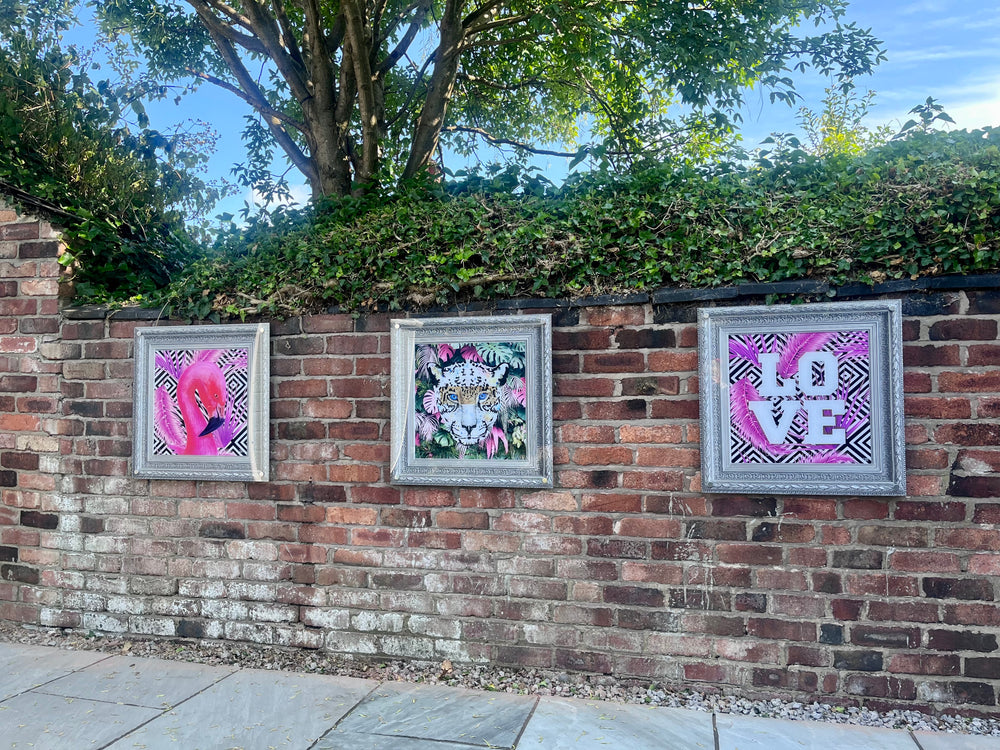
With the final finish, YardArt provides all-weather architectural standoff bolts to enhance the 3D frame effect, while allowing the piece to sit slightly away from the surface to help prevent damp build-up.
Styling outdoor wall art so it looks intentional
Secure hanging is only half the job. The other half is making the artwork feel as if it belongs there.
Start with the character of the space. A modern terrace can handle bold abstracts, monochrome designs or clean-lined statement pieces. A softer garden setting may suit botanicals, vintage-inspired prints or art that picks up surrounding greens, stone tones and natural textures. The aim is not to match everything exactly. It is to create a considered relationship between the art and the wider outdoor scheme.
Spacing matters around the piece as much as the piece itself. Let statement works breathe. If you surround them with too many lanterns, shelves and wall accessories, the result can feel cluttered. Outdoor art tends to make a stronger impact when it has room to lead.
If you want a gallery feel, keep the arrangement structured. Use even gaps, align edges where possible, and repeat materials or tones so the display feels curated rather than improvised. This is especially effective in covered entertaining areas where the wall acts almost like an outdoor room.
Common mistakes to avoid
Most outdoor hanging problems come down to rushing. People choose the artwork first, then improvise the installation. A little planning avoids the usual issues: fixings that rust, art hung too high, pieces that are too small for the wall, or placement on surfaces that are not sound enough to support them.
Another mistake is treating exterior styling as purely functional. Gardens, courtyards and patios deserve the same visual attention as interiors. A strong piece of outdoor art can change the atmosphere of a seating area, sharpen the architecture of a plain wall or give a fence line genuine decorative purpose. That shift happens when installation is done with both design and durability in mind.
If you are investing in outdoor-grade acrylic artwork, as many customers do with specialist collections such as those from YARDART UK, the hanging method should match the quality of the piece. Premium art deserves more than a temporary fix.
A final check before you finish
Once the artwork is installed, step back again. Check that it sits level, feels proportionate and works from the main viewing points in the garden. Look at it in bright daylight and, if relevant, with your evening outdoor lighting switched on.
The best outdoor wall art does not just fill empty space. It gives the area identity. Hang it with care, and your patio, fence or exterior wall starts to feel less like a boundary and more like part of a designed home.


Leave a comment