How to Make a Patio Feel Finished
A patio rarely feels unfinished because it is missing one big thing. More often, it is missing a few smaller decisions that help the space look intentional rather than temporary. If you are wondering how to make a patio feel finished, the answer usually comes down to structure, balance and personality - the same principles that make an interior feel pulled together.
A paved area with chairs and a table can be perfectly usable and still feel flat. The difference between functional and finished is whether the space looks designed. That does not mean overfilling it. In fact, the best patios often have fewer elements, chosen with more purpose.
How to make a patio feel finished starts with the layout
The fastest way to make a patio look incomplete is to treat it like a holding area for outdoor furniture. A finished patio has zones, even in a compact garden. You should be able to tell where people sit, where they put a drink down, how they move through the space and what the focal point is.
Start by looking at proportion. If your dining set is too small for the footprint, the patio can feel empty and underdressed. If everything is pushed to the edges, it can look like you are waiting for something else to arrive. Pull furniture into a more deliberate arrangement so it feels anchored. A seating area should read as a group, not a scattering of individual items.
This is also where shape matters. A rectangular patio often benefits from being visually broken into smaller areas through a rug, a planter grouping or a bench against one wall. On a smaller square patio, one strong arrangement usually works better than several competing moments. Finished spaces tend to have a clear hierarchy.
Give the eye somewhere to land
Every well-resolved patio has a focal point. Without one, the whole area can feel visually vague. In some gardens, that focal point is a fireplace or a statement planter. In many patios, especially enclosed ones, the most effective focal point is the vertical surface people tend to ignore - the wall, fence or exterior boundary.
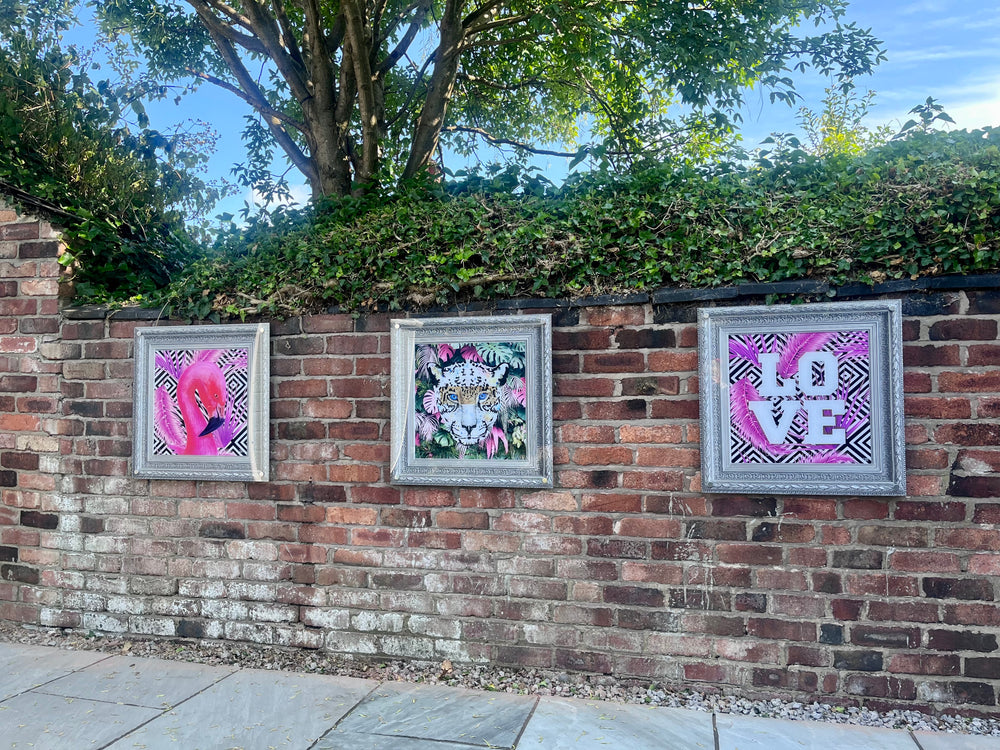
This is where outdoor art makes an immediate difference. It adds intention to a space in a way that cushions and pots alone often cannot. More importantly, it helps the patio feel decorated, not just furnished. A weatherproof wall piece can visually complete a blank wall, introduce colour and create the same finished effect you would expect from artwork in a sitting room.
The key is scale. One undersized piece on a large fence can look apologetic. A larger statement artwork, or a considered pairing, usually feels more convincing and more architectural. Choose something that complements the style of the space rather than matching every detail exactly. Contrast often looks more curated.
Layer the patio like an interior
A patio feels finished when it has depth. That usually comes from layering materials, textures and heights so the space does not sit on one visual plane.
Soft furnishings help, but they are only one layer. An outdoor rug can define a seating area and warm up paving that feels stark. Cushions add comfort and colour. But if that is where the styling stops, the patio can still feel surface-level. The more complete look comes from mixing grounded pieces with vertical elements and natural forms.
Planting does a lot of this work. Tall planters, trailing greenery and varied leaf shapes soften hard edges and stop the patio from feeling too rigid. If your scheme is very architectural, a few looser plants can prevent it from looking cold. If your planting is already abundant, a cleaner furniture silhouette can stop the space feeling busy. It depends on the balance you want.
Lighting is another finishing layer people often leave until last, then wonder why the patio only looks good in daylight. Soft wall lighting, lanterns or subtle festoon lights can turn an ordinary setup into a space that feels ready to use in the evening. Good lighting also makes the patio feel lived in and looked after.
Use repetition without making it predictable
A finished patio usually has some repetition in colour, material or form. That does not mean everything must match. In fact, too much matching can make a space feel flat and showroom-like.
Instead, repeat one or two visual cues. That might be black accents across planters, lighting and furniture frames, or a palette of sage, stone and off-white running through textiles and planting. Outdoor wall art is particularly useful here because it can pull together tones already present in the garden and make the whole scheme feel more resolved.
If you love bolder styling, repetition still matters. A vivid print, patterned cushion and glazed planter can work beautifully together when there is one shared thread, whether that is colour temperature, shape or mood. The aim is not perfection. It is coherence.
Why patios often feel unfinished even after styling
Sometimes homeowners add plenty of decorative pieces and the patio still does not feel complete. Usually, one of three things is happening.
The first is that everything is happening at ground level. Chairs, pots and side tables all sit low, so the eye never travels upward. The space then feels visually chopped off. Adding height through planting, screens or outdoor wall art solves that quickly.
The second is that the patio lacks contrast. If your paving, furniture, fencing and accessories are all similar in tone, the scheme can blur together. Introducing a darker accent, a warmer natural texture or a statement artwork gives the space definition.
The third is that the patio has function but no identity. A table and chairs tell people what to do there, but not how the space is meant to feel. This is where style choices matter. A modern courtyard might call for abstract artwork, sculptural pots and restrained planting. A softer garden patio may suit botanical prints, textured textiles and relaxed layering. Finished spaces tend to have a point of view.
The details that quietly complete the space
Small finishing details matter because they remove the sense that the patio is still in progress. That might mean hiding obvious clutter, replacing tired cushions, repainting a worn fence or upgrading a flimsy parasol that drags the whole look down.
It is worth being selective here. Not every patio needs a fire pit, storage bench and outdoor kitchen. Sometimes those additions create more visual noise than value. A finished patio is not the one with the most features. It is the one where each element earns its place.
Practicality counts too. If your décor cannot cope with rain, sun and temperature changes, it will not look finished for long. Weatherproof materials are part of good design, not a separate concern. Outdoor wall art made specifically for exterior use is a good example. It brings decorative impact without the worry of using something indoors that simply is not built for outdoor conditions.
For British gardens in particular, where the weather can change its mind by lunchtime, durability is part of what makes a space feel confidently designed. There is a big difference between a patio that looks styled for a photo and one that holds its look through the seasons.
How to make a patio feel finished without overcrowding it
If your patio is on the smaller side, restraint matters. People often try to compensate for limited space by adding more accessories, but the result can feel cramped rather than complete. A better approach is to choose fewer, stronger elements.
One generous piece of outdoor art can do more for a compact patio than several tiny decorative items. The same goes for a pair of substantial planters instead of lots of small pots. When each piece has presence, the space feels considered.
Leave some breathing room too. Negative space is not emptiness if the composition is working. It allows the eye to appreciate what is there. A finished patio feels settled, not stuffed.
If you are updating the space gradually, begin with the most visible surfaces. Tired walls, bare fences and empty vertical areas often create the unfinished feeling in the first place. Once those are addressed, the rest of the patio tends to fall into place more easily. That is one reason brands such as YARDART UK focus on treating exterior walls as a design opportunity rather than an afterthought.
The real shift happens when you stop thinking of the patio as separate from the home. Style it with the same confidence you would bring to a living room. Give it artwork, shape, atmosphere and materials that feel chosen. Once the space reflects a clear idea instead of a collection of outdoor items, it starts to feel complete almost immediately.
A finished patio does not need to be elaborate. It just needs to look like somebody meant it.


Leave a comment