How to Style Patio Art That Actually Works
A blank patio wall can make even a beautifully furnished garden feel unfinished. If you are wondering how to style patio art, the answer is not simply choosing a piece you like and hanging it outside. The best results come from treating your patio as a designed room - one with sightlines, materials, mood and practical demands of its own.
Outdoor art works hardest when it feels intentional. It should connect with your planting, furniture, paving and architecture, while still bringing enough personality to change the atmosphere of the space. Get that balance right, and a plain seating area becomes a destination.
How to style patio art with the space you have
Before you think about subject matter or colour, start with the wall itself. Size, texture and distance matter more outdoors because everything is visually spread out. A piece that looks generous in a showroom can disappear against a long fence or broad brick wall.
Look at your patio from the spots where people actually spend time - dining chairs, a sofa, the back door and any route through the garden. If the wall is seen from several angles, the artwork needs enough presence to read clearly from a distance. On a compact courtyard, one strong piece can anchor the whole scheme. On a larger patio, a grouping may work better because it helps fill visual space without looking lost.
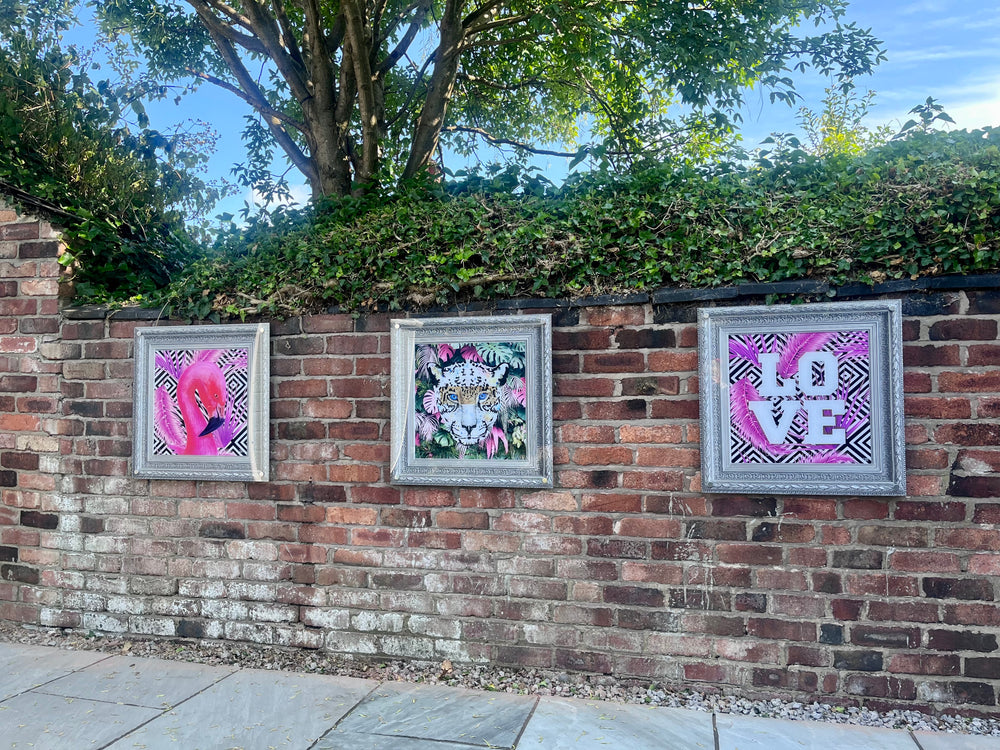
Surface also changes the effect. Clean rendered walls create a crisp gallery-style backdrop. Timber fencing feels more relaxed and benefits from art with stronger contrast or bolder shapes. Brick and stone already have plenty of pattern, so artwork with a clear focal point usually performs better than something too intricate.
This is the point where scale becomes non-negotiable. If your art is too small, the patio will still feel empty. If it is too large, it can overwhelm seating and planting. A useful rule is to aim for artwork that fills around two-thirds of the width of the zone you want to style, whether that is a dining nook, a bench or a section of wall between doors and windows.
Start with the mood, not just the artwork
Patio styling works best when you decide what the space should feel like first. Calm and minimal? Lush and layered? Sociable and energetic? The artwork should reinforce that intention rather than fight against it.
For a contemporary patio with structured planting, clean-lined furniture and neutral paving, abstract pieces often feel right because they echo the modern architecture without becoming predictable. If your garden leans softer - think textured cushions, trailing greenery and warm timber - botanical or boho-inspired art can bring cohesion without trying too hard. Vintage prints can add charm to traditional patios, especially where there are older brick walls, painted benches or classic garden pots.
The trade-off is that highly themed choices can date a space more quickly. If you like switching up soft furnishings or seasonal styling, choose art with a flexible palette and a subject that will still suit the setting in a few years. If you want immediate impact and a stronger design statement, lean into something more distinctive.
Use colour to connect the patio together
When people ask how to style patio art, they are often really asking how to make the whole patio feel pulled together. Colour does most of that work.
The easiest route is repetition. Pick up tones already present in your outdoor furniture, planters or doors, and let the artwork carry them through the wall space. This makes the art feel integrated rather than added on at the end. Deep greens, soft stone tones, charcoal, rust and muted blues tend to sit well outdoors because they complement natural surroundings without draining the space of energy.
If your patio is built around a neutral palette, artwork is your chance to introduce contrast. A vivid print can stop beige paving and pale render from feeling flat. On the other hand, if your cushions, parasol and planting are already doing a lot visually, quieter art may create a better sense of balance.
Light matters too. Strong sun can sharpen bright colours beautifully, but in shaded patios darker tones may read richer and more sophisticated. In a north-facing garden, pale or high-contrast artwork often gives more lift than muddy mid-tones.
Placement is what makes it look expensive
Good placement is the difference between a patio that feels designed and one that feels improvised. Art should relate to furniture below it, not float awkwardly above it.
If you are hanging a single piece above an outdoor sofa or bench, keep it visually tied to that arrangement. Too high, and it disconnects from the seating zone. Too low, and it can feel cramped. Aim for a position where the piece sits comfortably in the viewer's line of sight when seated and standing.
For dining areas, artwork can help define the entertaining zone, especially on boundary walls that would otherwise fade into the background. In smaller patios, placing one statement piece opposite the door creates an immediate focal point and makes the whole space feel more considered the moment you step outside.
Grouped arrangements can work well, but only if they are deliberate. Matching sizes create order and symmetry. Mixed sizes feel more collected and relaxed, though they need a clear structure. Outdoors, looser spacing often works better than tightly packed grids because the surrounding environment already contains visual texture from plants, shadows and materials.
Match the art to the way you use the patio
A patio used for long lunches and evening drinks needs different styling from a quiet reading corner or a slim side return. The art should support the purpose of the space.
In entertaining areas, go bolder. Larger formats, stronger graphic shapes and confident colours help create presence and energy. In more intimate corners, subtle pieces can be more effective because they reward close viewing and add atmosphere without dominating.
This is also where material quality matters. Outdoor spaces are exposed to rain, UV, temperature changes and general wear. Artwork designed specifically for exterior use keeps its finish and impact far better than pieces never meant to live outdoors. Weatherproof acrylic options are especially useful when you want the polished look of wall art with the reassurance that it can handle real conditions rather than just a few sunny weeks.
Practicality is part of style. If something fades, warps or looks tired after one season, it stops elevating the space. It becomes another job on the list.
How to style patio art around planting and texture
Plants and art should work together, not compete for attention. If your wall already has climbing greenery, choose artwork that can still hold its own among leaves and changing shadows. Strong outlines, defined compositions and confident colour contrast tend to fare best.
If your planting is minimal, the artwork can do more of the decorative lifting. This is especially useful on new patios that feel a bit bare while the garden establishes itself. Art adds instant maturity and structure, even before the planting fills out.
Texture matters too. Smooth outdoor wall art creates a smart contrast against rough brick, timber slats or dense foliage. That mix is often what gives a patio its layered, professionally styled feel. You do not need every surface to match. In fact, it usually looks better when they do not.
A few styling mistakes worth avoiding
The most common mistake is going too timid with scale. Outdoor spaces absorb visual detail, so small pieces often vanish. The second is choosing artwork in isolation, without considering the colours and shapes already in the patio.
Another issue is overcrowding. Not every wall needs decoration. One statement piece placed well can look far stronger than several smaller ones competing with furniture, lanterns and planting. And while symmetry can look elegant, it is not always the answer. If your patio is informal and full of movement, a perfectly rigid arrangement may feel out of place.
Finally, do not ignore installation. Art that is easy to mount well is far more likely to look polished from day one. That practical confidence matters, especially when styling exterior walls where durability and presentation need to go hand in hand.
The finishing layer that changes everything
The reason patio art has such a strong effect is simple. It shifts the space from functional to expressive. Furniture gives you somewhere to sit. Planting gives softness and life. Art gives the patio a point of view.
That is why outdoor wall art works so well in gardens that already have the basics in place but still feel like they are missing something. It provides structure, character and a focal point without asking you to redesign the whole space. For homeowners who want the patio to feel every bit as styled as the interior, that is often the smartest upgrade.
If you are choosing carefully, think less about filling a wall and more about shaping the experience of the space. The right piece does not just decorate the patio - it makes the whole setting feel finished.


Leave a comment