Large Outdoor Wall Art Panels That Transform
A blank garden wall can flatten an otherwise beautiful space. You might have the planting, the furniture and the lighting sorted, yet one large empty surface still makes the whole area feel unfinished. Large outdoor wall art panels solve that problem quickly and convincingly, turning fences, patios and exterior walls into part of the design rather than the background.
What makes them so effective is scale. Smaller accessories can get lost outside, especially against brick, render or long timber fencing. A larger panel holds its own in open air, adds structure to the space and creates a clear focal point. It gives the eye somewhere to land, which is often exactly what a patio or courtyard has been missing.
Why large outdoor wall art panels work so well outside
Outdoor spaces tend to need bolder decisions than interiors. Sunlight is brighter, sight lines are longer, and materials such as stone, brick and timber can absorb detail unless something with real visual presence is introduced. Large outdoor wall art panels bring that presence without the need for major renovation.
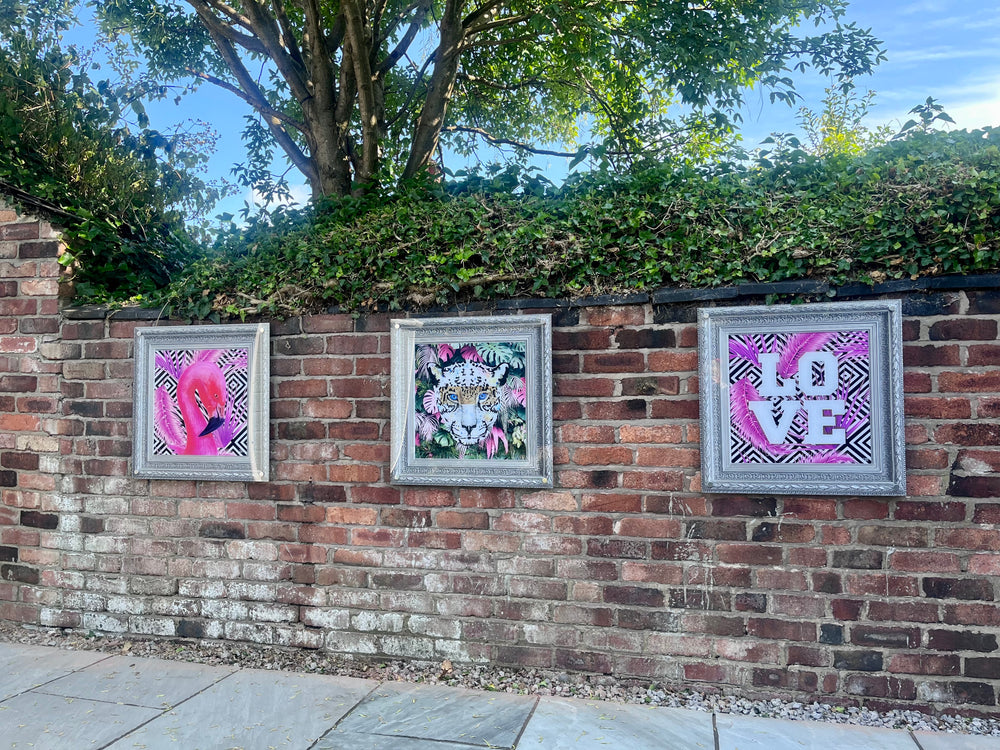
They also help define how a space feels. A modern abstract panel can sharpen a minimalist terrace. A botanical design can soften a sheltered seating area. Vintage-inspired artwork can add warmth to a brick courtyard, while street art can bring energy to a more contemporary garden scheme. The panel is decorative, but it also sets the tone.
There is a practical side to this as well. Many homeowners want their garden to feel designed, not just furnished. That means treating outdoor walls with the same attention you would give an interior room. Art does that better than most finishing touches because it introduces colour, mood and personality in one move.
Choosing large outdoor wall art panels for your space
The right piece depends on more than personal taste. Scale, placement and the surrounding finishes matter just as much as the image itself.
Start with the wall. A long horizontal fence panel usually suits a wider artwork, while a narrow section between doors or windows often benefits from a portrait format. If the wall is expansive, one substantial panel can feel crisp and architectural. In other settings, a diptych or triptych effect may create better balance, but only if the spacing feels intentional.
Colour should respond to the setting rather than compete with it. If your outdoor furniture is neutral and your planting is lush, bolder art can become the feature. If the garden already has plenty of visual movement, a cleaner composition may work harder. This is where many people go wrong. They choose an image they like in isolation, rather than one that improves the space it is going into.
Material finish matters too. Outdoor art needs to look refined up close, but it also needs to perform in changing weather. Premium outdoor-grade acrylic has a clarity and depth that suits large-format design especially well. It gives artwork a polished appearance while standing up to rain, UV exposure and general outdoor wear far better than standard indoor alternatives.
Style direction: what suits different gardens
A sleek paved patio with black-framed doors usually benefits from artwork with strong contrast, clean lines or modern graphic detail. Abstracts, monochrome pieces and contemporary compositions can reinforce that crisp, designed look.
If your garden is softer and more layered, think about botanical, boho or vintage-inspired imagery. These styles sit comfortably against planting and natural textures without disappearing into them. They add personality, but in a way that still feels connected to the landscape.
For entertaining areas, there is often room to be bolder. A statement piece near an outdoor dining set or lounge zone helps the whole area feel curated. It makes the garden feel less like a leftover patch of exterior space and more like an outdoor room.
That said, contrast can be useful. A classic brick wall with a contemporary artwork can look striking. A newer build can gain character from something more expressive or nostalgic. The best result is rarely about matching everything perfectly. It is about making deliberate choices that give the space identity.
Weatherproof performance is not a detail
With outdoor decor, appearance gets attention first, but durability is what determines whether the purchase still feels smart a year later. This is especially true with larger pieces, because they take on a bigger visual role.
Art made specifically for outdoor display is different from artwork simply placed outside. It should be produced on materials designed to handle moisture, sunlight and temperature changes. UV resistance helps preserve colour clarity. Water resistance helps prevent obvious deterioration. A solid, outdoor-ready construction helps the panel maintain its finish and structure through changing conditions.
This is one of the biggest distinctions in the category. Many decorative pieces look appealing online but are not built for long-term exterior display. Fading, peeling and general tiredness can set in quickly. If you are investing in a feature piece, performance should be part of the design brief from the start, not an afterthought.
For style-conscious homeowners, that reliability matters because outdoor walls are often visible from inside the house as well. If the artwork degrades, the whole view suffers. When the piece is made for real outdoor living, it continues to elevate both the garden and the interior outlook.
Placement makes the difference
Even the right artwork can underperform if it is badly positioned. Height is usually the first issue. Panels hung too high can feel disconnected from furniture and planting, while pieces set too low can seem visually crowded. As a general rule, align the art with the part of the space people actually use and look towards.
Think about natural framing. A panel above a bench, behind a dining table or at the end of a path will feel more purposeful than something placed arbitrarily on an empty wall. Consider how it looks from key angles - from the kitchen doors, from your main seating area, and from deeper in the garden.
Light changes the effect too. Gloss and colour can look different in full sun than in shade, so placement should account for how the wall behaves throughout the day. Some designs come alive in bright light. Others benefit from softer conditions where detail and tone can be appreciated more evenly.
Installation should also be simple enough to feel achievable. That matters more than people admit. If a large piece feels difficult to mount, it often ends up delayed or poorly placed. Well-considered outdoor art should offer impact without creating unnecessary friction.
Large-scale art is often the fastest garden upgrade
There are plenty of ways to improve an outdoor space, but most involve time, labour or expense. Re-landscaping is disruptive. Built-in features require planning. Even repainting fences can become a bigger project than expected. Large outdoor wall art panels offer a different kind of transformation. They deliver visual change quickly, without altering the structure of the garden.
That speed is part of their appeal, but not the whole story. They also add a level of finish that many gardens lack. A well-styled exterior space is not just practical and tidy. It has points of interest, layers of texture and something memorable about it. Art supplies that final layer.
For homeowners who care about design, this is where outdoor spaces start to feel intentional. The patio becomes more inviting. The side return gains character. The bare wall at the back of the garden finally earns its place in the scheme. One well-chosen panel can do more than a collection of smaller accessories because it changes the reading of the space in a single glance.
At YARDART UK, that is exactly the point: outdoor walls deserve art made for outdoor living, not second-best decor that happens to survive a few showers. When the artwork has both visual authority and genuine weatherproof performance, you can style with confidence.
The most successful gardens are rarely the ones with the most features. They are the ones where every element feels considered - including the walls. If your exterior space looks good but still feels like it is missing something, a large statement panel is often the piece that brings it all together.


Leave a comment