12 Modern Garden Design Ideas That Work
A modern garden rarely needs more stuff. It needs more intention. The best modern garden design ideas are less about filling every corner and more about giving shape, contrast and purpose to the space you already have.
That matters whether you have a compact courtyard, a long suburban plot or a paved entertaining area that still feels unfinished. Modern garden styling works best when every element earns its place - planting, paving, seating, lighting and, often overlooked, the walls that frame the whole scene. Once those surfaces are treated as part of the design rather than dead space, a garden starts to feel considered instead of merely maintained.
What makes modern garden design ideas feel current?
Modern gardens are usually built around clarity. Clean lines, restrained planting palettes, repeated materials and strong focal points do most of the visual work. That does not mean cold or minimal for the sake of it. A successful modern scheme still feels lived in, relaxed and personal.
The difference is editing. Rather than mixing too many finishes, colours or decorative themes, modern design tends to narrow the palette and let texture do more. Pale porcelain, dark timber, architectural grasses, poured concrete planters, soft outdoor upholstery and weatherproof wall art can sit together beautifully because each brings contrast without clutter.
There is also a practical side to the look. Contemporary outdoor spaces are expected to perform. They need to cope with changing weather, occasional neglect, easy cleaning and real use. If something is stylish but cannot stand up to rain, strong light or everyday wear, it rarely belongs in a modern garden for long.
Modern garden design ideas for structure first
The strongest gardens usually start with layout rather than decoration. If the bones are right, even a simple scheme looks expensive.
Create zones without chopping up the space
Modern gardens often include dining, lounging and planting areas, but those zones should flow. Instead of hard dividers everywhere, use changes in material, level or orientation. A paved dining terrace can run into a gravel strip with oversized planters, then soften into a planted border. The eye reads separate uses without the garden feeling fragmented.
In smaller spaces, this matters even more. Too many boundaries make a garden feel busy and cramped. One clean path, one defined seating spot and one focal wall can do more than several tiny features competing for attention.
Work with a limited material palette
If you want a modern result, choose fewer finishes and use them well. Two or three core materials are usually enough - perhaps porcelain paving, painted timber and stone-toned planters. Repetition creates calm.
This is where many gardens slip off course. A contemporary sofa, rustic fence stain, traditional trellis and ornate pots can all be good pieces individually, but together they pull in different directions. Consistency is what makes a garden look designed.
Use walls as part of the design
Garden walls, fences and exterior surfaces often take up more visual space than the planting itself. Leaving them blank is like decorating a sitting room and ignoring every wall.
Turn dead walls into focal points
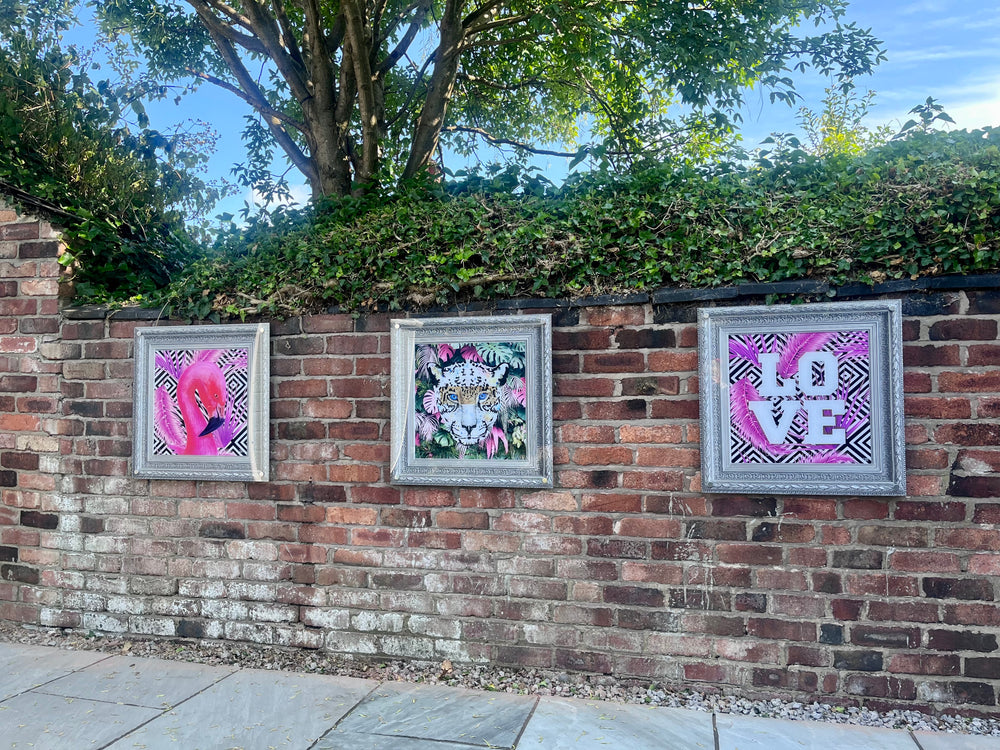
A modern garden benefits from one clear point of attention. That might be a rendered wall, a painted fence in a deep neutral, or a large-format piece of weatherproof outdoor wall art that anchors the seating area. This works especially well in courtyards and patios, where the vertical plane is always in view.
The key is scale. Small decorative pieces can disappear outdoors, particularly against brick or fencing. A single larger artwork or a carefully grouped arrangement tends to feel more confident and more architectural. It also helps balance hard landscaping, giving the space personality without relying on excess planting.
For homes where the garden is used as an extension of the interior, this approach makes particular sense. Outdoor walls deserve the same visual attention as indoor ones, provided the finish is made for exposure to UV, rain and seasonal temperature shifts.
Planting for a modern garden
Modern planting is rarely about stuffing beds full of variety. It is about shape, rhythm and season-long interest.
Choose form over fussiness
Architectural plants instantly sharpen a scheme. Think clipped evergreens, airy grasses, alliums, agapanthus, verbena and plants with strong silhouettes. Repeating a smaller number of species usually looks more polished than cramming in every favourite.
That said, modern does not have to mean sparse. If you prefer a softer look, keep the planting generous but controlled. Limit the colour palette, repeat key textures and let one or two plants take the lead. A looser planting style can still feel contemporary if the framework around it is clean.
Keep colour disciplined
You do not need to avoid colour, but you do need to place it deliberately. Modern gardens often rely on greens, whites, purples and soft pinks because they sit comfortably against stone, charcoal and timber. Hot colours can work too, though usually in smaller doses.
This is also where outdoor art can do something planting cannot. Flowers change, fade and disappear with the season. A bold abstract, botanical or monochrome piece can hold a colour story in place all year, giving continuity when beds are between peaks.
Modern garden design ideas for furniture and styling
Furniture in a contemporary garden should feel visually light but substantial enough to hold the space.
Go low, simple and comfortable
Modern outdoor seating tends to have cleaner silhouettes, lower profiles and better proportions than traditional sets. Straight lines, generous cushions and understated finishes usually work best. The goal is not showroom stiffness. It is comfort with discipline.
If your space is compact, built-in seating can be worth considering. It reduces visual clutter and can make an awkward corner feel intentional. Add texture with cushions and throws rather than introducing several competing furniture styles.
Layer texture instead of adding clutter
A modern garden still needs warmth. Texture is what stops it feeling flat. Timber slats, woven planters, soft fabrics, matte ceramics and acrylic outdoor artwork all add depth without making the scheme look busy.
This is where quality matters. One well-made statement piece often has more impact than several cheaper accessories that weather badly. The modern look depends on surfaces staying sharp, colours staying true and details holding up over time.
Lighting that supports the design
Garden lighting can either elevate a modern scheme or make it feel overdone. Restraint usually wins.
Light the edges, not just the middle
Instead of relying on one bright fitting, layer softer sources. Uplighting a specimen plant, washing light across a textured wall and adding subtle illumination near seating creates atmosphere and depth. It also extends the usefulness of the garden long after sunset.
Think about what you want to see from inside as well. A modern garden should look considered through the windows in winter evenings, not disappear into darkness. Lighting a focal wall or outdoor artwork helps the garden stay part of the home year-round.
Balancing beauty with durability
Good outdoor design always comes back to performance. Contemporary gardens may look effortless, but the best ones are chosen carefully.
Pick finishes that can cope with real weather
The British climate is not kind to decorative shortcuts. Rain, frost, algae, direct sun and temperature swings all test outdoor materials. That is why weather resistance is not a side note. It is part of the design brief.
When choosing decorative pieces, especially for exposed walls or open patios, look for products made specifically for outdoor use rather than indoor décor repurposed outside. UV stability, water resistance and straightforward installation all matter. A beautiful garden feature stops being good value the moment it fades, warps or needs replacing after one season.
When modern garden design ideas need softening
Not every home suits a hard-edged contemporary garden. Period properties, cottage-style surroundings and family gardens often benefit from a softer interpretation.
That might mean pairing crisp paving with looser planting, or introducing modern artwork into a garden with more traditional greenery. The point is not to force a trend. It is to create contrast in a way that still feels right for the house and how you live.
For some, a strictly minimal garden feels too stark. For others, a more layered and art-led approach brings the right amount of character. It depends on the architecture, the amount of maintenance you want to take on and whether the space is mainly for entertaining, relaxing or everyday family use.
A modern garden should feel finished
Many outdoor spaces are functional but never quite resolved. The paving is done, the furniture is in place, the planting is growing, yet something still feels missing. Usually it is definition. A focal point, a stronger palette or a better use of vertical surfaces can bring the whole scheme together.
That is why the most effective modern garden design ideas are rarely the flashiest ones. They are the choices that make the garden feel intentional from every angle - from the back door, from the seating area and from inside the house looking out. If you treat the garden as a designed room with weatherproof materials and visual confidence, it starts to deliver far more than a nice patch of outside space.
A well-designed garden does not need to shout. It just needs to look like every element was chosen on purpose.


Leave a comment