Modern Garden Wall Art That Transforms Space
A bare fence panel or tired brick wall can flatten an otherwise beautiful garden. Modern garden wall art changes that quickly - not by filling space for the sake of it, but by giving an outdoor area a clear point of view. The right piece brings structure to open patios, softens hard surfaces and makes the whole garden feel considered rather than simply finished.
For many homeowners, that shift matters more than ever. Outdoor spaces are no longer treated as an afterthought once the paving is laid and the planting is in. They are entertaining areas, morning coffee spots, family backdrops and places to switch off. If the interior of your home reflects your taste, the garden should do the same.
Why modern garden wall art works so well outdoors
Modern styling has a particular advantage in the garden because it creates contrast without feeling busy. Clean lines, graphic forms, abstract compositions and balanced use of colour can bring order to spaces that already have plenty of natural movement from plants, grasses and changing light. Instead of competing with the garden, modern wall art often gives it a frame.
That is especially useful in contemporary outdoor layouts where rendered walls, timber screening, porcelain paving and neat borders can sometimes feel a little too controlled. Art adds personality. It stops a garden from looking like a showroom set and helps it feel lived in.
There is also a practical side. Large outdoor walls can be difficult to style convincingly. Pots alone may leave the vertical space empty, while climbing plants take time and do not suit every surface. A properly scaled artwork gives immediate impact and can anchor the whole scheme in a way that smaller accessories rarely manage.
Choosing modern garden wall art for your space
The best choices usually start with architecture rather than decoration. Look at the shapes, finishes and sightlines already present in your garden. A sleek courtyard with dark frames and pale render can handle bold contrast and crisp abstract work. A softer patio with mixed planting and natural stone may suit modern botanical or painterly pieces that still feel contemporary but less stark.
Scale is where many people hesitate, and for good reason. Go too small and the art disappears against the wall. Go too large and it can dominate the space in a way that feels forced. As a rule, the artwork should look intentional from the main viewing position, whether that is the dining set, back doors or the far end of the lawn. If you have a wide expanse of brick or fencing, one statement piece often works better than several scattered ones.
Colour deserves the same level of thought. You do not need to match every planter or cushion, but the palette should connect with something nearby. Deep greens, charcoals, off-whites, terracottas and muted blues tend to sit beautifully outdoors because they echo natural tones while still feeling refined. If your garden already has a lot happening visually, a more restrained artwork can create balance. If the space is minimal, a stronger burst of colour may be exactly what lifts it.
Materials matter more than style trends
This is where outdoor wall art either succeeds or disappoints. A beautiful image is only half the story if the material cannot cope with rain, UV exposure and changing temperatures. Gardens are demanding environments, and decorative pieces designed mainly for indoor use often show their limits quickly.
Modern garden wall art should be made specifically for exterior display, not simply adapted for it. Weatherproof acrylic is a strong example of this because it delivers a crisp contemporary finish while standing up well outdoors. It holds colour brilliantly, resists water and offers a polished visual presence that suits modern styling. For customers who want art that looks premium rather than improvised, that distinction matters.
Durability also affects where you place the piece. A sheltered courtyard and a fully exposed boundary wall are not the same setting. Even with weather-resistant materials, direct sun all day, wind exposure and heavy moisture can influence how an artwork performs over time. Choosing purpose-built outdoor art gives you far more confidence, particularly if you want the installation to look sharp through every season rather than just for one summer.
Where modern wall art has the biggest impact
Some garden walls are obvious candidates, but others are easy to overlook. The space behind an outdoor dining table is one of the strongest positions because it acts like an exterior feature wall and gives the seating area a designed backdrop. Courtyards also benefit enormously, especially when wall space is limited and every visual element has to earn its place.
Blank fence sections can be transformed with a single large-format piece, particularly in newer gardens where boundaries feel functional rather than characterful. Exterior walls near bifold or sliding doors are another smart option because they visually connect indoor and outdoor living. When the artwork is visible from inside the house, the garden feels styled even on the days when no one is sitting out.
More compact spaces may benefit most of all. In a smaller garden, you cannot always add another tree or widen a border, but you can use wall art to pull the eye upward and make the area feel more layered. That creates atmosphere without taking up floor space, which is often the scarcest resource in urban gardens.
How to style modern garden wall art without overdoing it
The strongest outdoor styling tends to be quite disciplined. If the artwork is bold, let it lead. That might mean keeping surrounding pots simpler, repeating one or two accent colours rather than six, and avoiding too many competing decorative pieces on the same wall.
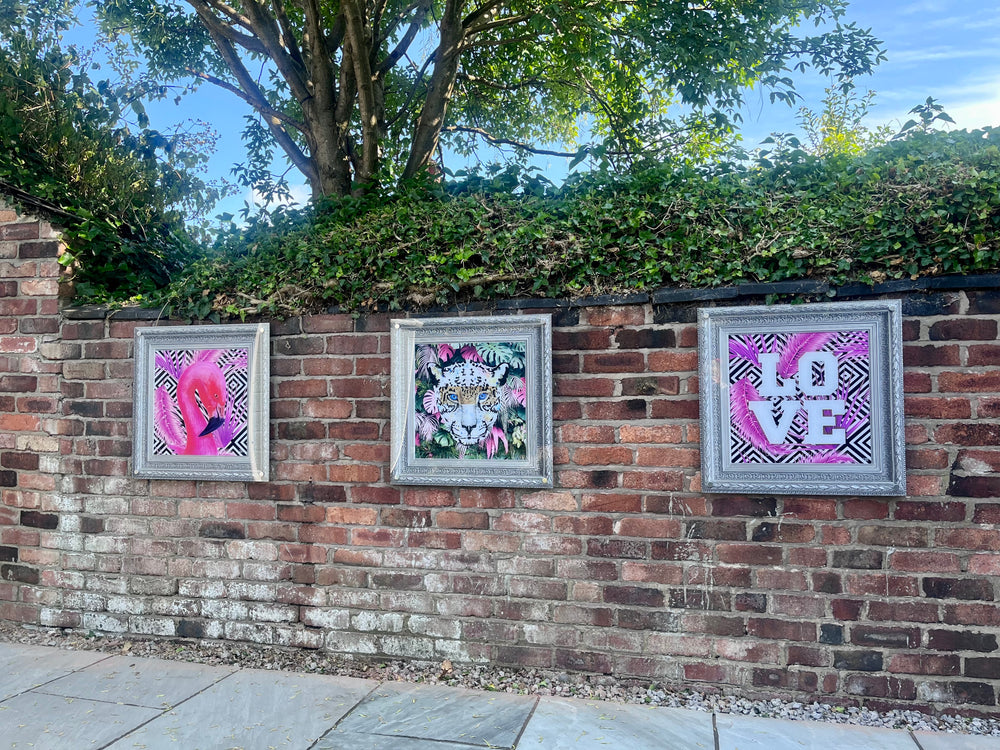
Texture helps here. Modern art looks especially good against brick, slatted timber and smooth render because the contrast gives depth. Planting can soften the edges, but it is worth leaving enough breathing room around the piece so the shape remains clear. A wall covered in art, trellis and tangled foliage can start to feel cluttered, even with good individual elements.
Lighting can make a surprising difference as well. Evening illumination from nearby wall lights, festoon lighting or subtle garden spots can keep the artwork present after dark and extend its effect beyond daylight hours. If you entertain outdoors, that added layer is often what makes the space feel complete.
It is not just about looks
People often start shopping for outdoor art because a wall looks empty, but the real value runs deeper. Art changes how a space is used. A forgotten side return becomes somewhere you pause. A plain patio starts to feel like an outdoor room. A new seating area gains atmosphere and identity.
There is also confidence in choosing pieces designed to last. When a product is built for outdoor living, installation feels less like a risk and more like a finishing touch. That reassurance matters for buyers who have already spent on landscaping, planting and furniture and do not want the decorative layer to be the weak point.
This is one reason specialist outdoor art has become more relevant. Homeowners are no longer willing to accept generic garden decor that fades into the background or deteriorates after a spell of bad weather. They want design impact with real performance behind it. YARDART UK speaks directly to that expectation, treating exterior walls with the same attention most brands reserve for interior styling.
A modern look, but not a cold one
One of the biggest misconceptions around contemporary outdoor design is that it has to feel stark. It does not. Modern garden wall art can be bold and clean while still making the space warmer, more expressive and more inviting. The trick is choosing work that reflects the mood you want, whether that is calm and architectural, vibrant and energetic or softly abstract.
If your garden already feels lush and layered, modern art can provide the visual pause that lets everything else shine. If your space is simpler and more pared back, it can become the focal point that gives the garden personality. Neither approach is more correct. It depends on how you live outdoors and what you want the space to say.
The best gardens rarely rely on one element alone. They work because hard landscaping, planting, furniture and decoration all support the same idea. Modern wall art earns its place when it does more than fill a gap - when it sharpens the style of the space and makes the whole setting feel more intentional.
If a wall in your garden still feels unresolved, that is usually a sign there is more potential there than you have used yet. A well-chosen artwork can be the piece that turns it from background into part of the reason you want to spend time outside.


Leave a comment