Outdoor Wall Prints That Transform Your Garden
A blank garden wall can make even the most carefully planted outdoor space feel unfinished. Outdoor wall prints change that instantly, bringing the colour, personality and visual focus usually reserved for inside the home into patios, courtyards, balconies and entertaining areas. The right piece does more than decorate a surface - it gives the whole setting a sense of intention.
Unlike a cushion, planter or lantern, wall art works at eye level. It can draw attention to a seating area, soften a plain boundary wall or create a striking view from the kitchen doors. When it is made for real outdoor conditions, it also gives you the confidence to style your garden with the same care as your living room.
Why outdoor wall prints make such a difference
Gardens are full of beautiful elements at ground level: foliage, paving, furniture and pots. Walls are often overlooked, despite being some of the largest visible surfaces in the space. A well-chosen print turns that unused area into part of the design.
This is especially valuable in compact gardens, where there may be limited room for more planting. A large botanical print can make a small courtyard feel greener and more layered. An abstract design can add energy to a simple patio without introducing visual clutter. In a long, narrow garden, a statement piece at the far end can create a stronger sense of depth and destination.
There is a practical benefit too. Outdoor art allows you to introduce a new style without committing to a major renovation. If your paving, fencing or render is neutral, artwork can bring in rich ochre, deep blue, leafy green or softer sun-washed tones. It is an effective way to refresh the atmosphere for a new season of outdoor living.
Start with the wall, not the artwork
It is tempting to choose a print purely because you love the image. That matters, of course, but the wall itself should guide the decision. Look at it in daylight, from your usual seating position and through the windows facing the garden. Consider the surface, available proportions and the amount of visual competition around it.
A broad, uninterrupted wall can carry a generously sized print with confidence. Going too small on a large expanse is one of the most common styling mistakes: the artwork can appear isolated rather than intentional. Conversely, a compact bistro corner may need one medium-sized piece that gives the space character without overwhelming it.
Think about what sits beneath the print as well. Art above an outdoor sofa, dining set or console creates a natural zone for relaxing and entertaining. On a fence, it can act as a focal point between planting. Above a water feature, it may reflect the calm, layered feel of the area - provided the image and scale do not compete with the feature itself.
Before ordering, mark the proposed size on the wall with painter's tape or cut paper. Stand back from several viewpoints. This simple check makes it much easier to judge whether the print has enough presence.
Match the mood, not every colour
A coordinated garden does not require an exact colour match. In fact, selecting every detail from the same palette can make a space feel flat. Instead, choose outdoor wall prints that share the mood of your surroundings.
For contemporary gardens with clean lines, concrete planters and structured greenery, modern abstract art, graphic forms or architectural photography can bring a polished finish. Dark backgrounds create drama against pale render, while light, airy designs can lift timber fencing and shaded corners.
For more relaxed or layered gardens, botanical illustrations, boho-inspired patterns and vintage-style imagery feel at home among climbing plants, weathered pots and textured paving. Equine artwork can give a country garden or stable-inspired setting an elegant sense of place. Street-art-inspired pieces suit social patios where bold furniture, outdoor kitchens and evening entertaining are central to the design.
The key is contrast with purpose. A colourful print can bring life to a restrained scheme. A monochrome or muted design can give a busy garden somewhere for the eye to rest.
Choose materials made for outside
Not all framed art belongs outdoors. A conventional indoor print, paper-backed image or untreated frame may look good initially, but rain, moisture, temperature changes and direct sunlight can quickly affect its finish. Colours can fade, surfaces can warp, and the piece may soon look out of place in an otherwise well-kept garden.
Outdoor-grade acrylic is designed for a different job. It provides a sleek, contemporary finish while protecting digitally printed artwork from the conditions exterior walls face. Quality outdoor prints should be UV resistant to help preserve colour, water resistant for everyday wet weather and made to cope with changing temperatures.
This does not mean every location is identical. A covered terrace is gentler on art than an exposed coastal wall, while a south-facing garden receives far more direct sun than a shaded courtyard. If your wall gets the full force of the weather, choose purpose-made weatherproof art rather than trying to adapt an indoor piece. It is the difference between a short-lived decorating idea and a feature you can enjoy season after season.
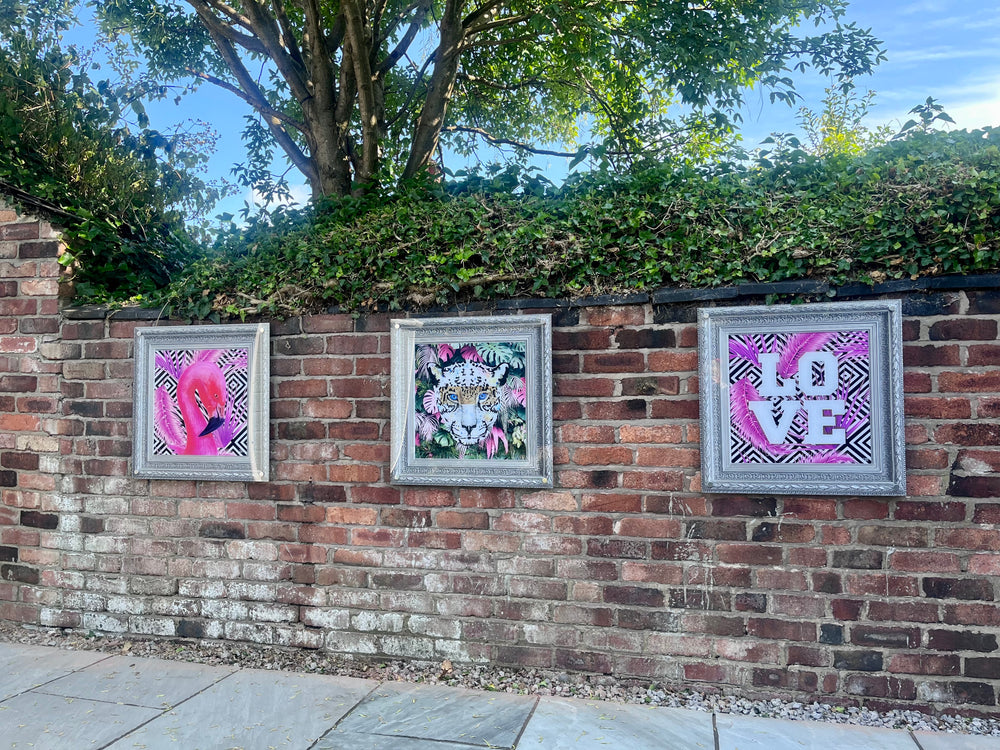
At YARDART UK, outdoor-grade acrylic artwork is created specifically for exterior display, combining vivid printed detail with reassuring durability. The result is art that looks considered from the first garden gathering through to the quieter months of the year.
Place artwork where it earns attention
Height affects how art feels in a garden. Above seating, position the centre of the print roughly around eye level when standing, then adjust according to the furniture below. A piece hung too high can seem disconnected from the area it is meant to anchor.
On a bare fence or boundary wall, use the planting line as your visual reference. Artwork placed just above the tallest nearby foliage often looks integrated, as though it belongs within the garden rather than being added as an afterthought. Leave enough breathing room around the edges to let the image read clearly.
For one large print, give it space. For a pair, keep the gap deliberate and even. Grouping can work beautifully on a covered outdoor wall, but only if there is a strong relationship between the images. Similar tones, a shared subject or matching proportions will feel curated. Randomly mixing styles can distract from the garden rather than enhancing it.
Installation should be straightforward, but it still deserves care. Use suitable fixings for the wall material, whether brick, masonry, timber or another outdoor surface. Check that the artwork is level, secure and positioned away from anything likely to knock against it. If you are styling a rented property, consider the permissions and the fixings you can use before making a choice.
Let the seasons inform your choice
A garden changes more than any room indoors. In summer, art sits alongside full borders, open doors and long evenings outside. In winter, when planting is quieter and the structure of the garden is more visible, a print can become an even stronger focal point.
That makes enduring designs particularly rewarding. Botanical artwork need not only suit summer, and moody abstracts need not only suit autumn. Choose a piece you will be pleased to see from indoors on a rainy February afternoon as well as beside a table set for a July supper.
Lighting can extend its impact after dark. A soft exterior wall light or carefully positioned garden lighting can pick up the surface and make the print part of the evening atmosphere. Avoid harsh glare directly onto the artwork, which can flatten the image and make the seating area less inviting.
Make your outdoor space feel like yours
The most successful gardens are not built around trends alone. They reflect the people who use them: the colours they return to, the places they remember, the style of gathering they enjoy and the atmosphere they want outside their back door.
Outdoor wall prints give that personal expression a permanent, practical place. Start with the wall that feels forgotten, choose a design with enough scale and character to hold it, and let the artwork set the tone for everything around it. A garden with art on its walls does not just look finished - it feels lived in, considered and ready to enjoy.


Leave a comment