Patio Mural Alternatives for Homes That Last
A painted feature wall can make a patio feel personal, but it also asks a lot of exterior paint. Rain, strong sunlight, frost and surface movement can turn a once-brilliant design into a faded, peeling maintenance job. The best patio mural alternatives for homes deliver the same sense of scale and personality, while giving you more control over durability, placement and future change.
Your patio should not be the part of the home where decorating stops. A blank brick wall, rendered boundary or sheltered courtyard has the potential to frame outdoor dining, soften a hard landscape and make even a compact garden feel considered. The right alternative depends on the wall itself, the exposure it receives and whether you want a permanent architectural treatment or a statement you can refresh as your style evolves.
Why homeowners look beyond painted patio murals
A hand-painted mural has undeniable charm. It can be entirely bespoke and, on a protected wall with careful preparation, it can look exceptional. Yet outdoor walls are rarely static canvases. Moisture can enter through masonry, paint can chalk under UV exposure, and hairline cracks may show through the artwork over time.
There is also the practical matter of commitment. A mural covers a large area and is not a quick weekend change when your garden scheme moves from tropical maximalism to quieter, contemporary planting. For homeowners who enjoy updating their spaces, a fixed design can feel less flexible than it first appears.
This does not mean a mural is the wrong choice. If you have a sheltered wall, a clear long-term vision and access to a skilled exterior artist, it may be exactly right. But where weather performance, easy installation and design freedom matter most, there are more adaptable ways to create impact.
Patio mural alternatives for homes with real presence
Outdoor-grade acrylic wall art
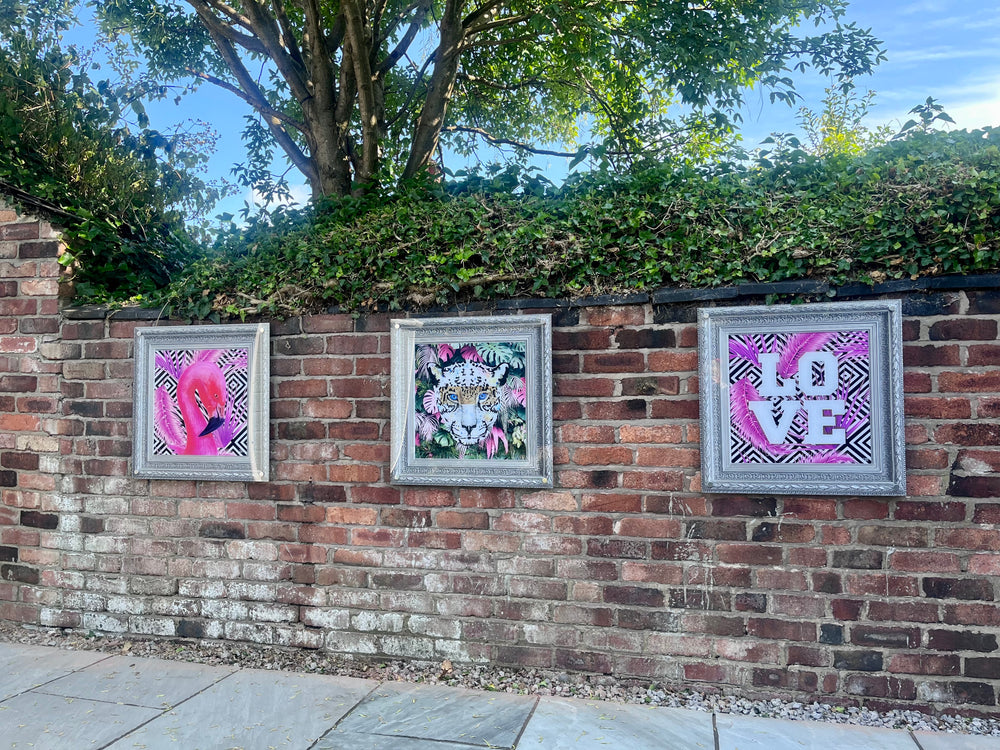
Large-format outdoor wall art is one of the closest visual alternatives to a mural, without turning the wall itself into the artwork. A single oversized botanical print can give a plain patio the depth of a secret garden. An abstract composition can bring colour to pale render, while street-art-inspired designs introduce energy to an outdoor bar or entertaining corner.
The advantage is that the artwork is made for exterior display rather than relying on standard indoor materials. Outdoor-grade acrylic provides a crisp, polished surface, with UV and water resistance designed for changing conditions. It also keeps the design contained, so a tired fence panel or imperfect wall can be transformed without the extensive preparation a painted mural demands.
Scale matters. One substantial piece often looks more intentional than several small decorations scattered across a large wall. Treat it as you would a focal-point artwork indoors: allow it room to breathe, position it where people naturally look from seating, and choose colours that either echo or confidently contrast with your planting.
Decorative tile and mosaic details
Tilework brings texture as well as colour. It works particularly well around an outdoor kitchen, water feature, sheltered seating nook or Mediterranean-inspired courtyard. A full mosaic wall can be a major undertaking, but a tiled inset, framed panel or vertical band can provide the same crafted feel on a more manageable scale.
Choose materials rated for outdoor use and take the substrate seriously. In the UK, freeze-thaw conditions and damp can expose poor installation quickly. Grout, adhesive and drainage details matter as much as the tile design, especially on exposed walls.
Tile is a strong option when you want a finish that feels integrated with the architecture. It is less flexible than a mounted art piece, however, and changing it later may involve more disruption than expected.
Timber battens and planted backdrops
For patios that need warmth rather than pattern, a timber batten wall can create a refined backdrop for furniture, lanterns and climbing plants. Vertical lines make a low boundary feel taller, while a darker stain can give pale planting and light-coloured cushions greater definition.
A planted treatment adds another layer. Climbers trained on wires, wall-mounted planters or a living-wall system can turn a flat boundary into something seasonal and immersive. Fragrant jasmine near a seating area or evergreen foliage around a dining patio changes the atmosphere in a way paint cannot.
The trade-off is care. Timber needs suitable protection, and living elements need watering, pruning and an honest assessment of light levels. A north-facing wall will not support the same planting choices as a sunny courtyard. This approach is best for gardeners who enjoy tending the finished look, not just installing it.
Exterior cladding and textured finishes
Textured render, stone-effect cladding and architectural wall finishes can bring a calm, high-end character to a patio. They are especially useful when the wall itself is the issue: stained masonry, mismatched repairs or a surface too uneven for artwork.
Think of this as a backdrop rather than decoration. A textured finish can make sculptural grasses, a simple dining set and a statement planter look more deliberate. It suits restrained schemes, coastal-inspired gardens and contemporary extensions where a loud artwork may compete with the architecture.
This route generally requires more budget and professional fitting. It also offers less colour and narrative than a mural, so it can benefit from a carefully chosen outdoor artwork placed nearby to introduce a focal point.
Screens, trellis and layered privacy
A decorative screen or well-designed trellis can solve two patio problems at once: visual interest and privacy. Used in front of a boundary wall, it adds depth through shadow and creates a useful support for climbers. It can also conceal bins, utilities or an awkward view without making the patio feel boxed in.
Leave a small gap between the screen and the wall where possible. The resulting shadow line gives the arrangement more dimension, particularly when evening lighting is added. For smaller gardens, opt for an open pattern or slim vertical structure so light can still move through the space.
Screens are not always the best answer on very exposed sites. Wind loading, secure fixing and material suitability should guide the choice. A beautiful panel that flexes, rattles or traps moisture against a wall will soon lose its appeal.
How to choose the right finish for your patio wall
Start with the wall's condition. If it is sound but visually uninspiring, outdoor wall art gives the fastest transformation. If it is cracked, damp or structurally tired, address those issues first and consider a treatment that does not conceal a problem you may need to access later.
Then consider exposure. A fully open south- or west-facing patio needs materials that can cope with intense sun and repeated rain. Sheltered courtyards offer more freedom, but they can hold moisture, so airflow and suitable fixings still matter. A product described simply as suitable for outdoors is not automatically designed for year-round exterior display.
Finally, decide what role the wall needs to play. Is it the focal point for a dining area? A calming backdrop for planting? A privacy boundary? The clearest answer usually leads to the best design decision. A vivid abstract art panel can animate a social space, whereas layered greenery may be more fitting beside a reading chair or quiet morning coffee spot.
Make the alternative feel designed, not added on
The most successful patio walls relate to the rest of the garden. Pick up one colour from your cushions, pots or flowering plants in the art or finish. Repeat materials where practical, such as timber in a bench and a slatted backdrop. At night, use warm, low-glare lighting to reveal texture and give artwork the attention it deserves without flooding the whole garden with light.
Avoid filling every available surface. One strong statement wall is often enough, especially in a compact patio. Keeping the surrounding elements simpler makes the colour, texture or artwork feel purposeful rather than busy.
For homeowners who want the visual confidence of a mural without the permanence and upkeep of paint, weatherproof outdoor art offers a particularly smart balance. YARDART UK designs outdoor wall art to bring gallery-level personality to patios while meeting the practical demands of exterior living.
Choose the treatment that makes you want to stay outside for another hour. Whether that is a vivid artwork above the dining table, a wall of climbing foliage or a quietly textured backdrop, the best patio design gives your outdoor space a character that feels entirely your own.


Leave a comment