Patio Reimagined for Stylish Outdoor Living
A patio can have good furniture, healthy planting and decent lighting and still feel unfinished. Usually, the problem is vertical space. Bare brick, timber fencing and plain rendered walls leave an outdoor area looking practical rather than designed. That is where a patio reimagined starts to feel different - not with more clutter on the ground, but with stronger visual choices at eye level.
Outdoor living has changed. Patios are no longer treated as a place for a table set and little else. They are extensions of the home, used for quiet morning coffee, summer hosting and the everyday pleasure of stepping outside into a space that feels considered. If the interior of your home has personality, your patio should not stop at paving slabs and planters.
What a patio reimagined really means
A patio reimagined is not about making everything look new for the sake of it. It is about shifting the space from overlooked to intentional. The best transformations happen when a patio is styled as a room without losing its outdoor character.
That often means paying attention to the same design principles you would use indoors - scale, balance, texture and focal points. A wall that currently disappears into the background can become the anchor for the whole space. Once that happens, seating layouts make more sense, planting feels more curated and the patio starts to read as a complete setting rather than a collection of separate items.
This is especially useful in gardens where the footprint is limited. Smaller patios benefit from visual structure because every element has to work harder. A single statement artwork can do more for the atmosphere than several small decorative pieces scattered around the edges.
Why walls change everything
Most patios are designed from the ground up. Homeowners think about paving, dining sets, outdoor rugs and pots first. Walls are left until the end, if they are considered at all. Yet walls are often the largest visible surfaces in the space.
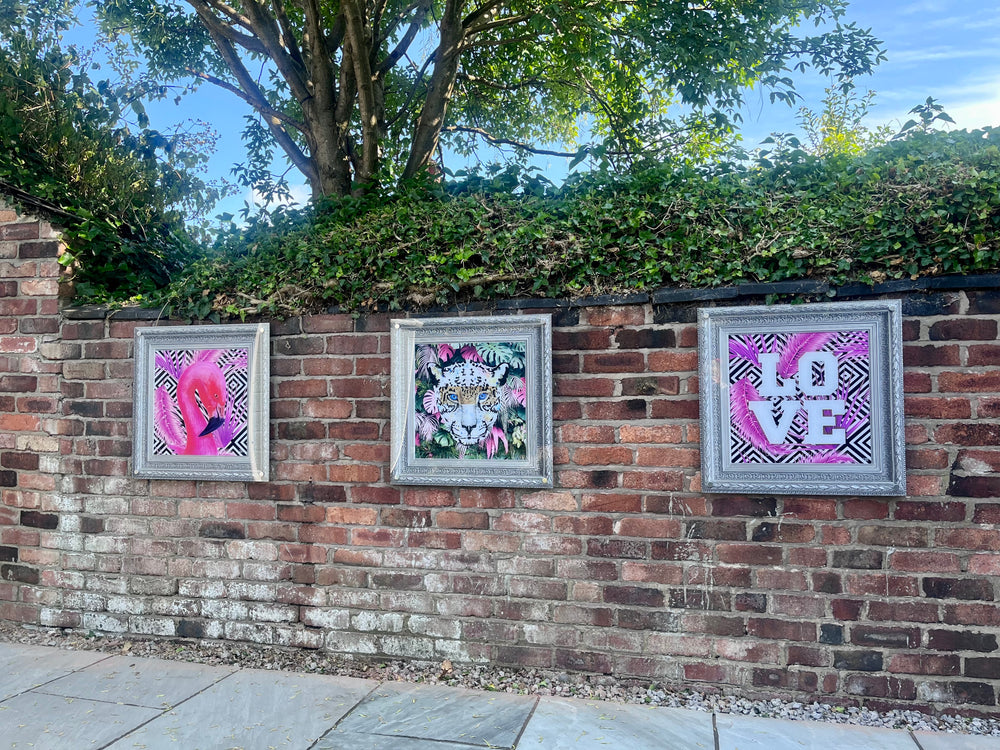
When those surfaces are blank, the patio can feel exposed, flat or generic. When they are styled properly, the whole area gains depth. Outdoor wall art adds colour, contrast and identity without taking up valuable floor space. It also helps connect the patio to the style of the home, whether that leans contemporary, rustic, botanical or bold.
There is a practical side to this as well. A strong piece on an exterior wall can soften harsh boundaries, break up long runs of fencing and distract from less attractive features such as utility areas or awkward corners. In enclosed courtyards, it can create a sense of destination. In open garden settings, it can help frame a seating zone so the patio feels grounded.
Patio reimagined through art, not accessories alone
Accessories have their place, but many outdoor spaces end up relying on the usual formula of lanterns, cushions and pots in the hope that the space will suddenly come together. Sometimes it does. Often it still feels like something is missing.
Art brings a different kind of impact because it introduces intention. It tells the eye where to look. It creates mood quickly. A vintage-inspired print can bring warmth to a brick wall, while an abstract design can sharpen a more minimal scheme. Botanical artwork can echo surrounding planting without making the patio feel overly themed.
The key is choosing pieces designed for outdoor conditions rather than treating the exterior like an afterthought. This is where many people go wrong. Indoor prints, untreated frames and decorative items not built for rain or UV exposure rarely keep their appeal for long. A patio should be styled with materials that can handle real weather, not just a few sunny weekends.
Choosing a style that suits the space
The most successful patios do not copy trends blindly. They reflect how the space is used and the atmosphere you want to create. A family patio used for casual meals and everyday relaxation may call for softer, more organic artwork with natural tones. A compact courtyard with modern paving and architectural planting can handle bolder graphics and cleaner lines.
Scale matters as much as style. One oversized piece can look polished and confident on a solid wall, while a pair of coordinated artworks may work better on either side of doors or windows. If your fence line is visually busy, simpler compositions usually hold their own better than intricate imagery. If the patio itself is quite restrained, artwork is a chance to introduce richer colour and personality.
There is always a balance to strike. Too little visual interest and the patio feels underdressed. Too much, and it begins to feel crowded. The right artwork should support the space rather than compete with everything in it.
Matching art to materials and planting
Think about what is already doing the visual work. Pale stone paving, black-framed doors, warm timber screening and structured evergreens all create a design language. Outdoor art should sit comfortably within that language, either by reinforcing it or adding deliberate contrast.
If your planting is loose and romantic, crisp geometric artwork can add useful structure. If your patio already has strong lines and darker finishes, softer brushwork or earthy tones can stop the scheme feeling severe. The best patios have tension in the right places. Not everything needs to match, but everything should feel chosen.
Performance matters as much as appearance
A beautiful patio is only satisfying if it stays that way. Outdoor decoration has to earn its place, particularly in the British climate where rain, shifting temperatures and strong sunlight can all test a surface over time.
That is why material choice matters. Weatherproof outdoor wall art printed on exterior-grade acrylic offers a cleaner, more durable solution than decorative pieces that are simply marketed for occasional outdoor use. UV resistance helps preserve colour. Water resistance protects the finish. Easy installation removes a common barrier for homeowners who want impact without a complicated project.
This practical reliability changes how confidently people decorate outside. Instead of treating the patio as a temporary styling exercise each season, they can create a lasting look that holds up through daily use. For a design-led brand such as YARDART UK, that combination of visual quality and outdoor performance is exactly the point. Exterior spaces deserve the same standard as interiors, but with materials that belong outdoors.
Making the patio feel bigger, warmer and more finished
One of the most interesting things about outdoor wall art is how much it can alter the feel of space. Large-format pieces can make a narrow patio feel more expansive by drawing the eye outward. Warmer palettes can make a shaded area feel more welcoming. A carefully placed artwork behind seating can create a natural backdrop that instantly makes the arrangement feel more complete.
This is particularly effective in newer gardens where boundaries can feel stark before planting matures. It also helps in urban spaces where neighbouring walls or fences dominate the view. Instead of fighting those features, you can design with them.
Lighting adds another layer. If your patio is used in the evening, wall-mounted lighting or soft garden illumination can pick up the artwork after dark and extend its presence. The result is not flashy. It is composed. The patio feels looked after, which often makes it feel more comfortable to use.
Common mistakes to avoid
A patio reimagined does not need constant buying and rearranging. It needs better decisions. Choosing artwork that is too small for the wall is one of the most common errors, followed closely by selecting pieces that do not relate to the wider palette of the space.
Another mistake is treating outdoor styling as less important than indoor styling. If you would not hang a flimsy, poorly made print in your sitting room, it makes little sense to accept one on your patio simply because it is outside. Exterior design should still feel elevated.
Start with one wall and build from there
If your patio feels underwhelming, you do not need to redesign the entire garden at once. Start with the wall that is most visible from the house or from the seating area. That single surface often has the biggest influence on how finished the patio feels.
Once the focal point is in place, the rest becomes easier to edit. Furniture can be arranged in response to it. Planters can echo its palette. Textiles can support the mood rather than trying to create it from scratch. Good outdoor styling is not about adding more. It is about giving the space a stronger point of view.
The most memorable patios are not necessarily the largest or the most expensive. They are the ones that feel considered, comfortable and visually confident. When the walls are part of the design, the whole space shifts. That is when outdoor living starts to feel less like an add-on and more like a natural part of home.


Leave a comment