11 Patio Wall Decor Ideas That Actually Last
A blank patio wall can make even a beautifully furnished outdoor space feel unfinished. The best patio wall decor ideas do more than fill a gap - they shape the mood of the space, add personality, and hold their own through rain, sun and changing seasons.
If you have already invested in paving, planting, seating and lighting, the wall often becomes the missing layer. It is what turns a practical patio into a space with presence. The trick is choosing decor that looks intentional and is genuinely made for outdoor living, rather than something that feels like an indoor afterthought moved outside for summer.
Why patio walls deserve the same attention as interiors
Most people style a patio from the ground up. Furniture comes first, then pots, then perhaps an outdoor rug or lanterns. The vertical space is left until last, which is why so many patios feel visually flat even when they have good pieces in them.
A wall gives you scale, structure and a focal point. It can soften a long stretch of brick, bring colour to rendered surfaces, or break up fencing that feels too uniform. More importantly, it helps the whole scheme feel curated. Outdoor living works best when it carries the same confidence as your interior style.
That does not mean every wall needs a dramatic statement. Sometimes one carefully chosen piece does more than a cluster of smaller accessories. It depends on the size of the patio, the wall material, and whether you want the art to anchor the space or blend into a larger garden scheme.
Patio wall decor ideas for different outdoor styles
1. Use outdoor wall art as the main focal point
If you want the biggest visual change with the least clutter, start here. A single large-scale artwork can completely shift how a patio feels, especially on a plain wall behind a dining set or outdoor sofa.
This works particularly well in modern gardens, courtyards and newly renovated patios where the architecture is clean and the planting is controlled. Abstract pieces bring movement and colour without competing with foliage. Botanical art feels softer and suits patios with layered greenery. Vintage and street art styles can give more personality to urban spaces that need edge rather than softness.
The key is material. Proper outdoor wall art should be made to cope with UV exposure, moisture and temperature changes. That is the difference between something that still looks sharp after months outdoors and something that fades, warps or peels.
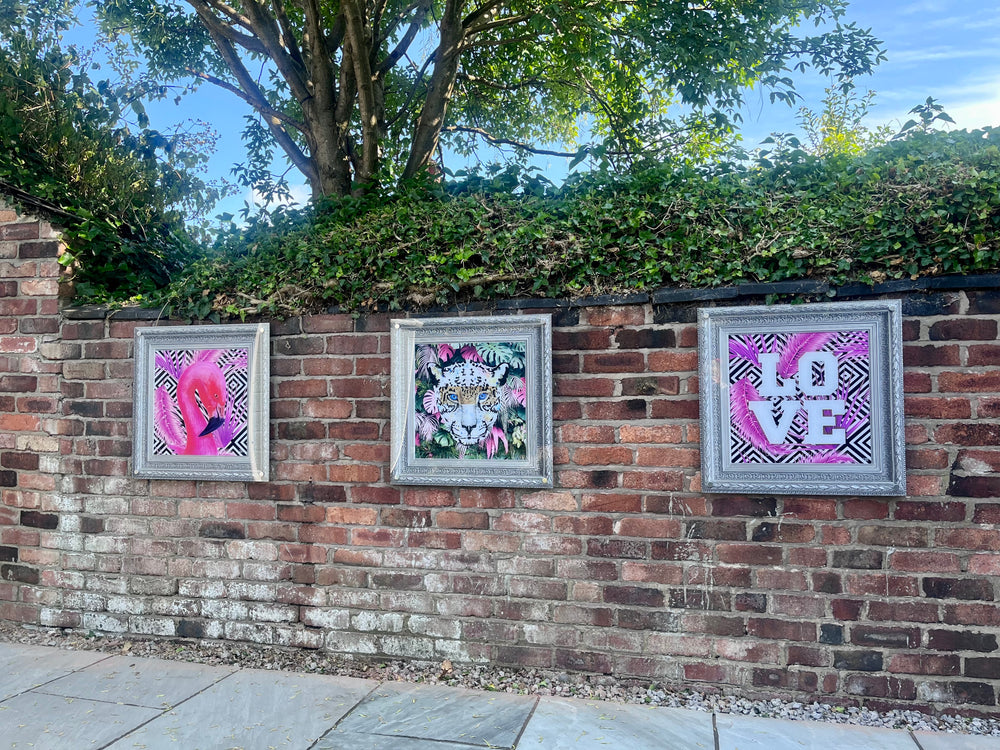
2. Build a gallery wall with breathing room
Gallery walls are one of the most versatile patio wall decor ideas, but they need editing. Outdoors, too many small pieces can look busy fast, especially once you add planters, seating and shadows from surrounding plants.
A tighter curation usually works better than trying to fill every inch. Choose a clear theme such as monochrome prints, botanicals, equine imagery or warm-toned abstracts, then vary the sizes slightly. Keep spacing consistent so the arrangement feels deliberate.
This approach suits patios that are used for entertaining because it gives guests something to look at up close. It also works well on fencing panels where one oversized piece might feel too dominant.
3. Add sculptural metal for texture
Not every patio needs colour. Sometimes what is missing is texture and contrast. Outdoor metal wall decor can be effective against timber fencing, pale render or dark painted brick because it catches the light differently throughout the day.
Geometric designs feel contemporary, while leaf forms and organic silhouettes suit softer garden schemes. The trade-off is that metal often gives a more decorative than artistic effect. If you want the wall to feel like a true design feature rather than an accessory, printed outdoor artwork often has more impact.
4. Pair art with climbing plants
This is one of the strongest ways to make a patio feel established rather than newly styled. Position weatherproof art where it can sit alongside trained jasmine, ivy or climbing roses, allowing the hard lines of the wall to be softened by foliage.
The contrast matters. Clean, modern artwork looks striking against looser planting, while botanical or vintage-inspired pieces create a more romantic look. Just leave enough clearance so the planting frames the art rather than obscures it. You want layering, not a maintenance problem.
How to choose the right piece for your patio wall
Size matters more than most people expect
One of the most common mistakes is choosing decor that is too small. A tiny plaque on a wide fence panel will disappear, particularly once viewed from inside the house or across the garden.
As a rule, the wall decor should relate to the furniture below it. If you are hanging art above an outdoor bench or sofa, aim for a piece or arrangement that spans a good portion of that width. It does not need to match exactly, but it should hold visual weight. Large patios can handle oversized formats far better than people think.
Match the style, not every colour
It is tempting to choose wall decor that picks up the exact shade of your cushions or planters. That can work, but it is not essential. What matters more is the design language.
If your patio has contemporary furniture, crisp paving and architectural planting, lean towards bold abstracts, graphic compositions or minimal monochrome pieces. If the space is softer, more eclectic or cottage-inspired, vintage florals, boho influences and nature-led imagery will sit more comfortably. A good piece should connect to the wider mood of the patio rather than simply copy its accent colours.
Think about viewing distance
A design that looks beautiful close up may lose impact from the kitchen door or bi-folds. Outdoor spaces are often seen from several angles, and that changes what works.
For walls viewed from a distance, stronger contrast and simpler compositions tend to perform better. Intricate detail is more suited to enclosed patios and courtyard corners where people will be near the wall. This is where premium outdoor acrylic art can be especially effective - it keeps colour clarity and crispness in changing light, rather than looking dull once installed.
Practical patio wall decor ideas that also solve design problems
Use art to zone the space
If your patio serves more than one purpose, wall decor can quietly define each area. A bold piece above a dining set makes that zone feel anchored. A calmer artwork near a lounge chair or fire pit creates a more relaxed mood.
This is useful in larger gardens where one long patio can otherwise feel like a row of furniture rather than a considered outdoor room. The wall treatment gives each area an identity without needing screens or bulky dividers.
Brighten dark corners and shaded walls
Not every patio is blessed with full sun and pale stone. Many UK gardens have enclosed corners, boundary walls or north-facing spots that stay visually heavy for much of the year.
In those areas, decor with light backgrounds, reflective surfaces or vivid botanical tones can lift the space instantly. This is where art often does more than planting, especially if the conditions are too shaded for colour-rich flowers. The wall becomes the source of brightness.
Soften hard landscaping
A patio with lots of brick, porcelain, composite decking or rendered walls can feel overly rigid without a softer visual layer. Wall decor helps break up those hard materials and introduce rhythm.
This does not have to mean rustic styling. Even sleek modern art can soften a scheme simply by adding colour variation and a focal point that draws the eye away from large uninterrupted surfaces.
What actually lasts outdoors
This is where style choices need to be backed by performance. Plenty of products are marketed for outdoor use but are only suitable for occasional exposure or covered areas. If your wall gets direct sun, wind-driven rain or winter temperature swings, materials matter.
Look for decor designed specifically for exterior display, with UV-resistant printing or finishes, water-resistant construction and hardware suitable for outdoor installation. Acrylic outdoor art is particularly strong for this because it offers a polished look while standing up well to moisture and fading. It also suits a broad range of aesthetics, from minimal to expressive.
Wood can be beautiful, but it usually needs more maintenance and changes appearance over time. Metal can last well if properly treated, though lower-quality finishes may discolour. Canvas is generally the risky choice unless it is engineered for outdoor conditions, because it can quickly look tired.
If you want a result that feels premium rather than temporary, it makes sense to buy decor built for the job. That is the thinking behind specialist outdoor art brands such as YARDART UK, where the design and the material are considered together rather than separately.
Installation and placement tips that make a difference
Hang the piece slightly lower than you would indoors if it is being viewed from seated areas. On a patio, people often experience the wall while relaxing, dining or looking out from the house, so the sight lines are different.
Leave enough negative space around the artwork so it can breathe. This is especially important outdoors, where furniture, plants and shadows already add visual activity. If your wall is exposed, use fittings that suit the surface properly rather than relying on indoor hardware.
And do not overlook lighting. A well-placed wall light or warm garden spotlight can extend the effect of the decor into the evening, which is often when a patio is used most.
The most effective patio wall is not the one with the most on it. It is the one that makes the whole outdoor space feel finished, personal and ready to enjoy whatever the weather is doing.


Leave a comment