13 Roof Terrace Ideas That Feel Properly Styled
A roof terrace can be the most exciting square footage in your home - and the easiest to get wrong. Too often, it ends up as a few chairs, a tired planter and a view doing all the heavy lifting. The best roof terrace ideas treat the space as a real outdoor room: layered, intentional and built to handle weather as well as weekends.
That matters even more when space is tight. Most roof terraces do not have the luxury of sprawling lawns or generous borders to create atmosphere. Every surface has to work harder, and every design choice needs a reason. When you get it right, even a compact terrace feels polished, welcoming and surprisingly substantial.
Roof terrace ideas start with how you want to use it
Before choosing colours, furniture or planting, decide what the terrace needs to do. A space for morning coffee wants something very different from a terrace used for evening drinks or family lunches. This sounds obvious, but it is the step people skip when they buy pieces one by one and wonder why nothing quite comes together.
If entertaining is the priority, keep the centre open and think in terms of conversation zones rather than squeezing furniture around the perimeter. If quiet downtime matters more, a single generous lounge chair, a side table and soft lighting may make better use of the footprint than a full dining set. Small terraces benefit from restraint. Fewer, better pieces nearly always look more expensive than a crowded layout.
There is also the question of exposure. Some roof terraces are sun traps, others are breezy, overlooked or surprisingly chilly by late afternoon. Good design works with those conditions instead of pretending they are not there.
Build the layout like an interior room
The strongest roof terraces have structure. Think about flooring, walls, ceiling effect and focal point in the same way you would indoors. Even if your terrace is modest, creating visual order makes it feel finished.
Start from the ground up. Decking tiles, porcelain paving and outdoor rugs can each define a zone, but they create different moods. Decking feels warmer and more relaxed. Porcelain looks crisp and architectural. An outdoor rug can soften a hard space quickly, although it works best when the rest of the terrace already feels settled rather than temporary.
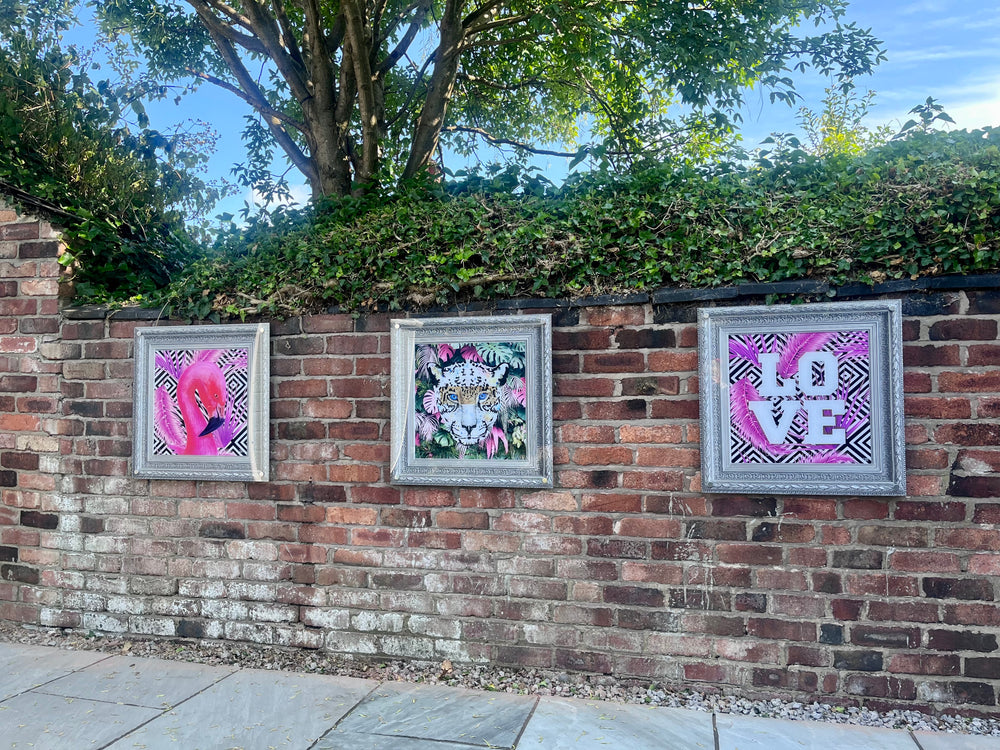
Then look at the vertical plane. This is where many terraces underperform. People focus on furniture and pots, but blank walls or fencing can leave the whole scheme feeling thin. Outdoor wall art is one of the easiest ways to give a roof terrace identity without taking up floor space. It creates an instant focal point, adds colour at eye level and helps the terrace feel designed rather than simply furnished. On compact terraces especially, that vertical styling can make a bigger impact than another planter ever will.
Acrylic outdoor art works particularly well here because it gives you the decorative presence of artwork with the practical reassurance a rooftop setting demands. Wind, rain and strong sun are not minor details on an exposed terrace. Choosing pieces made for outdoor conditions means the space keeps its finish instead of looking worn after one season.
Choose furniture with a lighter footprint
Not every terrace needs modular sofas and oversized coffee tables. On a roof terrace, visual weight matters almost as much as physical size. Furniture with open frames, slimmer profiles and raised legs tends to keep the space feeling airy.
That does not mean sacrificing comfort. It means being selective. A compact bistro set may be perfect for a city terrace used by two, while a built-in bench can deliver more seating than separate chairs without making the floorplan feel cluttered. Benches with hidden storage are especially useful if you need somewhere to keep cushions, throws or small accessories out of the weather.
Scale is the real test. If you have to sidestep every table corner, the terrace is overfurnished. Leave enough negative space for the layout to breathe.
Planting should shape the space, not swallow it
Lush planting is one of the most popular roof terrace ideas, but more is not always better. A rooftop packed with mismatched pots can look busy rather than beautiful, and the maintenance can become a chore.
Instead, use planting strategically. Tall grasses or slim evergreens can screen a seating area without blocking all the light. Repeating the same planter style instantly looks more cohesive than mixing five different finishes. Herbs are practical and attractive near a dining setup, while architectural foliage gives a modern terrace stronger lines.
Weight is worth considering too. Large containers filled with wet compost can be substantial, so check what your structure can sensibly accommodate before committing to oversized planting schemes. If that sounds limiting, remember that one or two statement planters often do more stylistically than a scatter of smaller ones.
Add colour where it has the most impact
On a roof terrace, colour needs a bit of discipline. Because the setting is open to the sky, shades can read brighter and contrasts can feel sharper than they do indoors. A controlled palette usually gives the most sophisticated result.
Neutrals with one accent colour work well if you want a calm, contemporary space. Sand, charcoal, olive and off-white create a strong base, then a deep rust, cobalt or botanical green can lift the scheme. If your furniture is understated, this is where outdoor wall art can do the heavy visual work. It introduces personality without the need to over-style every chair and table.
For a bolder look, repeat a colour at least three times across the terrace - perhaps through planters, cushions and artwork - so it feels intentional. Random bursts of colour rarely look curated.
Lighting is what makes the terrace usable
A roof terrace that looks good at noon but disappears after sunset is only half finished. Lighting brings atmosphere, but it also defines how often you actually use the space.
Layering works best. Soft wall lighting or portable lamps create the ambient glow. Table lanterns add intimacy around seating. Subtle floor or step lighting makes the space feel safer and more premium. String lights can work, but they are best used carefully. Too many, and the terrace starts to feel more temporary than tailored.
If your terrace is exposed, choose fittings designed for outdoor use rather than trying to adapt indoor decorative lighting. Good looks matter, but performance matters more when weather is involved.
Privacy matters, but so does openness
Most roof terraces need some degree of screening. The challenge is gaining privacy without boxing in the space. Solid barriers can make a terrace feel smaller, darker and less connected to the skyline that made it appealing in the first place.
Slatted screens, well-placed planters and positioned seating often solve the problem more elegantly than trying to block every sightline. If neighbouring windows are the main issue, focus screening where you actually sit rather than enclosing the entire perimeter. A terrace can still feel open and protected at the same time.
This is another reason vertical styling helps. A decorative wall treatment or weatherproof art panel can make one side feel purposeful and private, rather than merely screened off.
Make room for texture, not clutter
The terraces that feel inviting usually have more texture than stuff. That might mean woven seating, a brushed outdoor rug, tactile cushions and a glossy art surface that catches the light differently through the day. These layers give the space depth.
Clutter does the opposite. Too many accessories, too many tiny pots, too many decorative objects competing for attention - all of it makes a roof terrace feel unsettled. Curate it like you would a well-styled sitting room. A few strong choices always land better.
If your terrace is very exposed, this approach is practical as well as aesthetic. Fewer decorative pieces means fewer things to move, store or replace when the weather turns.
The best roof terrace ideas balance beauty and durability
A roof terrace should feel aspirational, but it also needs to cope with real life. Fabrics fade. Cheap finishes peel. Decorative pieces not designed for outdoor use can age quickly in full sun and rain. That is why the smartest terrace schemes are built around materials chosen for performance as much as appearance.
This is where product choices quietly shape the whole experience. Weatherproof artwork, durable textiles and easy-care surfaces reduce the effort of keeping the terrace looking sharp. They also give you more confidence to style the space properly rather than treating it as somewhere that has to stay bare for fear of damage.
At YARDART UK, that idea sits at the heart of outdoor styling: exterior spaces deserve the same design attention as interiors, but the products need to be made for outdoor life. On a roof terrace, that is not a luxury. It is the difference between a space that stays impressive and one that starts to date almost immediately.
Style direction that suits a rooftop setting
If you are still working out the look, start with a clear style direction. Modern terraces suit clean-lined furniture, restrained planting and abstract or graphic wall art. A softer boho scheme can work beautifully with layered textiles, sandy tones and botanical pieces. For a more dramatic city feel, richer colours, moodier lighting and statement artwork can give the terrace real evening presence.
What matters is consistency. Mixing too many styles can make a small outdoor space feel uncertain. Pick a direction, then repeat its cues in materials, shapes and colour.
The most memorable roof terraces do not rely on size or expensive architecture. They feel good because every element has been considered - where the eye lands, where people sit, how the light changes and what still looks beautiful after a spell of very British weather. Start there, and your terrace stops being a leftover outdoor space and starts feeling like one of the best-designed parts of your home.


Leave a comment