Selecting Art for Exposed Walls That Lasts
A blank garden wall can make an otherwise considered patio feel unfinished. Selecting art for exposed walls is the point at which outdoor decorating becomes more than adding another planter or cushion: it gives the space a focal point, a mood and a sense that it belongs to the home rather than sitting apart from it.
The challenge is that exterior walls ask more of art than an indoor hallway ever will. Rain, bright sun, wind, temperature changes and airborne dirt all affect how a piece looks over time. The right choice needs to feel visually confident from a distance while being genuinely made for the conditions it will face.
Start with the wall, not the artwork
Before choosing a style, stand back and assess the wall as part of the wider garden. Its size, finish, position and surrounding planting will tell you whether the space needs one large statement piece or a quieter composition that supports the rest of the scheme.
A long rendered wall beside a dining area can carry an oversized abstract or a bold botanical print beautifully. It creates a visual destination behind a table and helps the patio feel like an outdoor room. A narrow section between a gate and a fence, however, often benefits from a smaller vertical design that gives the eye somewhere to rest without making the area feel crowded.
Look at the wall from the places you actually use. View it from the kitchen doors, your favourite chair and the end of the garden. Art that looks perfectly proportioned when viewed close up can disappear when seen from across the lawn. As a useful rule, outdoor art should often be more generous in scale than your first instinct suggests. Exterior spaces have more open air around them, so they can absorb stronger proportions.
Wall texture matters too. Smooth brick, timber cladding and contemporary render each create a different backdrop. A highly detailed vintage image may need a calmer wall behind it, while a plain surface can take a graphic street-art-inspired design or expressive colour with ease. If the wall already has plenty of character, such as aged stone or richly grained timber, choose artwork with a clear central image rather than too many competing details.
Selecting art for exposed walls means choosing the right material
The most beautiful design is not the right design if it is made for a lounge and left to battle a British winter. Standard paper prints, canvas and untreated wood can warp, stain, fade or deteriorate quickly outdoors. Even a sheltered wall is exposed to moisture in the air, changing temperatures and seasonal grime.
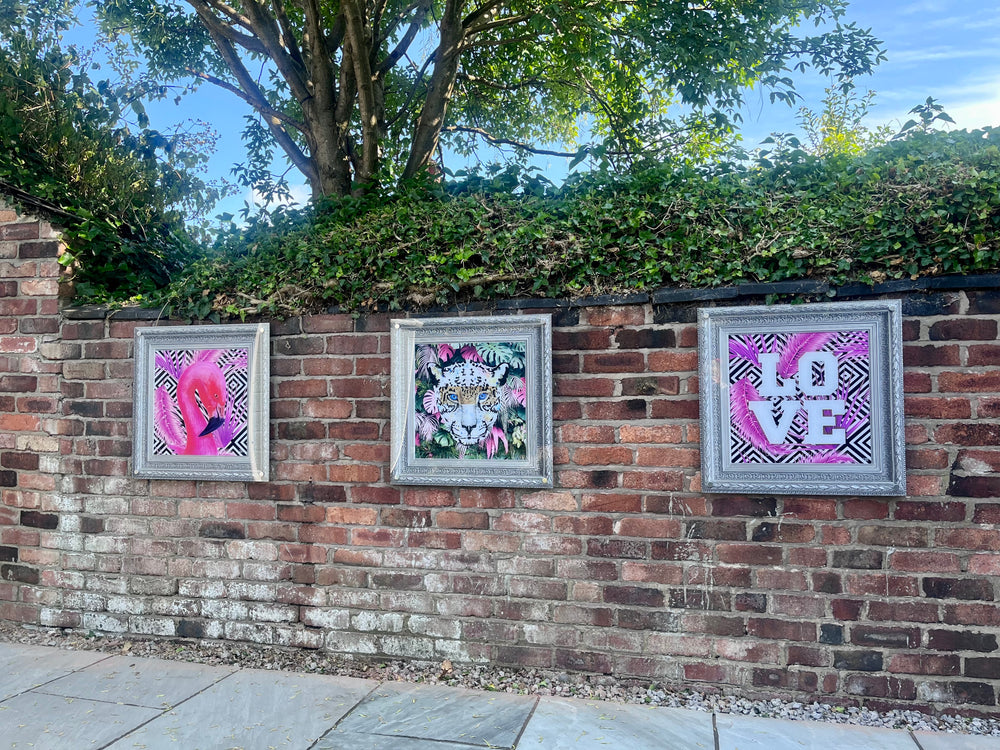
Purpose-made outdoor wall art removes that compromise. Outdoor-grade acrylic offers a polished, contemporary finish while being designed to resist water and UV exposure. Digitally printed artwork on this material holds its colour and definition far better in real garden conditions than indoor alternatives. It is also light enough to install without turning a simple refresh into a major project.
Exposure still changes the decision. A covered courtyard wall has more protection and can accommodate subtler tones or intricate imagery. A south-facing wall in full sun calls for art with proven UV resistance and colours that will remain clear rather than looking washed out by midsummer. On a wall exposed to driving rain, secure fixings and a weatherproof surface are not optional extras. They are part of the design brief.
Think about cleaning, too. Gardens are living spaces, which means pollen, splashes, dust and the occasional muddy fingerprint. A wipe-clean surface keeps artwork looking considered with minimal effort, especially around an outdoor kitchen, children’s play area or well-used entertaining space.
Choose a style with a clear role
Outdoor art does not need to match every cushion, pot and flower. In fact, trying to coordinate every colour can make a garden feel overly controlled. Instead, decide what role the piece should play: should it bring calm, create drama, introduce personality or connect different areas of the garden?
Botanical artwork can echo surrounding foliage without becoming lost among it. It is particularly effective on patios where planting is still developing, adding fullness and colour while borders mature. Vintage-inspired designs bring warmth and character to older properties, walled gardens and spaces with reclaimed furniture. For a clean-lined extension or contemporary courtyard, abstract art can introduce movement and depth without relying on a literal scene.
Boho designs tend to soften hard landscaping and work well with natural textures, layered seating and warm evening lighting. Equine imagery can give rural gardens a sense of place, while carefully chosen street-art-inspired prints can make a plain urban boundary feel intentional and energetic. The best option is rarely the one that follows a trend most closely. It is the one that gives the garden a more recognisable identity.
Colour deserves a little restraint. If your planting is abundant and varied, a piece with a limited palette can anchor the scene. If the garden is mostly evergreen, neutral or built around paving, artwork is an opportunity to introduce saturated blues, warm terracottas, bright florals or a striking monochrome contrast. Repeat one or two tones from the artwork in a pot, outdoor cushion or painted bench and the result will feel connected without becoming matchy.
Get scale and placement right
A small piece centred on a very wide wall often looks apologetic. Rather than treating wall art as a finishing touch, give it enough presence to hold its own against the architecture. For a single focal piece, aim for artwork that occupies a meaningful portion of the available wall rather than a token amount of it.
Height is equally important. In a seated entertaining area, hang the centre of the artwork roughly at a comfortable eye level when seated or standing nearby, depending on how the area is used most. Above an outdoor sofa or dining bench, leave a clear visual gap so it feels related to the furniture rather than pressed against it. Near a path, position the piece where it can be appreciated as people approach rather than hidden behind tall planting.
Consider what happens through the seasons. Summer borders may partially obscure artwork that is perfectly visible in March. Deciduous climbers can leave a wall bare in winter, making a colourful piece especially valuable when the garden needs life. If you are placing art near a mature shrub or ornamental grass, allow room for future growth rather than designing only for how it looks on installation day.
For very large walls, one substantial design usually feels stronger than several small pieces scattered across the surface. A grouped arrangement can work, but only when the pieces share a deliberate relationship in colour, subject or spacing. Randomly assembled small artworks can read as clutter outdoors, where fences, furniture, planting and practical features already create visual information.
Let light shape the final choice
Outdoor light is less predictable than indoor lighting, and that is part of its appeal. A glossy surface may catch changing daylight beautifully, but positioning is worth considering if a wall receives intense direct sun at the time you most use the garden. A design with strong contrast and a defined composition will remain legible in bright light as well as on softer overcast days.
Evening use matters if your patio comes alive after work. Gentle wall lighting or nearby garden illumination can extend the impact of the piece and make the outdoor area feel more inviting after sunset. Avoid placing a light directly in front of artwork where glare may obscure the image. Angled or indirect light tends to reveal colour and texture more comfortably.
Make durability part of the design decision
There is a difference between art that survives outdoors and art that still looks good there. Fading, curling edges and water marks make a wall feel neglected quickly, no matter how attractive the original image was. Choosing weatherproof art from the outset protects the visual investment and means your space can look styled through wet spells, heatwaves and everything between.
Installation should feel equally considered. Use suitable fixings for the wall material, check the weight and leave enough clearance for drainage and cleaning where needed. If you rent or are hesitant about permanent changes, start with a smaller wall section or a more sheltered location. Once you see how much difference a single piece makes, it becomes easier to plan the rest of the space with confidence.
YARDART UK is built around this idea: exterior walls deserve art made for outdoor living, not indoor décor pressed into service outside. The right piece can turn an overlooked boundary into the backdrop for slow breakfasts, summer gatherings and the view that welcomes you home.
Choose the image that makes you want to spend another hour outside. When it is scaled well, made for the weather and placed with purpose, a once-forgotten wall becomes one of the most personal parts of the garden.


Leave a comment