
11 Small Garden Ideas That Add Real Style
A small garden can feel oddly demanding. Every chair, planter and paving choice is more visible, and one wrong proportion can make the whole space feel cramped. The good news is that the best small garden ideas are rarely about squeezing in more. They are about editing well, using vertical surfaces properly, and giving the space enough character to feel designed rather than simply reduced.
If your garden is short on square footage, think of it the way you would a compact sitting room. It needs a focal point, a clear layout, and a balance between function and atmosphere. Once those pieces are in place, even the smallest courtyard, terrace or narrow patch of lawn can feel polished and generous.
Small garden ideas that make the space feel bigger
The quickest way to improve a compact garden is to create visual order. That does not mean everything has to match, but it should feel intentional. Too many materials, too many plant shapes and too many competing features can make a small plot feel restless.
Start with a restrained palette. If your paving, planters and fencing are all pulling in different directions, the eye stops at every change. Repeating two or three finishes creates calm and makes the boundaries feel less obvious. Soft stone tones, warm timber, charcoal and muted greens work particularly well because they let foliage and decorative details stand out without becoming busy.
Scale matters just as much as colour. In a small garden, fewer larger elements often work better than lots of tiny ones. One generously sized planter has more impact than five undersized pots scattered about. A single bench with clean lines can look more luxurious than a cluster of folding chairs. The same logic applies to planting. Broader drifts and repeated forms feel more composed than a pick-and-mix collection.
Use walls and fences as part of the design
Many compact gardens have one major advantage - vertical surface area. Fences, brick walls and exterior walls are often underused, yet they are where a small space can gain depth and personality without losing floor area.
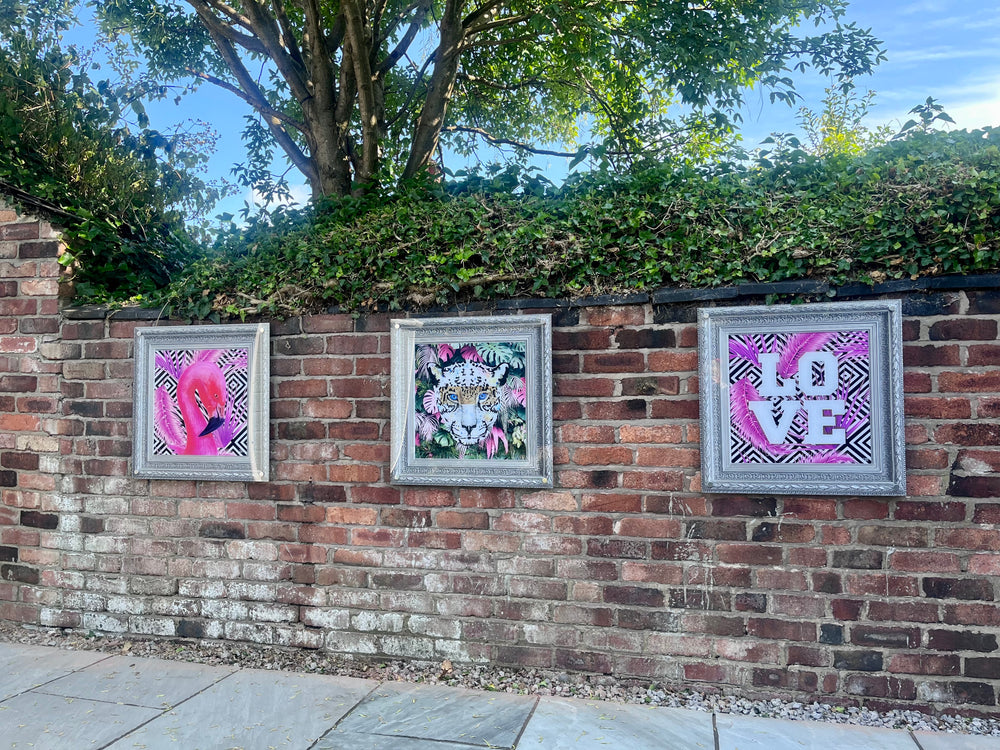
Outdoor wall décor is especially effective here because it draws the eye upward and gives the garden a proper focal point. A weatherproof artwork panel can turn a plain fence into a styled backdrop, soften a hard courtyard wall, or give a seating corner the same finished feeling you would expect indoors. This is one of the most overlooked small garden ideas, particularly for gardens that have limited planting space or awkward boundaries.
The style you choose changes the mood immediately. Botanical artwork keeps the look fresh and layered. Abstract designs sharpen up a contemporary patio. Vintage-inspired pieces can warm up a brick wall that feels a little stark. The key is to treat the wall as part of the room, not just the edge of it.
This is also where durability matters. Outdoor spaces are exposed to rain, sun and seasonal changes, so decorative pieces need to be designed for those conditions rather than simply borrowed from indoors. A polished garden should feel effortless, and that is hard to achieve if every decorative element looks tired after one winter.
Create zones, even if they are tiny
One of the smartest small garden ideas is zoning. People often assume zoning is only for large gardens, but in a compact space it can be even more useful. When every area has a purpose, the whole garden feels easier to use.
A zone can be as simple as a bench and side table in one corner, a run of planting along one boundary, and a small dining spot near the doors. The change does not need walls or screens. A rug, a planter grouping, a shift in level or a statement piece on the wall can be enough to define an area.
This approach also stops the garden from feeling like one flat, undifferentiated rectangle. Even a narrow plot can feel layered when there is a clear destination at the far end. A bistro set, a painted bench, a specimen planter or a piece of outdoor art can all pull the eye through the space and make it seem longer.
Think about sightlines
Small gardens are seen all at once, often from inside the house as much as from outdoors. That means your sightline from the kitchen, dining room or conservatory deserves attention. If the first thing you see is a bin store, tangled tools or a blank fence panel, the garden will always feel unfinished.
Place your strongest visual feature where it can be enjoyed from indoors too. This could be a beautifully planted container, a symmetrical pair of pots, or a statement artwork piece mounted on the boundary. Good small-scale design does not separate the house from the garden. It lets them work together.
Choose planting with discipline
Plants bring softness and movement, but in a small garden they need editing. A common mistake is trying to include every favourite variety, which often leads to a crowded result. It is usually better to repeat fewer plants and let them make a stronger statement.
Evergreen structure is especially useful because it keeps the garden looking composed all year. Clipped shrubs, architectural grasses and well-shaped small trees can hold the design together when seasonal flowers fade. Then you can layer in colour with containers, bulbs or a limited mix of flowering perennials.
If maintenance matters, choose plants that suit the conditions rather than forcing high-maintenance choices into the space. A sunny courtyard, a shady side return and a windy terrace all need different planting plans. There is no point creating a beautiful garden scheme that quickly turns into a chore.
Raised beds or pots?
It depends on how permanent you want the design to feel. Raised beds can make a small garden look tailored and architectural, especially in modern settings. They also help organise planting and can double as casual seating edges. Pots, on the other hand, offer flexibility. You can move them, refresh them seasonally and use them to test ideas before committing.
In very small gardens, a mix of both often works best. Keep the main structure simple, then use containers to add colour, texture and seasonal variation.
Keep furniture light but substantial
Outdoor furniture in a compact garden should earn its place. Bulky pieces can swallow precious room, but furniture that is too slight can feel temporary and underwhelming. The sweet spot is furniture with a clean silhouette and enough visual weight to feel intentional.
Built-in benches are especially good in smaller layouts because they reduce clutter and can fit awkward corners neatly. Foldable dining sets work well if you genuinely need flexibility, though they are often less comfortable for everyday use. If lounging is more important than dining, one good bench with cushions may serve the garden better than a full table-and-chair arrangement.
Leave breathing room around furniture wherever possible. A small garden does not need to be full to feel finished. In fact, a little negative space is often what gives it elegance.
Use lighting to extend the design into evening
Good lighting can make a compact garden feel far more atmospheric and expensive than its size suggests. It also shifts the focus away from boundaries, which helps the space feel deeper at night.
Rather than relying on one bright fitting, layer the light. Soft wall lights, subtle uplighting on a tree or shrub, and warm lantern-style accents around seating create a more flattering effect. If you have artwork on an exterior wall, a gentle light nearby can turn it into an evening feature and add another layer of interest after dark.
Keep the colour temperature warm. Harsh white lighting tends to flatten the garden and make small spaces feel stark.
Let decoration do more of the work
In large gardens, planting often carries the whole scheme. In small ones, decoration can take on a much bigger role. That is not about cluttering the space with ornaments. It is about selecting a few pieces that bring style, structure and a sense of finish.
Wall art is particularly useful because it adds impact without consuming floor space. It can introduce colour where planting is limited, create a backdrop for entertaining, and help a compact patio feel more curated. For style-conscious homeowners, this is often the difference between a garden that looks practical and one that feels designed.
That is why brands such as YARDART UK resonate with customers who want exterior spaces to have the same decorative confidence as interiors. When artwork is made for outdoor conditions, it gives you a reliable way to add personality without worrying that the weather will undo the effect.
Make peace with what your garden cannot do
Not every small garden can fit a dining set, a fire pit, a water feature, a vegetable bed and a play area. The strongest designs come from choosing the one or two functions that matter most and building around them.
If you love entertaining, prioritise comfortable seating and lighting. If you want calm, focus on planting, texture and a strong focal wall. If you mainly view the garden from indoors, treat it as a visual extension of the house and compose it accordingly.
A compact outdoor space does not need to imitate a large one. It needs to be edited, expressive and easy to enjoy. That is where the best small garden ideas always land - not in trying to do everything, but in making a few smart choices look exceptional.
The most memorable small gardens are the ones that know exactly what they are trying to say, and say it beautifully.


Leave a comment