What Outdoor Wall Art Lasts Longest?
A sun-faded print and a warped panel can make an outdoor space feel neglected faster than almost anything else. If you are asking what outdoor wall art lasts longest, the short answer is this: art made specifically for exterior use, with UV-stable printing and water-resistant materials, will outperform anything adapted from indoor décor.
That distinction matters. Plenty of wall art looks convincing online, but outdoor conditions are far less forgiving than a living room wall. Rain, direct sun, damp air, frost, airborne dirt and temperature swings all work on a piece at once. If you want your patio, fence or garden wall to feel designed rather than temporary, the material choice is everything.
What outdoor wall art lasts longest in real conditions?
The longest-lasting outdoor wall art is usually printed on outdoor-grade acrylic or similarly purpose-built weatherproof surfaces designed to resist UV fading, moisture damage and surface deterioration. Not all "outdoor" art is equal, though. Some materials survive a season or two. Others keep their colour and finish for years with minimal fuss.
The reason acrylic performs so well is simple. It does not absorb water in the way porous materials do, and it offers a stable, smooth surface for high-quality printing. When paired with outdoor-grade inks and proper mounting, it gives you the combination most homeowners actually want - strong visual impact and reassuring durability.
That does not mean every other material is poor. It means each comes with trade-offs, and those trade-offs become obvious the moment the weather turns.
The materials that tend to last best outdoors
Outdoor-grade acrylic
For decorative wall art that is expected to stay outside, acrylic is one of the strongest options available. It handles rain well, resists warping, and holds printed detail beautifully. Colours tend to stay crisp for longer when UV-resistant printing is used, which makes a real difference on bright garden walls or sun-exposed entertaining areas.
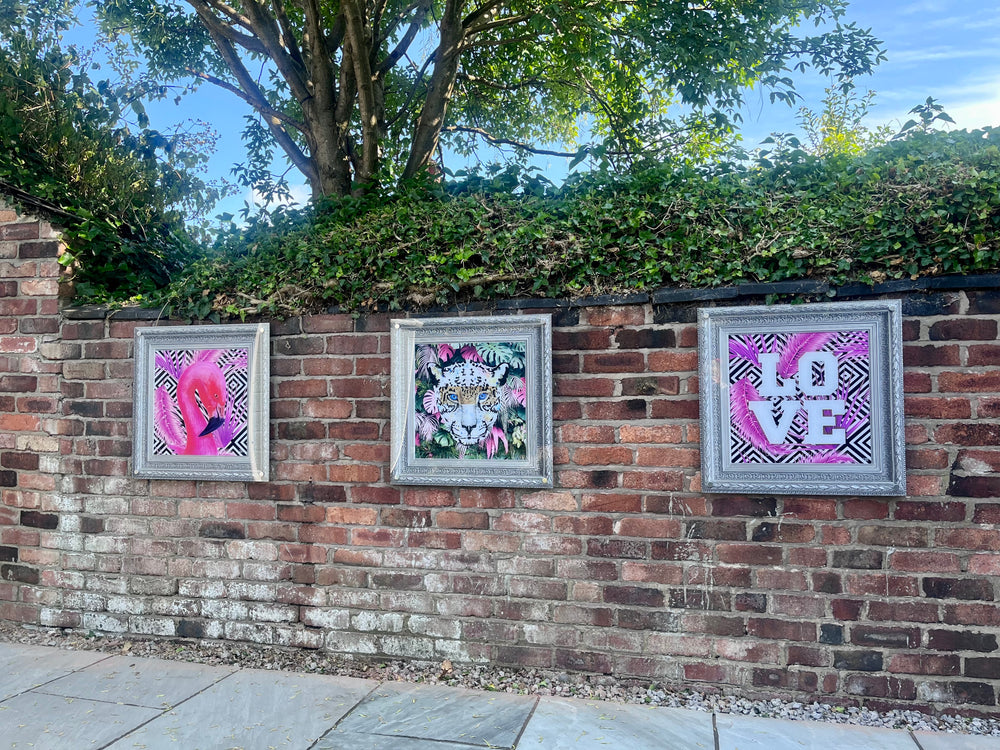
There is also a design advantage. Acrylic has a clean, contemporary finish that feels considered rather than improvised. If you are styling an outdoor dining area, courtyard or rendered wall, it gives that polished look people usually associate with interior art, but in a format made for outdoor living.
Its main consideration is placement and quality. A cheap acrylic print with weak inks will not behave like a premium exterior-grade piece. Material and print process need to work together.
Treated wood
Wood can suit rustic and natural garden schemes, but it is not the longest-lasting decorative surface unless it is carefully treated and consistently maintained. Moisture is the challenge. Even sealed wood expands and contracts, and over time that movement can lead to cracking, peeling or distortion.
If you love the warmth of timber, it can still work in sheltered areas. Just go in with realistic expectations. Wood often needs more upkeep and rarely keeps a pristine finish as effortlessly as acrylic.
Canvas marketed for outdoor use
Outdoor canvas sounds appealing because it feels familiar, but it is usually better for covered spaces than fully exposed ones. Even when treated for exterior display, canvas is still more vulnerable to sagging, mildew and gradual fading than rigid weatherproof panels.
For a covered pergola or enclosed garden room, it may hold up reasonably well. For an exposed brick wall facing regular rain and wind, it is typically not the best long-term investment.
Ceramic and porcelain-based wall pieces
These can be durable from a structural point of view and cope well with wet conditions. The issue is less about weather resistance and more about style flexibility, image detail and scale. They can be beautiful, but they do not offer the same broad visual range as printed art panels, especially if you want bold statement imagery or a more contemporary look.
They also tend to feel more fixed and less versatile when you want to refresh a space.
Why some outdoor art fails so quickly
When outdoor art deteriorates early, the material is only part of the story. The print technology, the protective finish and the mounting system matter just as much.
UV exposure is one of the biggest culprits. A design may still be physically intact, but if the colours bleach out after one summer, it stops doing its job. Water ingress is another. Once moisture gets into a surface or behind a coating, bubbling, peeling and mould become far more likely.
Then there is structural movement. Materials that swell, shrink or slacken under changing temperatures often lose their shape before they fully break down. That is why rigid, non-porous surfaces generally last longer than softer or absorbent ones.
What makes outdoor wall art genuinely durable?
A durable piece is not just "weatherproof" in a vague sense. It should have a few specific qualities.
First, it needs UV resistance. This is what helps preserve colour depth and sharpness, especially on south-facing walls and bright open gardens.
Second, it needs water resistance at both the surface and material level. If the artwork relies on coatings alone while the core material is vulnerable, its lifespan is limited.
Third, it should be easy to clean. Outdoor pieces collect pollen, dust, splash marks and general garden grime. A surface that wipes down easily will keep looking better for longer.
Finally, it needs stable installation. Even the best material can struggle if it is poorly mounted and constantly rattling in the wind or sitting against a damp, uneven wall.
The role of placement in how long art lasts
Even when deciding what outdoor wall art lasts longest, placement still changes the outcome. A covered patio is gentler than a fully exposed boundary wall. A coastal location with salty air puts materials under more pressure than a sheltered urban garden. A north-facing wall may stay cooler and damper, while strong southern sun can test colour fastness.
This does not mean you need to overcomplicate the choice. It simply means the best material for one home might not be the best for another. If your wall gets full sun all afternoon, prioritise UV-stable printing. If it stays damp through winter, moisture resistance matters even more.
For most homeowners, the safest route is to choose art designed from the outset for exterior display rather than trying to repurpose indoor pieces outside.
Style matters too - because durability is not enough
The longest-lasting outdoor wall art still has to look right in the space. A piece can be technically durable and still feel flat, generic or out of place. That is why material performance and aesthetic impact should work together.
Acrylic stands out here because it supports vivid modern prints, softer botanical designs, vintage-inspired artwork and more graphic statement pieces without losing clarity. It allows exterior walls to feel styled with the same confidence as interior rooms.
That matters if you are treating your patio or garden seating area as an extension of the home rather than just somewhere to store planters. The right artwork adds structure, colour and personality. It gives blank walls a focal point and helps an outdoor space feel finished.
How to choose the longest-lasting option for your space
If longevity is your main goal, look past broad marketing claims and focus on how the piece is built. Ask whether the artwork is made specifically for outdoor display. Check whether the print is UV resistant. Consider whether the surface is rigid and non-absorbent. Think about how exposed your chosen wall is to rain and direct sun.
This is also where buying from a specialist makes a difference. Brands that focus on outdoor wall art tend to engineer around real conditions instead of simply adapting indoor décor. At YARDART UK, that means artwork created on outdoor-grade acrylic to deliver both design impact and dependable performance outdoors.
If you are choosing for a high-use entertaining area, ease matters as much as lifespan. A piece that is simple to hang, easy to wipe clean and made to stay visually sharp gives you far better value than something that needs constant checking and care.
So, what outdoor wall art lasts longest?
In most cases, premium outdoor-grade acrylic wall art lasts the longest while keeping its finish, colour and overall visual quality intact. It offers one of the best balances of weather resistance, low maintenance and design appeal. Other materials can work, especially in sheltered spots or for specific styles, but they usually ask for more compromise somewhere along the line.
If your goal is an outdoor space that feels elevated year after year, choose art that was made for the job, not art that merely claims it can cope. Your garden walls deserve the same standard as the rooms inside your home - and when the material is right, that difference shows every day.


Leave a comment