Why Choose Yard Art Over Garden Sculptures?
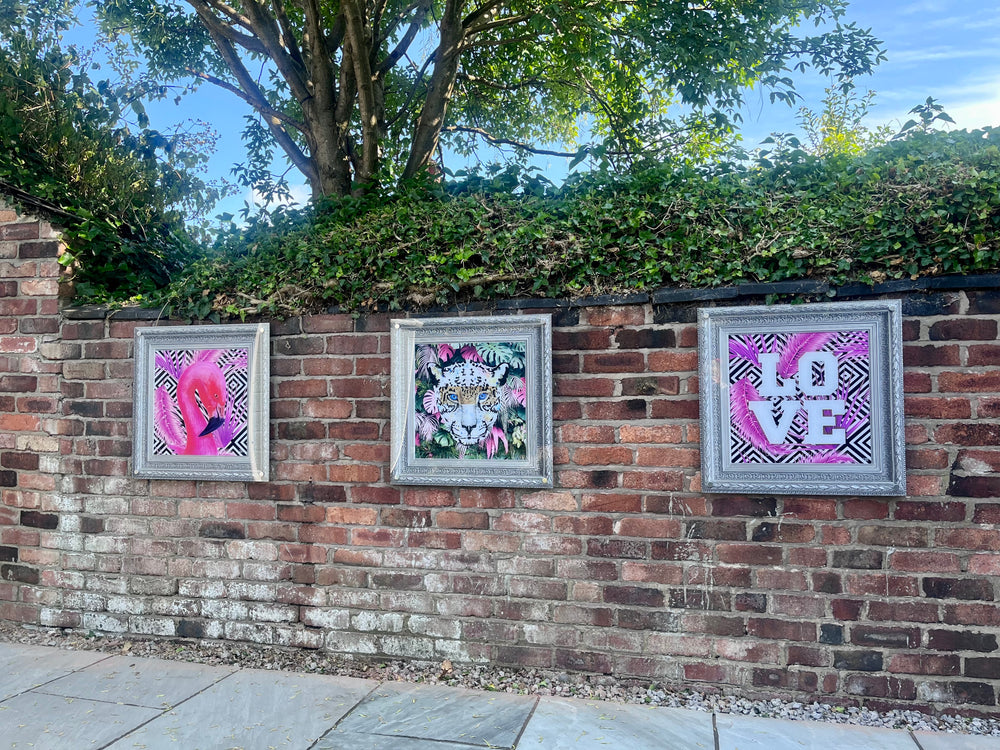
A beautifully planted garden can still feel unfinished if the walls, fences or patio backdrop are doing very little. That is often the real answer to why choose yard art over garden sculptures - wall-based outdoor art gives your space visual structure, colour and personality without taking up precious floor area. If you want the garden to feel designed rather than simply decorated, that difference matters.
Garden sculptures have their place. A well-positioned piece can create a focal point, add height and bring character to a border. But for many homeowners, they solve only one part of the styling challenge. They sit within the garden, while the larger surfaces around them - brick walls, rendered exteriors, fencing, courtyard boundaries - remain blank. That is where outdoor wall art often has the stronger impact.
Why choose yard art over garden sculptures for modern outdoor spaces
The biggest advantage is how efficiently yard art transforms a space. A sculpture needs room around it to breathe. It asks for placement, balance and often landscaping support. Outdoor wall art works with the architecture you already have. It turns an empty vertical surface into a finished design feature, which can make a patio, terrace or courtyard feel more intentional almost immediately.
This is especially valuable in gardens where square footage is limited. If you have a compact seating area, narrow side return or smaller urban garden, every bit of usable space counts. A freestanding sculpture can interrupt flow, compete with furniture or feel oversized quite quickly. Wall art delivers visual interest without creating clutter, so the garden still feels open and easy to use.
There is also a more contemporary look to consider. Many outdoor spaces now function as extensions of the home, with lounges, dining zones and styled entertaining areas replacing the old idea of the garden as a purely practical plot. In that setting, wall art often feels more aligned with modern outdoor living. It brings the same decorative thinking you would apply indoors, only with materials made to withstand the elements.
The design impact is immediate
One reason people gravitate towards sculptures is that they expect a statement piece to stand out. That can be true, but bold outdoor wall art often creates a stronger first impression because it works at eye level and across a broader visual plane. It is seen as part of the backdrop to the whole space rather than as an isolated object.
That matters when you are styling for atmosphere. A sculpture might reward close viewing, but wall art can set the tone from the moment you step outside. Abstract pieces can sharpen a minimalist courtyard. Botanical prints can soften a paved garden. Vintage or street-inspired artwork can inject personality into a plain fence line. Instead of relying on shape alone, yard art uses imagery, colour and scale to shape the mood.
For homeowners who want the garden to feel curated rather than pieced together over time, that is a significant advantage. You are not just filling a corner. You are defining the visual character of the space.
It makes overlooked surfaces work harder
Most gardens have at least one underused vertical surface. It may be the back wall behind a dining set, the fence visible from the kitchen, or the sheltered area near bifold doors that never quite looks finished. These are prime opportunities for outdoor art.
Sculptures do not address those dead zones very well because they rely on surrounding open space to be appreciated. Wall art does the opposite. It activates surfaces that would otherwise remain visually flat, helping the whole garden feel more layered and complete.
Why choose yard art over garden sculptures when practicality matters
Style matters, but so does everyday living. The practical case for yard art is often stronger than people expect.
Freestanding sculpture can come with a few compromises. Depending on the material and weight, it may require a stable base, careful positioning and occasional repositioning if you redesign the space. In exposed gardens, it can also become something you work around rather than simply enjoy. That does not make sculpture a poor choice, but it does mean the best results are often tied to layout, scale and maintenance.
Outdoor wall art is typically simpler to integrate. When designed specifically for exterior use, it offers decorative impact with less physical intrusion. It stays where it belongs, leaves entertaining areas clear and allows planting, seating and foot traffic to remain the focus at ground level.
For busy households, that ease is part of the appeal. You want the garden to look elevated, not fussy.
Weather performance changes the conversation
A major frustration in outdoor décor is buying something that looks beautiful at first and then quickly loses its finish. This is where material quality becomes decisive.
Outdoor wall art engineered for exterior display is built with weather exposure in mind. Premium acrylic pieces, for example, are designed to resist water and UV damage far more effectively than decorative items never truly intended for life outdoors. The result is colour clarity, sharper detail and a finish that continues to look considered through changing seasons.
That reliability is not just a technical feature. It affects confidence. When you invest in your garden, you want to know the piece will hold its presence through rain, sun and general outdoor wear. A statement should stay a statement.
Yard art gives you more style flexibility
Sculpture tends to make its impact through form and texture. That can be elegant, but it also narrows your styling options. If your space has a specific look - modern, boho, botanical, eclectic, vintage-inspired - artwork gives you far more freedom to express it clearly.
This is one of the strongest arguments for why choose yard art over garden sculptures if your goal is a personalised outdoor scheme. With wall art, you can match the mood of your interiors, pick up accent colours from cushions and planters, or create contrast against brick, timber or render. You are working with a much wider visual language.
That flexibility also helps if your taste evolves. Swapping or repositioning wall art is often easier than redesigning the landscape around a substantial sculptural piece. The garden can change with you, rather than locking you into one decorative direction.
It suits more than one kind of garden
Not every outdoor space is a sprawling lawn with deep borders. Some are sleek courtyards. Some are paved terraces. Some are small family gardens where storage, seating and planting all need to coexist. Yard art adapts well across all of them because it uses surfaces that already exist.
That makes it particularly effective in newer homes, renovated patios and compact spaces where visual polish matters but room is limited. It can also work beautifully in larger gardens, especially when used to define outdoor rooms or bring cohesion to entertaining areas.
The trade-off is not art versus sculpture
It depends on the result you want. If you love the sculptural look and have the space to support it, a garden sculpture can still be an excellent feature. In larger landscapes, it may add depth or create a focal pause within planting. For some classic or heavily landscaped gardens, that may feel exactly right.
But if the problem you are trying to solve is a dull fence, a blank exterior wall or a patio that lacks identity, sculpture is not always the most direct answer. Yard art often is. It addresses the surfaces people actually see most, and it does so in a way that feels immediate, stylish and architecturally connected.
This is why the smartest outdoor schemes are often less about following tradition and more about understanding function. What is visually missing from the space? Where does the eye land? What feels unfinished? Once you ask those questions, wall art starts to make a lot of sense.
Why choose yard art over garden sculptures for easier transformation
There is also a timing issue. Garden redesigns can take months to develop properly, especially if you are waiting on planting to mature or hard landscaping to settle in. Outdoor wall art offers a faster layer of transformation. It gives a patio or courtyard a finished, styled look now, rather than asking you to wait for the space to grow into itself.
That speed does not mean it feels temporary. High-quality outdoor art can become the anchor around which the rest of the garden develops. A strong piece can influence your planting palette, guide textile choices and help organise seating zones. In that sense, it is decorative, but it is also strategic.
For homeowners who want beauty and performance in equal measure, this is where specialist outdoor art stands apart. Brands such as YARDART UK have pushed the category forward by treating exterior walls as real design opportunities, not afterthoughts. That shift reflects how people live now. The garden is not separate from the home. It is part of it.
The best outdoor spaces are the ones that feel considered from every angle. If your garden already has texture at ground level but still lacks a focal point, look up. The blank wall, quiet fence or overlooked corner may be the place where the whole design finally comes together.


Leave a comment